
 Armenia
Odzaberd was an ancient settlement in modern Armenia on the shore of Lake Sevan [1]. It was founded in the 8th century BCE by a ruler of Urartu, an Iron Age kingdom centered in the Armenian Highlands, and continuously occupied into the Middle Ages [1]. The site is organized into three distinct zones: a central citadel, a fortress, and an extensive outer town [1]. A stele on the site bears an Urartian-language cuneiform inscription which states that Odzaberd was established by the Urartian king Rusa I (r. 735–714 BCE) in honor of the weather god Theispas to "demonstrate the power of Biaina [the Urartian capital, modern Van] and to cow her enemies." Some sources refer to the site as "Teisheba" or other variations of the Urartian god's name [1]. In the post-Urartian period Odzaberd was a regional center, as evidenced by recovered pottery styles and the use of mudbricks [1]. The Odzaberd site is on the southern shore of Lake Sevan near the town of Tsovinar [1].
Text: Wikipedia – 'Odzaberd' (revision of 2026-07-19), CC BY-SA 4.0 · sentences selected and shortened by an AI system · source →Teysheba
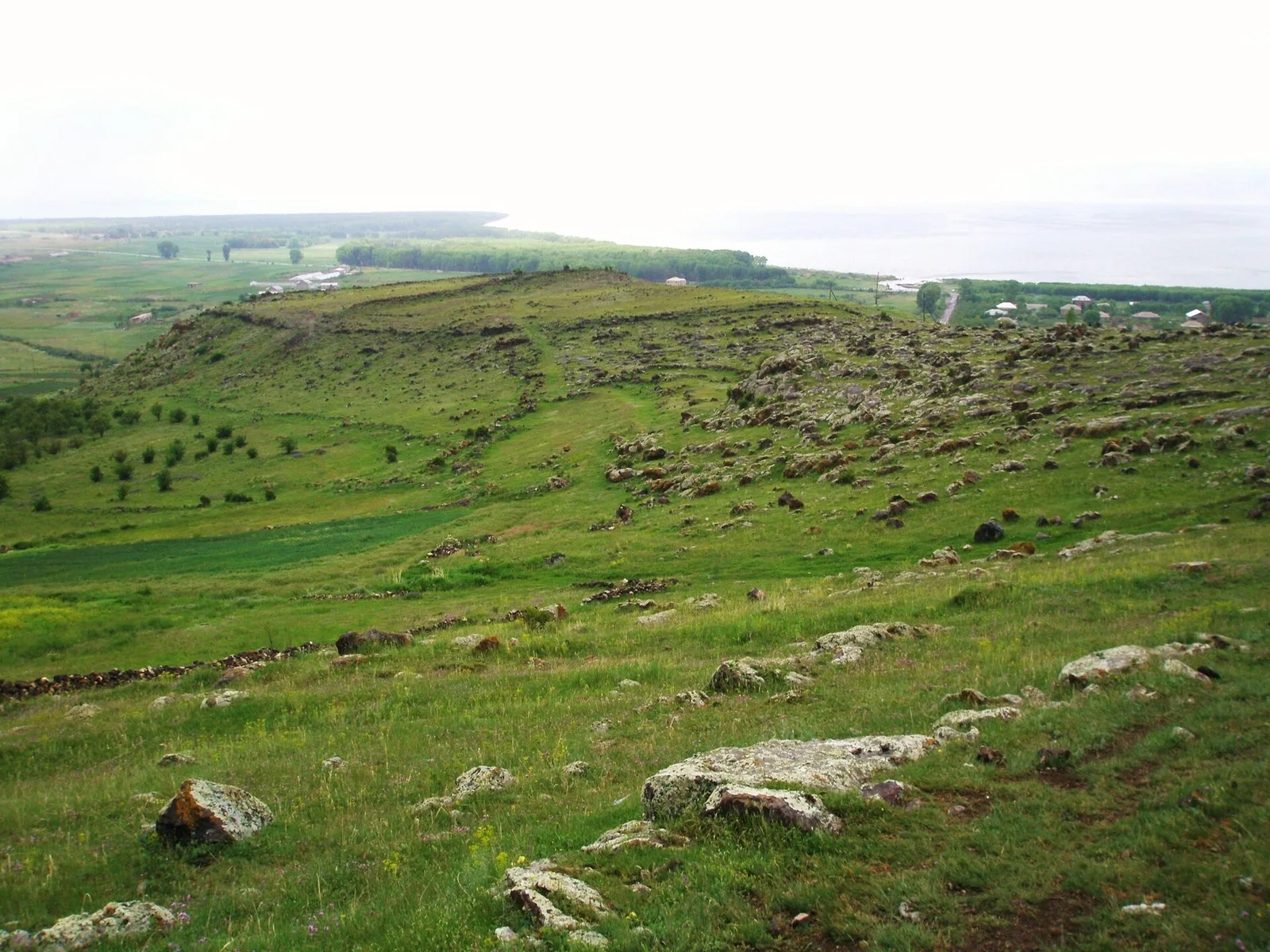
Also known as: citadelle des serpents, Felsinschrift von Zowinar, Festung Odzaberd, fortaleza de la serpiente, inscription de Rusa I, inscription de Tsovinar, inscription of Rusa I, Ishkanaberd, Kolagirən qalası, Lord's Fortress, Odzaberd, Oձաբերդ
| Type | Fortress/citadel |
|---|---|
| Period | 1500 - 500 BC |
| Country | Armenia |
| Coordinates | 40.1528° N, 45.4953° E |