
 Armenia
The Shengavit Settlement is an archaeological site in present-day Yerevan, Armenia located on a hill south-east of Yerevan Lake [1]. It was inhabited during a series of settlement phases from around 3000 BC cal to 2500 BC cal in the Kura–Araxes period of the Early Bronze Age and irregularly re-used until 2200 BC cal [1]. Excavations at the Shengavit historical site started in 1936 under the guidance of archaeologist Evegni Bayburdian who dug a trial trench at the hill which in turn led to further archaeological work to be done at the site [1]. Archaeologists so far have uncovered large cyclopean walls with towers that surrounded the settlement [1]. Within these walls were circular and square multi-dwelling buildings constructed of stone and mud-brick [1]. Inside some of the residential structures were ritual hearths and household pits, while large silos located nearby stored wheat and barley for the residents of the town [1]. Pottery found at the town typically has a characteristic black burnished exterior and reddish interior with either incised or raised designs [1].
Text: Wikipedia – 'Shengavit (site)' (revision of 2026-07-19), CC BY-SA 4.0 · sentences selected and shortened by an AI system · source →Shengavit Settlement
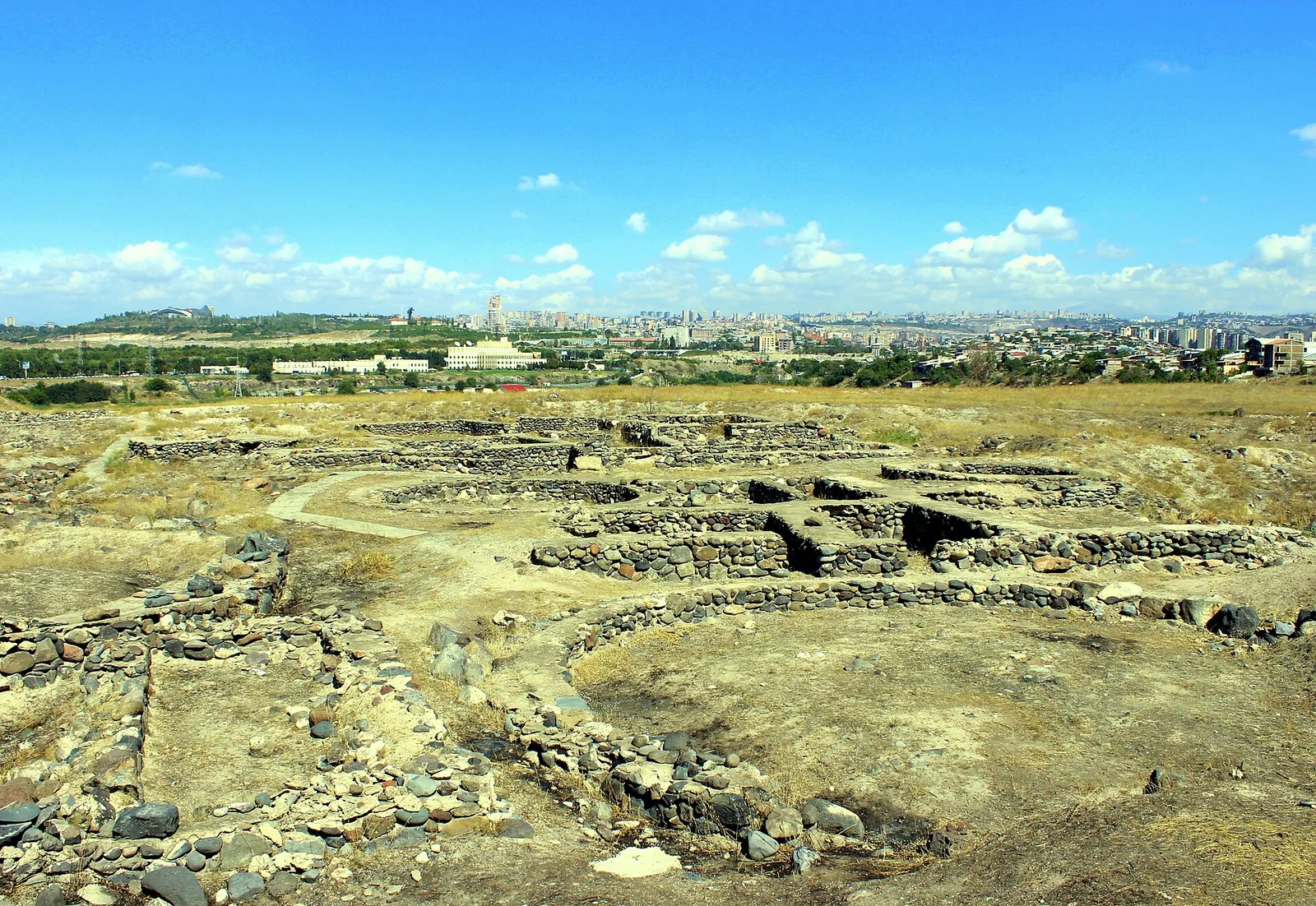
Also known as: Insediamento di Shengavit, Şengavit Yerleşimi, Shengavitnederzetting, Shengavit (site), Sjengavitbosättningen, Sjengavitnederzetting, Шенгавит (поселение), Шенгавитское поселение, Шенгавіт (поселення), შენგავითის დასახლება, Շենգավիթ, Շենգավիթ հնավայր
| Type | City/town/settlement |
|---|---|
| Period | 3000 - 1500 BC |
| Country | Armenia |
| Coordinates | 40.1565° N, 44.4769° E |