
 Spain
SpainCelsa was an important pre-Roman and Roman city located near the modern town of Velilla de Ebro, Aragon, Spain [1]. Celsa was originally an Iberian settlement, called Kelse, of the Ilergetes tribe [1]. It was located in the middle reaches of the River Ebro at a privileged position on the natural route from the coast to the peninsula [1]. It was sited on terraces rising from the river and dominating a strategic ford [1]. Marcus Emilius Lepidus, governor of Hispania Citerior, founded a colony here in 44 BC with discharged veterans of the legions [1]. Whole neighbourhoods have been brought to light with paved streets and blocks of houses of several floors arranged around courtyards, in Roman fashion, and rooms decorated with mosaics and paintings are numerous [1]. Roman architects carefully designed the street plan around the terraced slopes so that the streets evacuated rainwater into the Ebro because, unlike other Roman cities, it had no drains [1]. Excavations have also unearthed remains of several residential buildings of great interest, among which are the Houses of the Dolphin and of Hercules [1].
Text: Wikipedia – 'Celsa (Roman city)' (revision of 2026-07-31), CC BY-SA 4.0 · sentences selected and shortened by an AI system · source →Celsa - Roman City
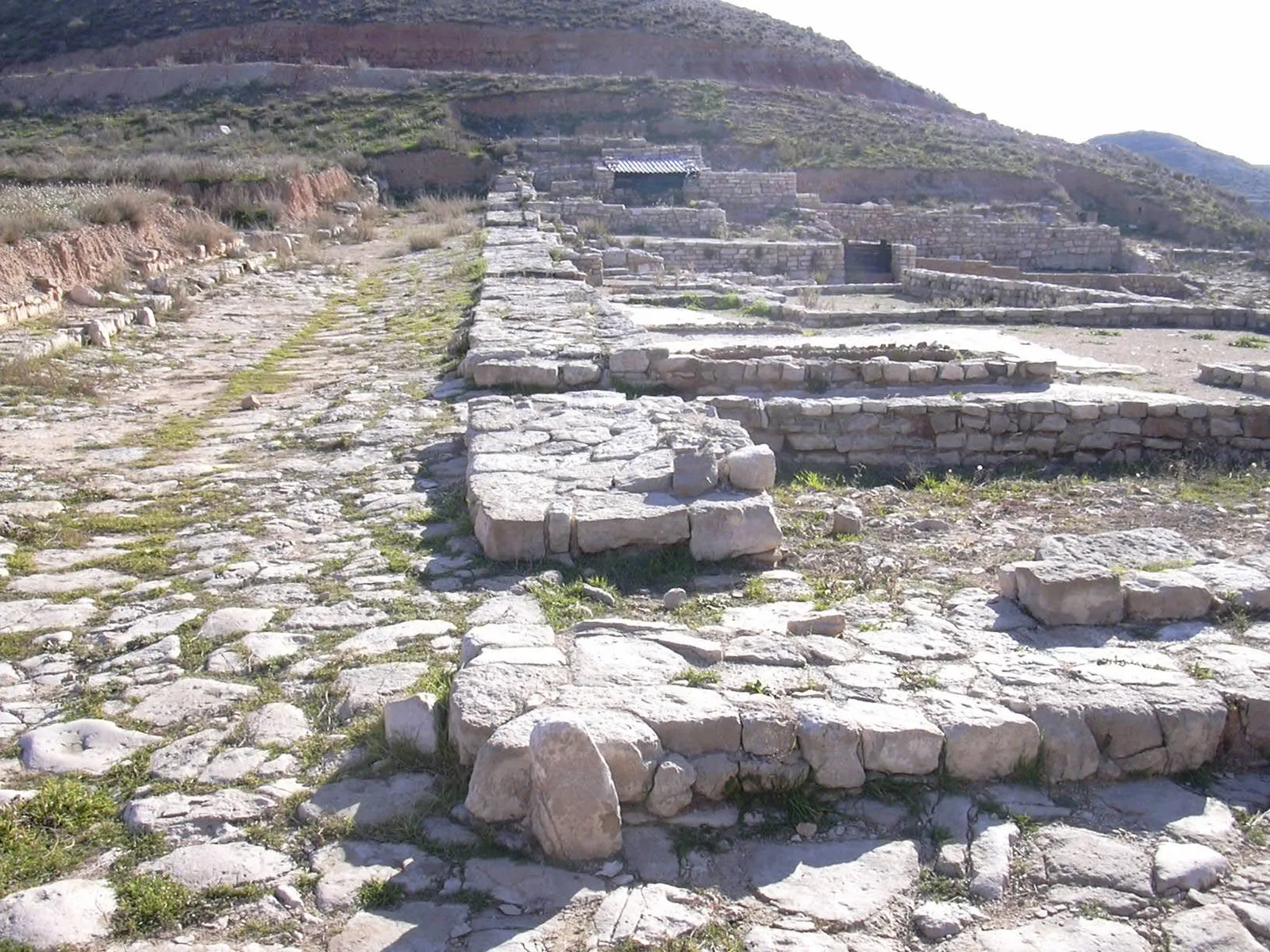
Also known as: Celsa, Celsa (colonie romaine), Celsa (Roman city), Colonia Celsa, Colonia Iulia Lepida Celsa, Colonia Iulia Victrix Celsa, Colonia Iulia Victrix Lepida Celsensis, colonia Lepida, Colonia Victrix Iulia Celsa, Colonia Victrix Iulia Lepida, Gelsa, yacimiento arqueológico romano Lépida Celsa
| Type | City/town/settlement |
|---|---|
| Period | 500 BC - 1 AD |
| Country | Spain |
| Coordinates | 41.3731° N, 0.4330° W |