
 Spain
SpainThe Caños de Carmona is a Roman aqueduct built during the first century BC to supply water from a spring in the ancient Roman city of Irippo –current Alcalá de Guadaíra– to the ancient Roman city of Hispalis –current Seville– [1]. It was later renovated and partially re-built in the twelfth century by the Almohads and it was fully operational until its demolition in 1912 [1]. Some sections survived the demolition and remain standing today [1]. The aqueduct was originally 17.5 kilometres long and was primary constructed from bricks [1]. The aqueduct was constructed approximately between 68 and 65 BC, the same period as the construction of the Walls of Seville and during Julius Caesar's term as quaestor [1]. It was renovated and partially re-built between 1171 and 1172 by Almohad caliph Abu Yaqub Yusuf [1].
Text: Wikipedia – 'Caños de Carmona' (revision of 2026-07-20), CC BY-SA 4.0 · sentences selected and shortened by an AI system · source →Caños de Carmona
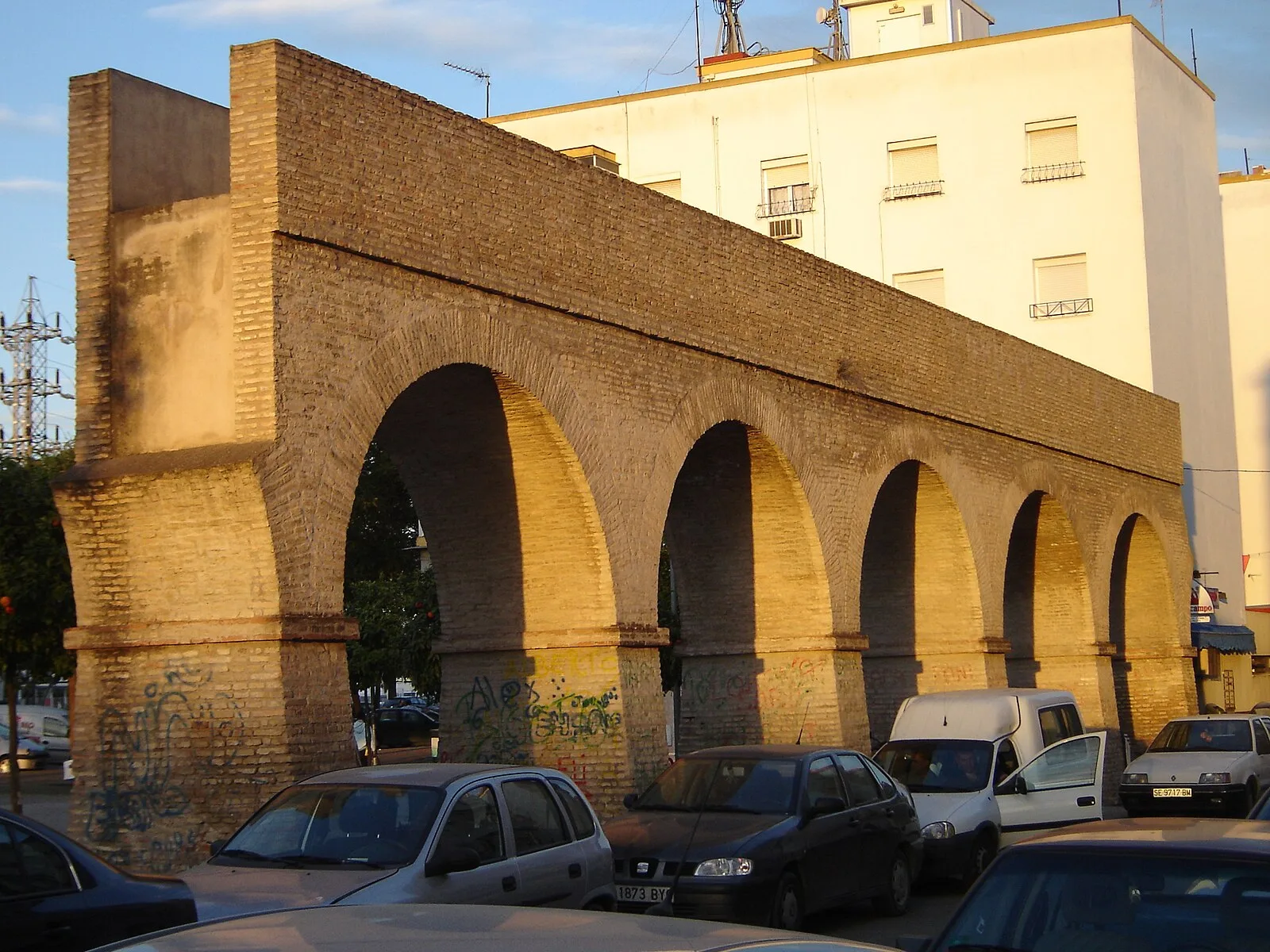
Also known as: Aqua Hispalensis, Каньос-де-Кармона
| Type | Reservoir/aqueduct/canal |
|---|---|
| Period | 500 BC - 1 AD |
| Country | Spain |
| Coordinates | 37.3885° N, 5.9826° W |