
 Spain
SpainSeville's origins trace to the 8th-7th century BC, when Phoenician merchants established a trading post called Ispal on an island in the Guadalquivir River, strategically positioned near copper and silver mines. The city grew under Roman rule as Hispalis after the decisive Battle of Ilipa in 206 BC, with Julius Caesar commissioning its first defensive walls. Archaeological remains include three marble columns from a Hadrianic temple on Marmoles Street and the Antiquarium beneath the Metropol Parasol, revealing nine wealthy Roman residences with mosaics dating to the 1st-2nd centuries AD. The name Seville derives from the Phoenician word Spal, meaning 'lowland'.
Seville
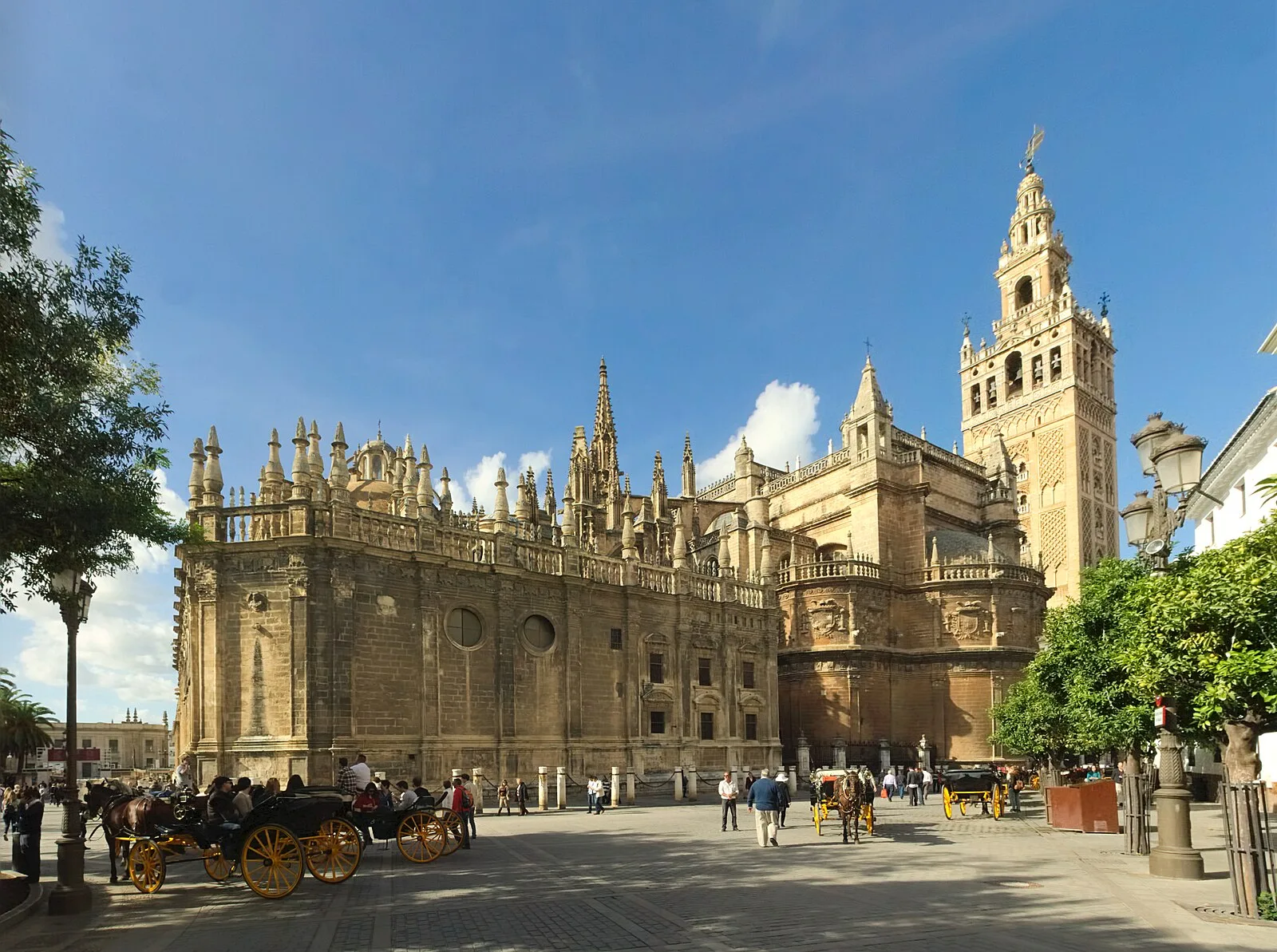
Also known as: 세비야, Hispalis, Išbilija, Ishbiliya, Ixbiliya, municipio de Sevilla, Sebilha, Sevėlėjė, Seviggia, Sevija, Seviļa, Sevile
| Type | City/town/settlement |
|---|---|
| Period | 1500 - 500 BC |
| Country | Spain |
| Coordinates | 37.3902° N, 5.9900° W |