
 Peru
PeruPikillaqta is a large Wari culture archaeological site in the Quispicanchi province of the Cusco Region of Peru [1]. Pikillaqta is located 3,200 meters above sea level in the Lucre Basin of the eastern Valley of Cusco [1]. Luis Valcarcel was the first to study Pikillaqta archaeologically—in 1927—but only found two green-stoned figurines and did not publish his findings until years later [1]. Most questions and current knowledge about Pikillaqta were finally answered when Gordon McEwan excavated Pikillaqta on three separate occasions: in 1978-79, 1981–82, and 1989–90 [1]. Canals, reservoirs, aqueducts were at Pikillaqta along with terraces and cultivated fields [1]. Pikillaqta was garrisoned and all five entrances to the valley accessible from the altiplano were heavily fortified [1]. A few burials were uncovered during excavations at Pikillaqta [1].
Text: Wikipedia – 'Pikillaqta' (revision of 2026-07-18), CC BY-SA 4.0 · sentences selected and shortened by an AI system · source →Pikillaqta
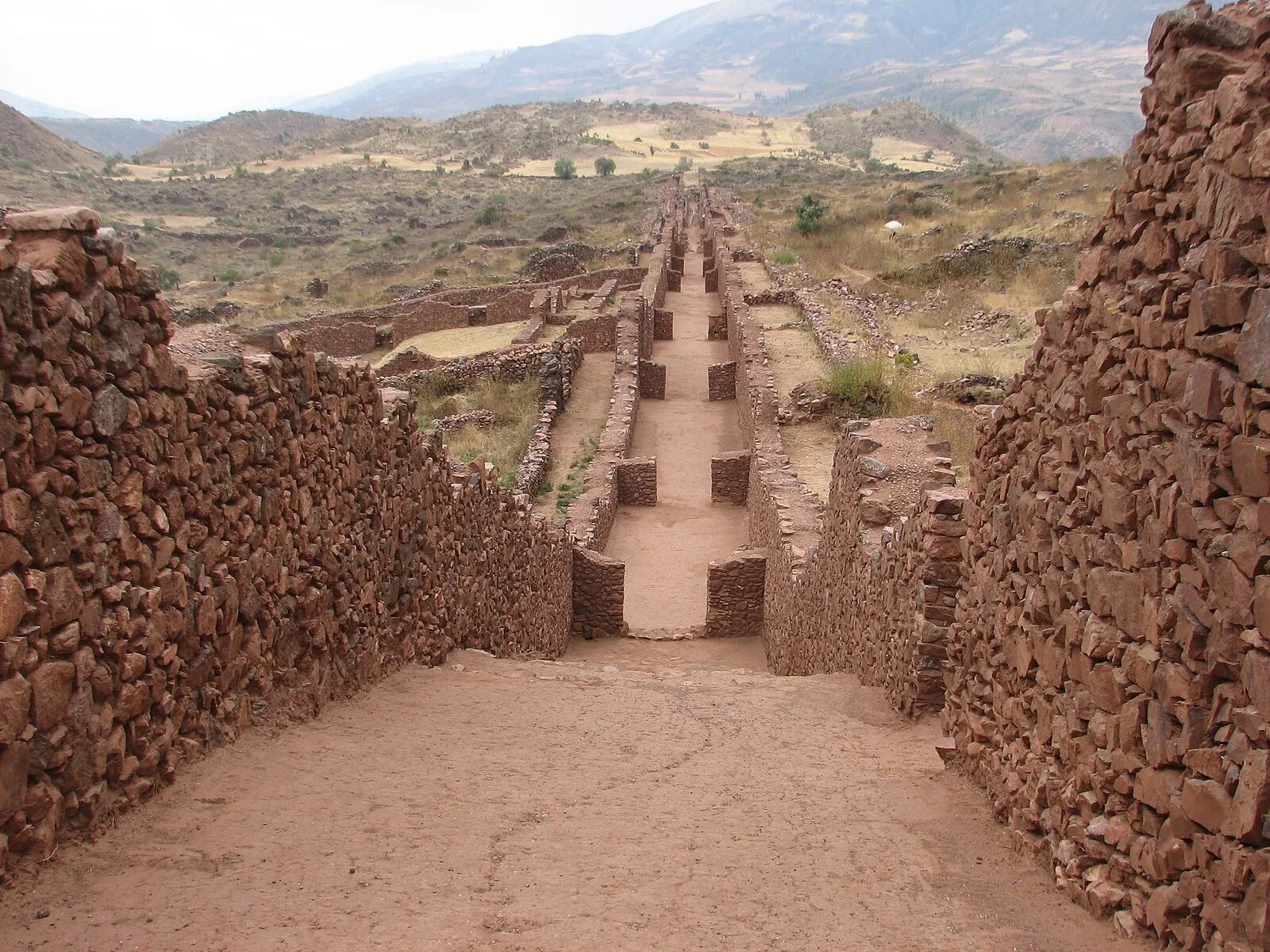
Also known as: Pikillacta, Piquillacta, Пикилакта, Пикильякта, პიკილიაკტა, პიკილიაქტა, פיקייקאטה, ピキリャクタ
| Type | City/town/settlement |
|---|---|
| Period | 500 - 1000 AD |
| Country | Peru |
| Coordinates | 13.6127° S, 71.7174° W |