

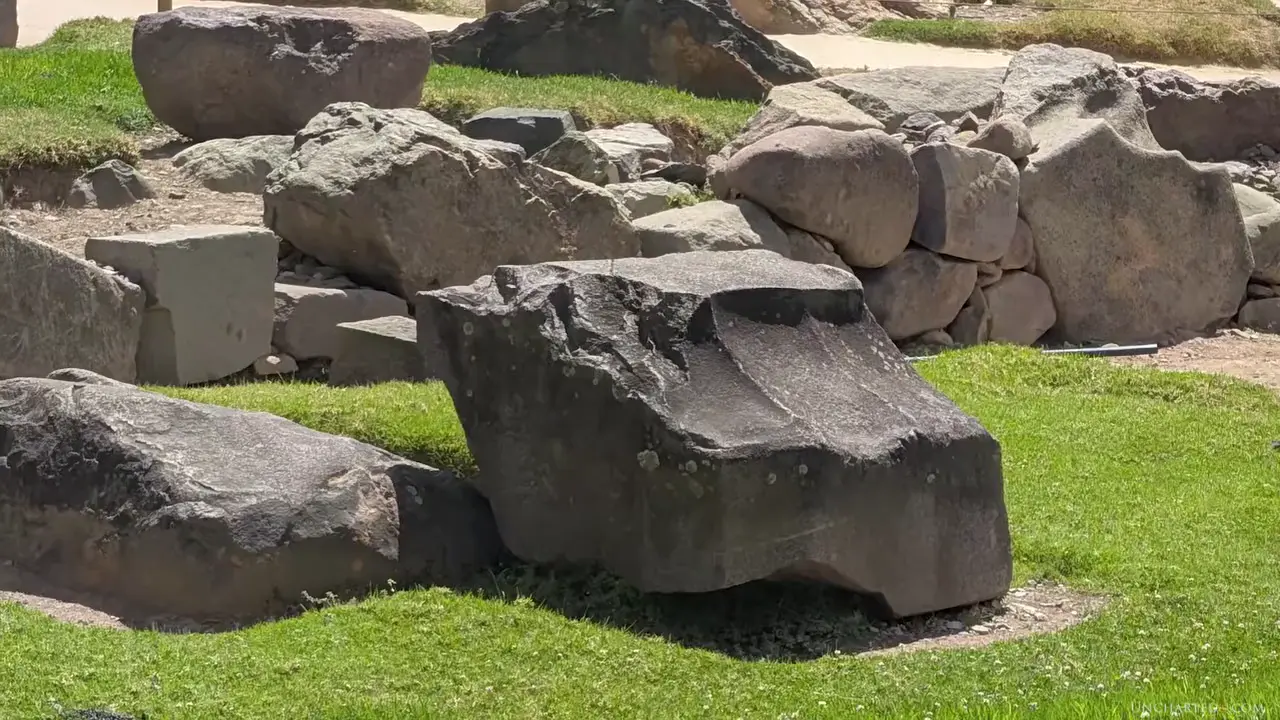
Granite quarry located 4.5 kilometers in straight line from Sun Temple, actual transport route approximately 10 kilometers crossing steep terrain and Urubamba River. Granite quarry located 4.5 kilometers in straight line from Sun Temple, actual transport route approximately 10 kilometers crossing steep terrain and Urubamba River Quarry situated at 10,000-13,000 feet elevation on steep mountainside accessible only by switchback trails Twenty or more massive granite blocks abandoned along transport route known locally as 'tired stones' or 'lazy stones'
Ollantaytambo features MEGALITHIC granite blocks scattered across steep slopes. Scoop marks and extraction evidence show precision techniques πΏπ Evidence of transport across rugged terrain!
Key facts claimed:
- Granite quarry located 4.5 kilometers in straight line from Sun Temple, actual transport route approximately 10 kilometers crossing steep terrain and Urubamba River
- Quarry situated at 10,000-13,000 feet elevation on steep mountainside accessible only by switchback trails
- Twenty or more massive granite blocks abandoned along transport route known locally as 'tired stones' or 'lazy stones'
- Individual abandoned blocks weigh approximately 50-100 tons, with largest examples in the 80-100 ton range
- Blocks show evidence of extraction with marks visible on some specimens
Key Facts
- Granite quarry located 4.5 kilometers in straight line from Sun Temple, actual transport route approximately 10 kilometers crossing steep terrain and Urubamba River
- Quarry situated at 10,000-13,000 feet elevation on steep mountainside accessible only by switchback trails
- Twenty or more massive granite blocks abandoned along transport route known locally as 'tired stones' or 'lazy stones'
- Individual abandoned blocks weigh 25-120 tons, with largest examples in 80-100 ton range
- Blocks show evidence of attempted extraction with wedge and chisel marks visible on some specimens
- Lower quarry area contains staging platform constructed from massive boulders indicating block preparation zone
- High-quality solid pink granite blocks distinguished from surface-level fractured stone in quarry
- Modern road construction forced to route around abandoned blocks rather than move them
- Abandoned blocks show similar erosional patterns and surface spalling to Egyptian monuments dated millennia earlier
- Blocks partially shaped at quarry then moved to site for final finishing, identical process to Egyptian construction
- No archaeological evidence supporting use of wheels, pulleys, or livestock for transport despite scholarly claims
- Modern comparative example: 90-ton Scottish locomotive required specialized cranes, multiple trailers, and extensive infrastructure for transport
Related site: Ollantaytambo — view location, images, and history on the Ancient Nerds map.
Source: HOW were 80 ton granite blocks moved 10km in the Andes? by UnchartedX