
 Italy
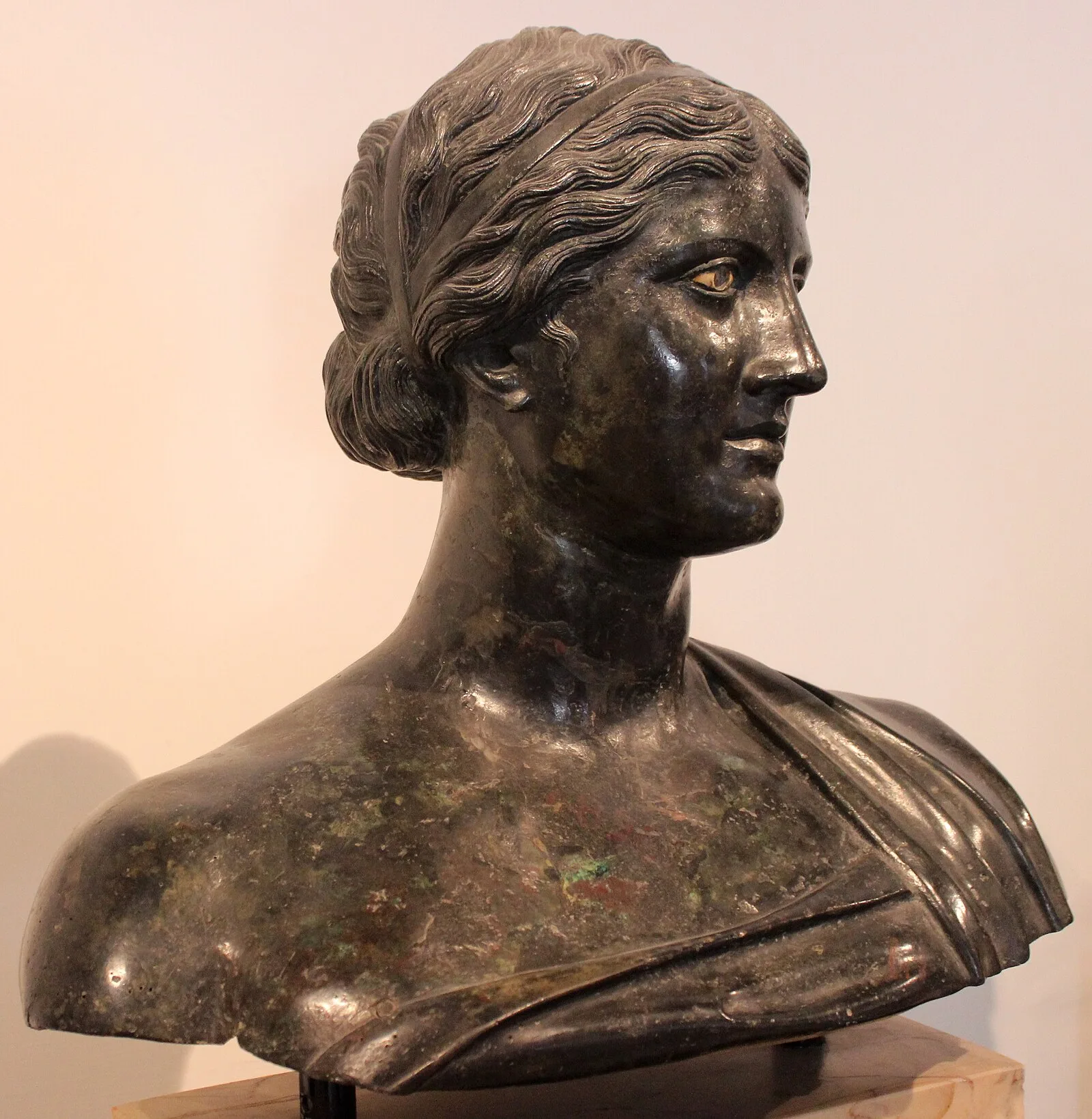
ItalyThe Villa of the Papyri was an ancient Roman villa in Herculaneum, in what is now Ercolano [1]. It is named after its unique library of papyrus scrolls, discovered in 1750 [1]. The Villa was considered to be one of the most luxurious houses in all of Herculaneum and in the Roman world [1]. Its luxury is shown by its exquisite architecture and by the large number of outstanding works of art discovered, including frescoes, bronzes and marble sculpture which constitute the largest collection of Greek and Roman sculptures ever discovered in a single context [1]. It was situated on the ancient coastline below the volcano Vesuvius with nothing to obstruct the view of the sea [1]. In AD 79, the eruption of Vesuvius covered all of Herculaneum with up to 30 metres of volcanic material from pyroclastic flows [1]. The villa housed a collection of at least 80 sculptures of magnificent quality [1]. The Villa of the Papyri was discovered in 1750 by farmers when digging a well [1].
Text: Wikipedia – 'Villa of the Papyri' (revision of 2026-08-16), CC BY-SA 4.0 · sentences selected and shortened by an AI system · source →Villa of the Papyri
Also known as: Casa dei Papiri, Papüüruste villa, Papyri Herculanenses, Papyrus Herculanensis, Papyrussernes Villa, Papyrusten huvila, Papyrusten villa, Papyrusvilla, Papyrusvillaen, Pisonenvilla, Vila dels Papirs, Vila dos papiros
| Type | Residence/villa/farmhouse |
|---|---|
| Period | 500 BC - 1 AD |
| Country | Italy |
| Coordinates | 40.8069° N, 14.3460° E |