
 Iran
IranPersepolis or Parseh was the ceremonial capital of the Achaemenid Empire (c. 550–330 BC) [1]. According to one account, Alexander deliberately set fire to Persepolis to avenge the destruction of Athens by the Persians; according to another, the fire was started at the urging of Thaïs, a courtesan [1]. Darius I's construction of Persepolis was carried out parallel to that of the Palace of Susa [1]. Grey limestone was the main building material used at Persepolis [1]. The first scientific excavations at Persepolis were carried out by Ernst Herzfeld and Erich Schmidt on behalf of the Oriental Institute of the University of Chicago [1]. Between 1933 and 1934, the excavations of the Oriental Institute discovered the administrative archives of Persepolis [1]. The buildings at Persepolis include three general groupings: military quarters, the treasury, and the reception halls and occasional houses for the King [1].
Text: Wikipedia – 'Persepolis' (revision of 2026-09-25), CC BY-SA 4.0 · sentences selected and shortened by an AI system · source →Persepolis
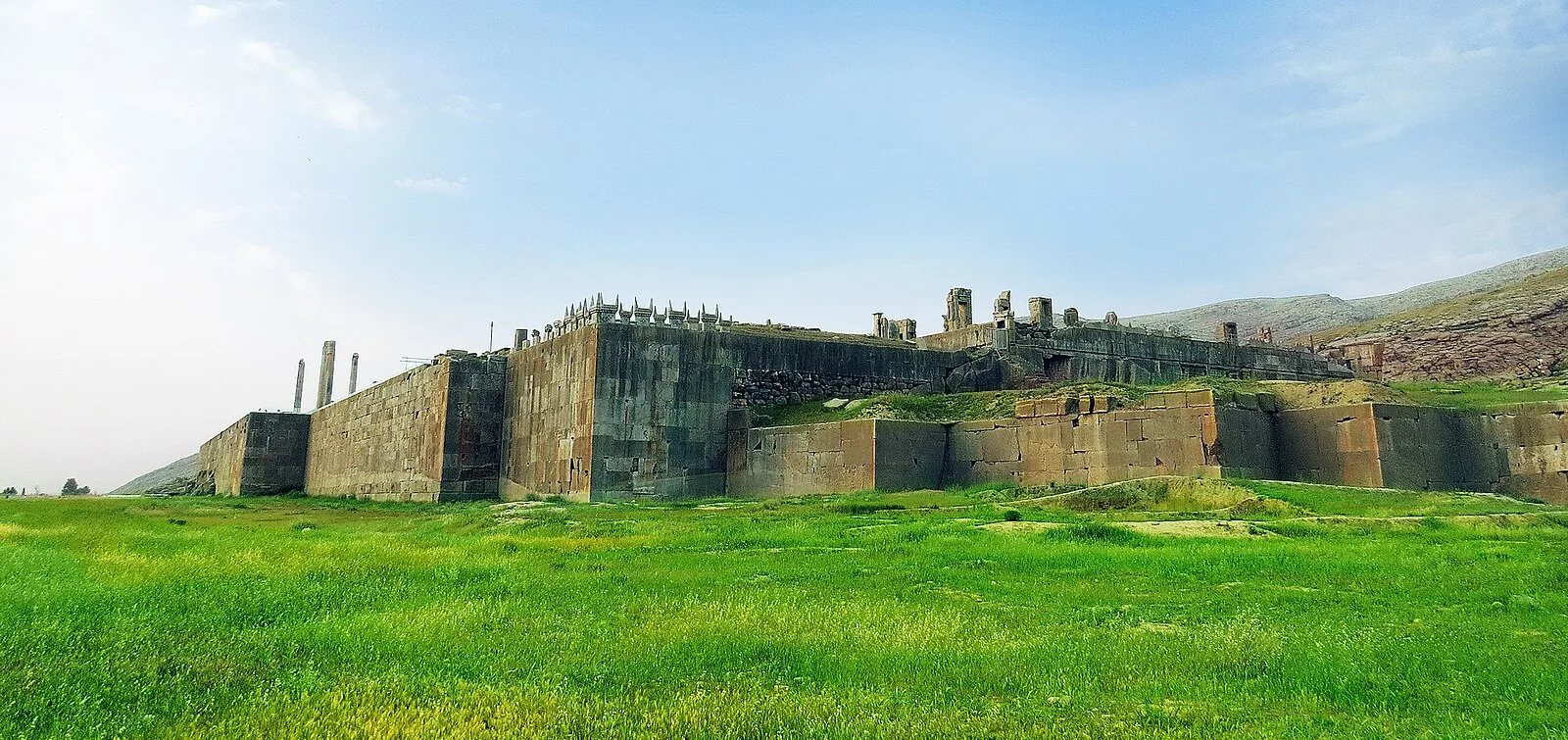
Also known as: 페르세폴리스, Čehel Menāra, Čəmšidi taxt, Chehel Menar, Chelmenar, Chel Menar, Chihilminar, Chihil Minar, Chilminar, Chil Minar, Chilminara, Cihilminar
| Type | Palace |
|---|---|
| Period | 1500 - 500 BC |
| Country | Iran |
| Coordinates | 29.9357° N, 52.8920° E |