
 Iran
IranThe two inscription panels of Ganjnameh, carved in stone in 20 lines on a granite rock above a creek, measure 2 × 3 m each [1]. Written in Old Persian, Neo-Babylonian and Neo-Elamite, except for the different royal name, the contents of the two inscriptions are identical; Ahura Mazda receives praise, and lineages and conquests are listed [1]. The site received its name from locals, who believed that the inscriptions contained the secret code to a hidden treasure [1].
Text: Wikipedia – 'Ganjnameh' (revision of 2025-08-31), CC BY-SA 4.0 · sentences selected and shortened by an AI system · source →Ganjnameh Ancient Inscriptions
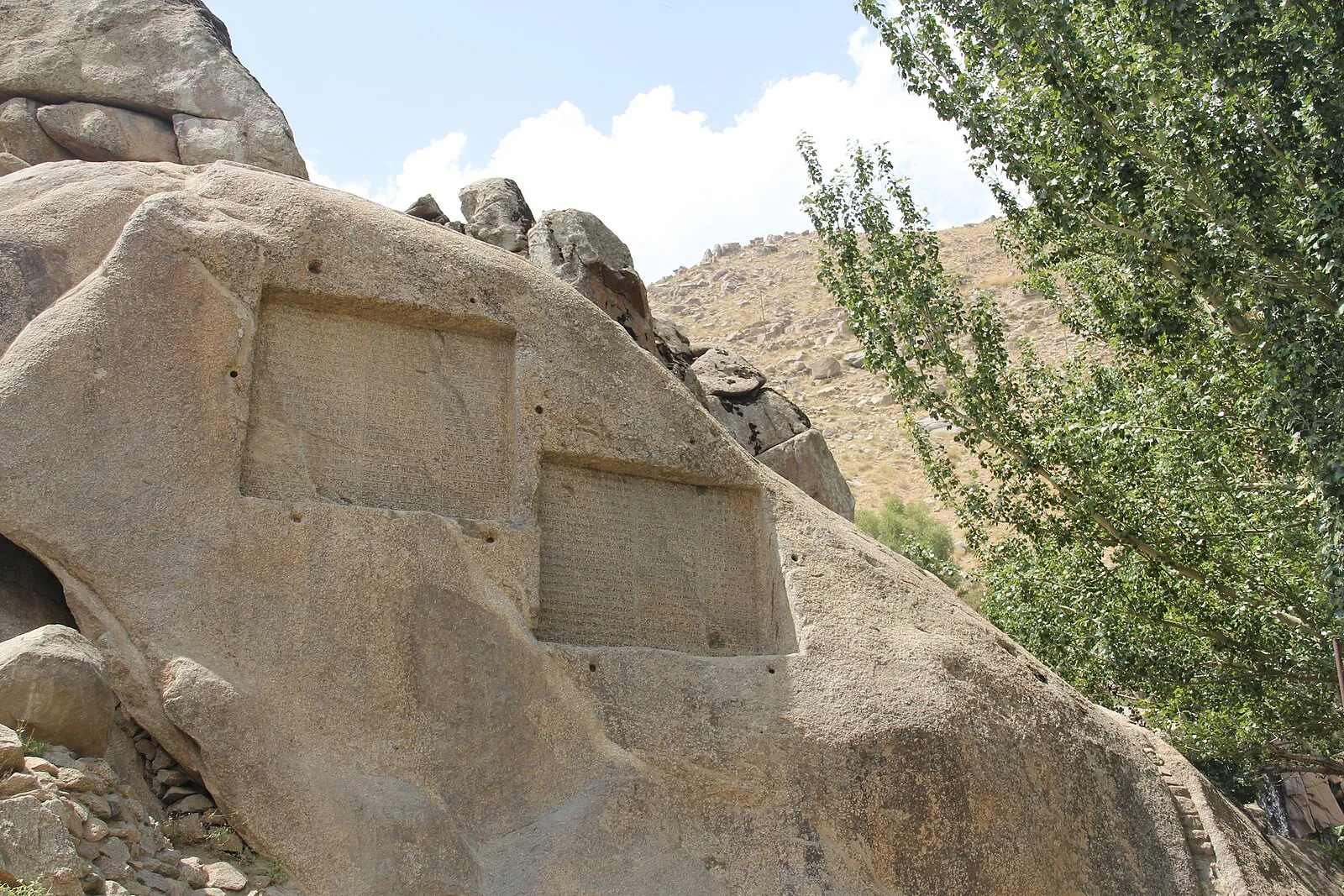
Also known as: Gandschnāme, Gandsch Nameh, Gandž Name, Ganjnameh, Ganj Nameh, Ganj Nameh inscriptions, Ganjnoma tosh bitiklari, Gencnâme, Gencnâme Yazıtı, Ганджнаме, Ганҷнома, כתובת גנג'נאמה
| Type | Rock relief/carving |
|---|---|
| Period | < 4500 BC |
| Country | Iran |
| Coordinates | 34.7626° N, 48.4379° E |