
 Iran
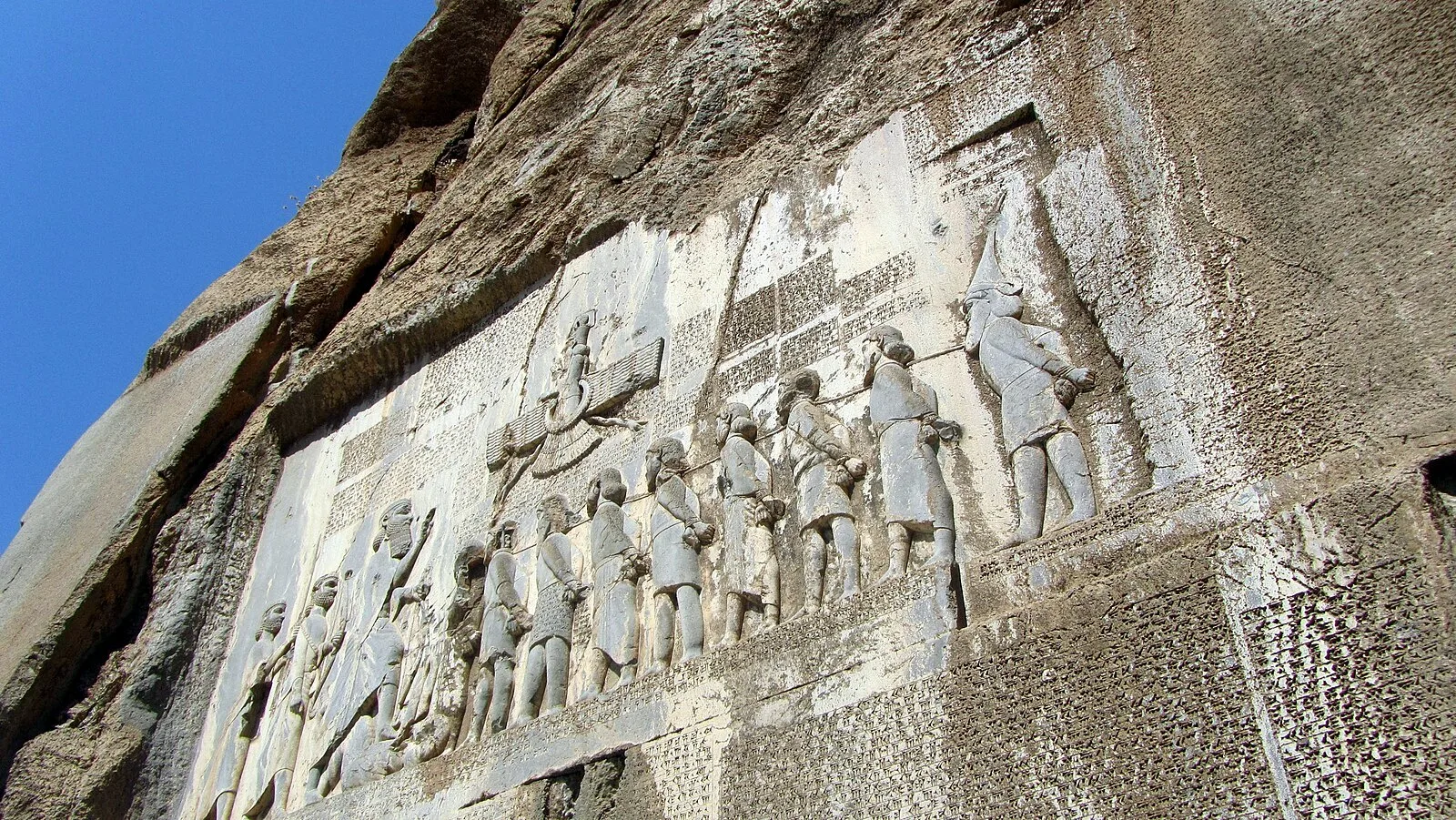
IranThe Behistun Inscription is a multilingual rock relief carved c. 520 BC on a cliff face 100 m above an ancient road at Mount Behistun in Kermanshah Province, Iran, commissioned by Darius I the Great [1] [2] [3]. Measuring 25 m long and 15 m high, it records the king's victory over rebel satraps in three cuneiform scripts -- Old Persian (414 lines), Elamite, and Akkadian (112 lines) -- alongside a relief showing Darius trampling a defeated king before nine bound captives [1] [4]. Sir Henry Rawlinson copied the texts, making it the key to deciphering cuneiform, much as the Rosetta Stone unlocked Egyptian hieroglyphs [1] [2] [3]. It was designated a UNESCO World Heritage Site in 2006 [1] [2].
Behistun Inscription
Also known as: 베히스툰 비문, 베히스툰 비석, Bagastana, Behistan, Behistoen-inskripsie, Behistoun, Behistun, Behistunas gravējums, Behistunas uzraksts, Behistungo inskripzioa, Behistun-indskrifter, Behistuninnskriftene
| Type | Rock relief/carving |
|---|---|
| Period | 1500 - 500 BC |
| Country | Iran |
| Coordinates | 34.3906° N, 47.4364° E |