
 Iran
IranThe Apadana Palace is a large hypostyle hall at Persepolis, Iran, dating to the first half of the 5th century BC [1]. It was designed by Darius the Great and completed by Xerxes I, making it one of the oldest structures in the city [1]. The hall covered approximately 1,000 square metres and was supported by 72 columns, each standing 24 metres tall [1]. The palace was destroyed in 331 BC by the army of Alexander the Great [1]. Modern scholarship demonstrates the metaphorical nature of the Apadana reliefs as idealised social orders [1].
Apadana Palace
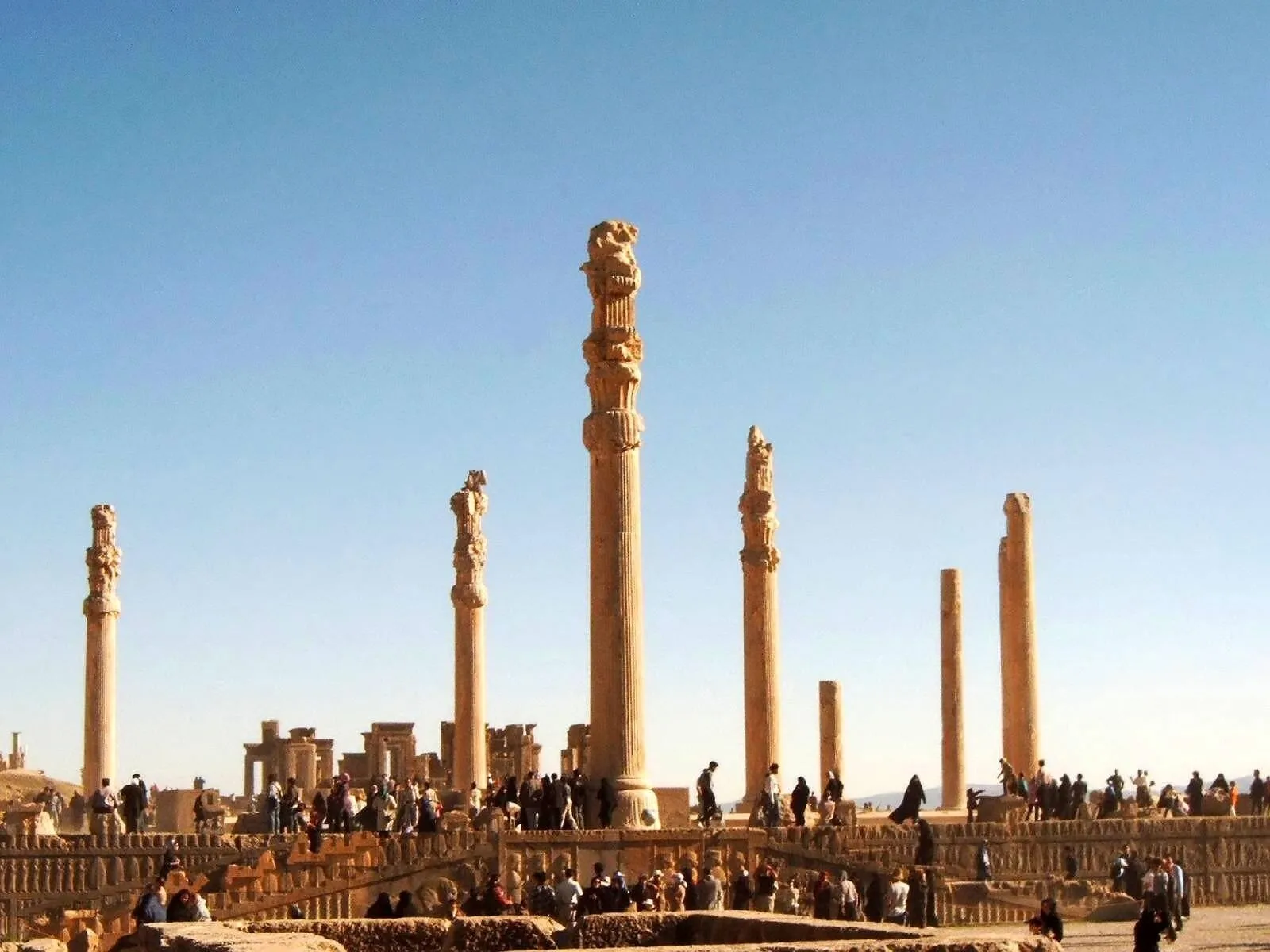
Also known as: 아파다나, abadana, Apadana, Apadana zalı, Ападана, აპადანა, Պերսեպոլիսի գահական դահլիճ, אפדנה, آپادانا, أبادانا, اپادانا, کاخ آپادانا
| Type | Palace |
|---|---|
| Period | 1500 - 500 BC |
| Country | Iran |
| Coordinates | 29.9355° N, 52.8897° E |