
 Iran
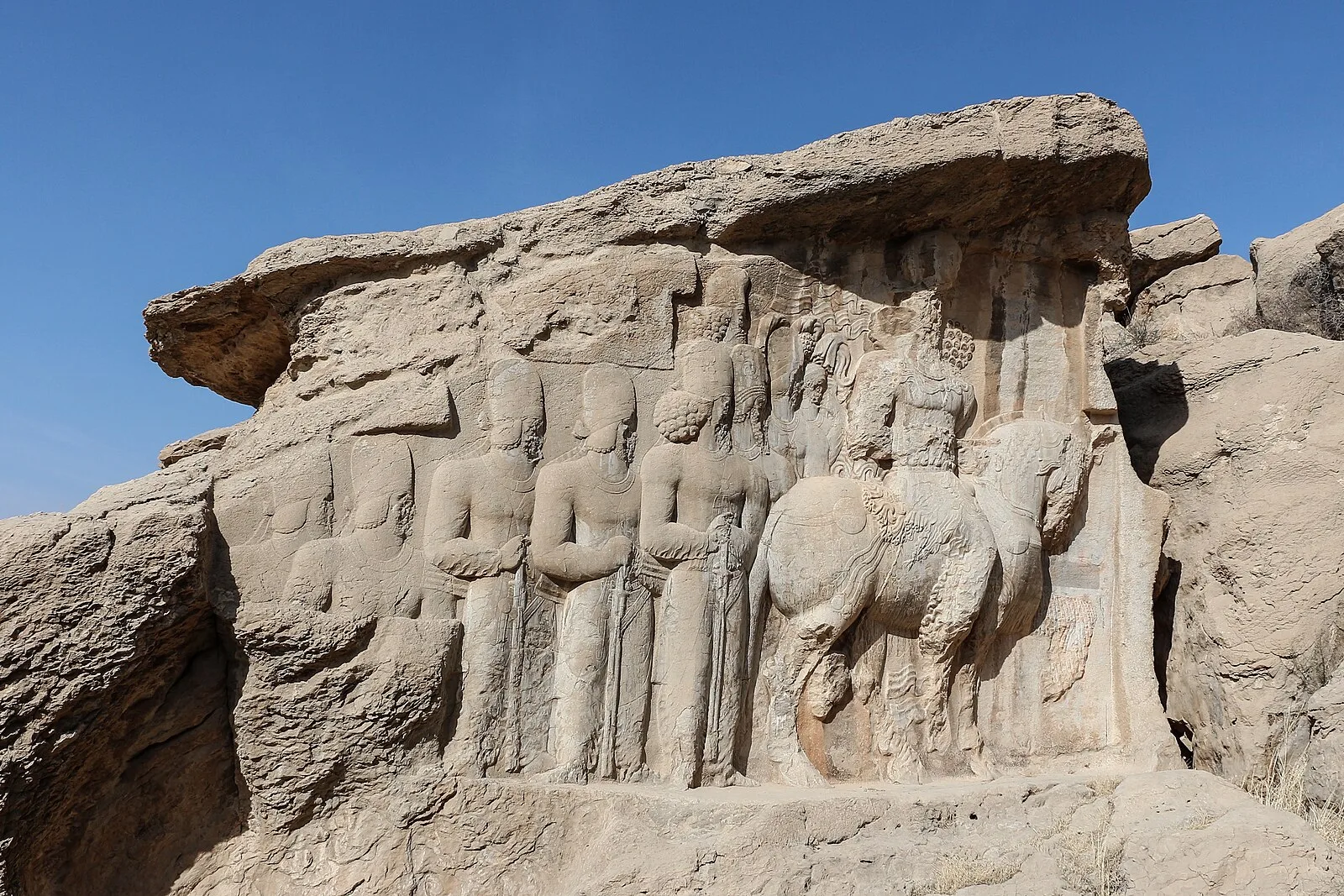
IranNaqsh-e Rajab is an archaeological site west of Istakhr and about 5 km north of Persepolis in Fars province, Iran [1]. Naqsh-e Rajab is the site of four limestone rockface inscriptions and rock-cut bas-reliefs that date to the early Sasanian Empire [1]. The earliest is the investiture scene of Ardashir I, the first Sasanian King of Kings [1]. The next relief, in terms of date, is the investiture scene of Shapur, where the king is depicted on horseback receiving a diadem or "ring of power" from Ahura Mazda [1]. The second relief commissioned by Shapur I is situated directly opposite the first [1]. It depicts Shapur I on horseback accompanied by 9 individuals on foot [1]. The latest relief is a bust of the Zoroastrian high priest Kerdir [1]. The relief is dated to the reign of Bahram II, and includes a 31-line inscription in Middle Persian outlining Kerdir's career under the Sasanian monarchs Shapur I, Hormizd I, Bahram I and Bahram II [1].
Text: Wikipedia – 'Naqsh-e Rajab' (revision of 2026-09-17), CC BY-SA 4.0 · sentences selected and shortened by an AI system · source →Naqsh-e Rajab
Also known as: Nakş-ı Recep, Naqsch-e Radschab, Naqsy-e Rajab, Накше-Раджаб, Накш-і-Раджаб, Нақши Раҷаб, Нәкъше-Рәҗәб, נקש-י רג'ב, نقش رجب, नक्श-ए रज्जबी, ナクシェ・ラジャブ, ナグシェ・ラジャブ
| Type | Rock relief/carving |
|---|---|
| Period | 1 - 500 AD |
| Country | Iran |
| Coordinates | 29.9663° N, 52.8879° E |