
 Iran
IranThe Anahita Temple is the name of one of two archaeological sites in Iran popularly thought to have been attributed to the ancient Iranian deity Anahita [1]. The larger and more widely known of the two is located at Kangāvar in Kermanshah Province [1]. The remains at Kangavar display Persian architectural designs [1]. Dispute exists among scholars on the correct identity of the main structure at the site [1]. Excavation first began in 1968, by which time the "large structure with its great Ionic columns set on a high stone platform" had been associated with a comment by Isidore of Charax, that refers to a "temple of Artemis" [1]. References to Artemis in Iran are generally interpreted to be references to Anahita, and thus Isidore's "temple of Artemis" came to be understood as a reference to a temple of Anahita [1].
Text: Wikipedia – 'Temple of Anahita, Kangavar' (revision of 2026-08-14), CC BY-SA 4.0 · sentences selected and shortened by an AI system · source →Anahita Temple
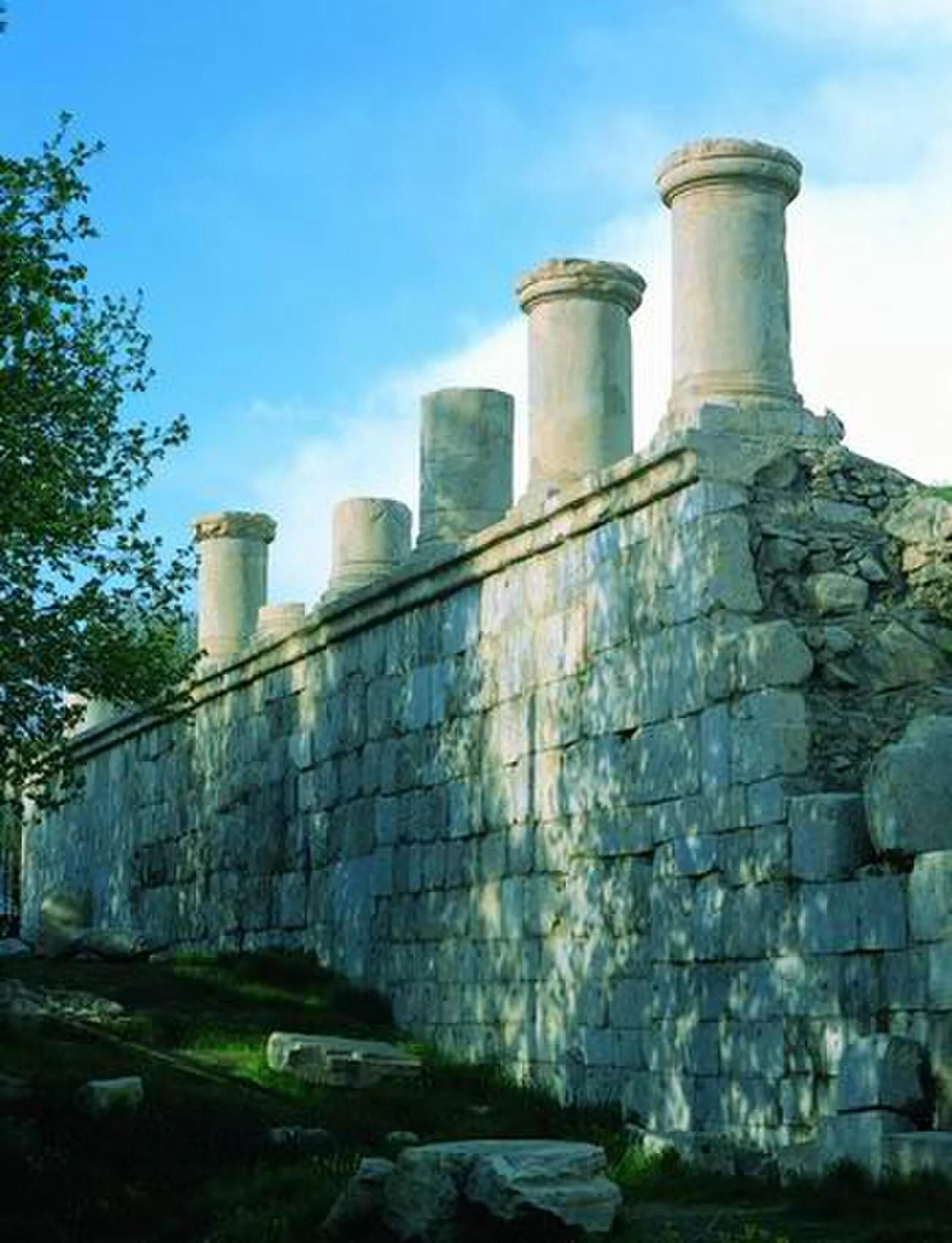
Also known as: Anahita Tapınağı, Anahita Temple (Kangavar), Greek Temple (Kangavar), Historic Monument of Kangavar, Kangavar Complex, Kangavar Palace, Ma‘bad-e Ānāhītā, Tempel van Anahita (Kangavar), Tempio di Anahita, Temple d'Anahita, Temple of Anahita at Kangavar, Temple of Anahita (Kangavar)
| Type | Temple complex |
|---|---|
| Period | 1 - 500 AD |
| Country | Iran |
| Coordinates | 34.5016° N, 47.9603° E |