
 Greece
The Tomb of Menecrates or Monument of Menecrates is an Archaic-period cenotaph in Corfu built around 600 BC in the ancient city of Korkyra [1]. The tomb and the funerary sculpture of a lion were discovered in 1843 during demolition works by the British army in the United States of the Ionian Islands who were demolishing a Venetian-era fortress in the site of Garitsa hill in Corfu [1]. According to an Ancient Greek inscription found on the grave, the tomb was a monument built by the ancient Korkyreans in honour of their proxenos Menecrates, son of Tlasias, from Oiantheia [1]. Both the tomb and the sculpture are made of local limestone [1]. The tomb is cylindrical with a conical roof [1]. The cylindrical part consists of five circular rings made of stones of equal thickness featuring isodomic construction [1]. The monument is 1.4 m in height and 4.7–4.9 m in diameter [1]. The inscription is one of the oldest extant in Greece [1].
Text: Wikipedia – 'Tomb of Menecrates' (revision of 2026-06-02), CC BY-SA 4.0 · sentences selected and shortened by an AI system · source →Tomb of Menecrates
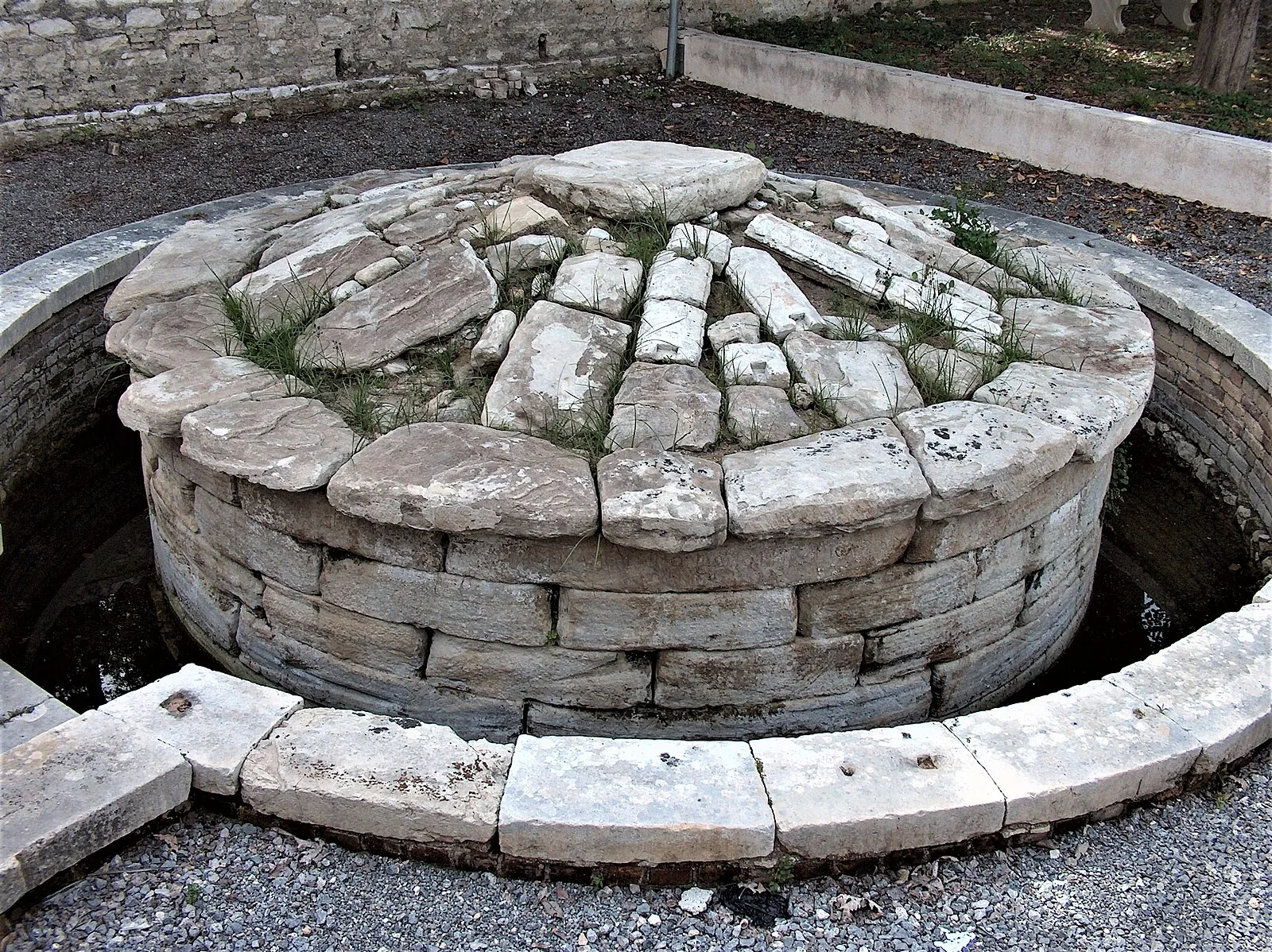
Also known as: Grab des Menecrates, Tombe de Ménécratès, Μνημείο Μενεκράτη, Μνημείο του Μενεκράτη, Гробниця Менекрата, قبر مينيكريتيس
| Type | Necropolis/tombs complex |
|---|---|
| Period | 1500 - 500 BC |
| Country | Greece |
| Coordinates | 39.6170° N, 19.9193° E |