
 Germany
The Trier Amphitheater is a Roman amphitheater in Trier, Germany [1]. The structure which was dug into the side of a hill was erected around the 2nd century A.D during the rule of Antoninus Pius [1]. Measuring 120 by 145 meters, the amphitheatre could accommodate approximately 20,000 spectators and is the 10th largest Roman amphitheatre still intact [1]. It was built into what was at the time the city's wall, to the east of the modern and Roman city centre [1]. When Constantius Chlorus moved to Trier, Germany around 293 during the Tetrarchy he renovated the amphitheater [1]. On the eastern bank of the amphitheatre, a small burial ground was discovered in 1996, containing the graves of 46 people [1].
Text: Wikipedia – 'Trier Amphitheater' (revision of 2026-07-24), CC BY-SA 4.0 · sentences selected and shortened by an AI system · source →Trier Amphitheatre
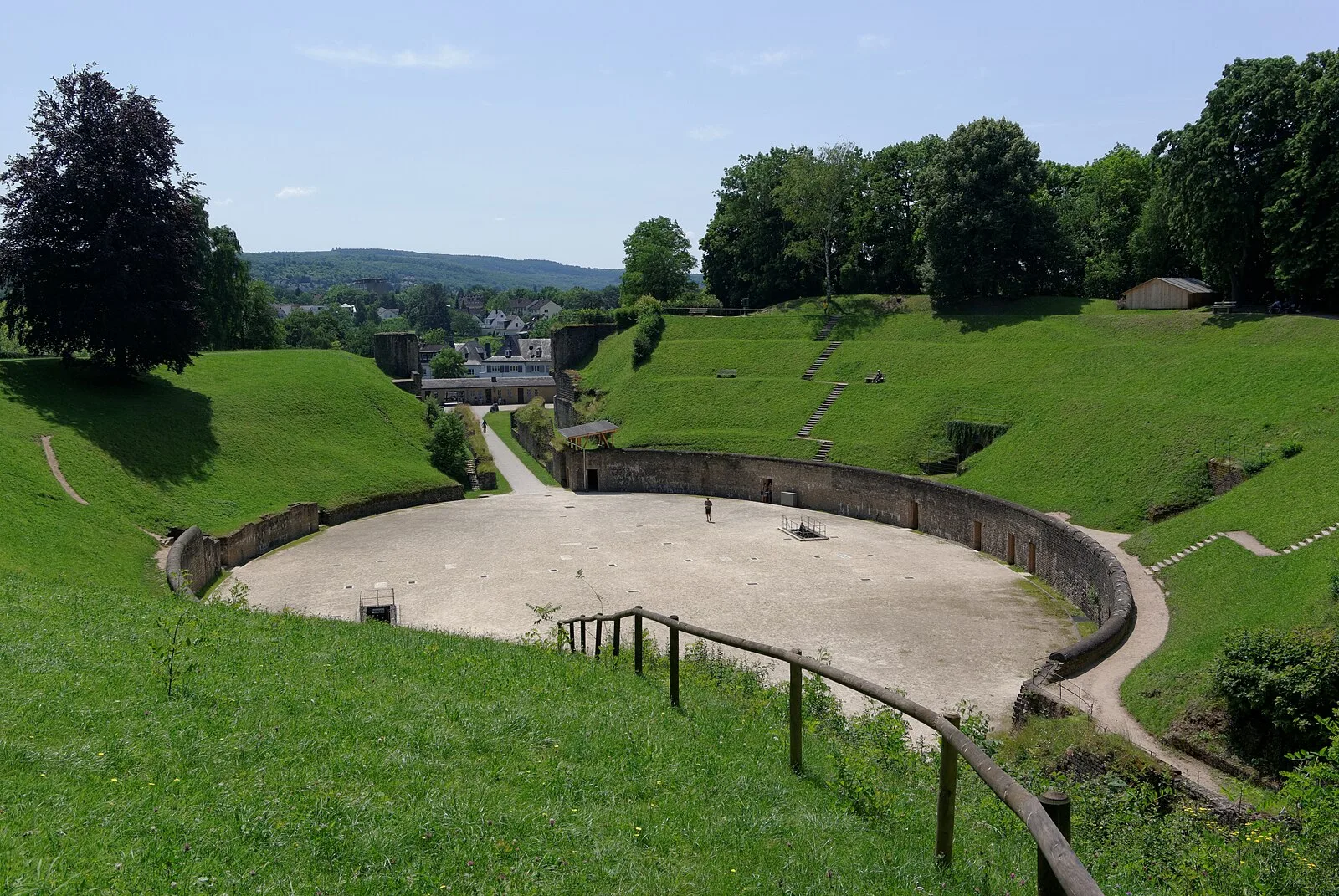
Also known as: Amfiteatar u Trieru, Amfiteater fan Trier, amfiteater v Trieru, Amfiteatre de Trèveris, Amfiteatret i Trier, Amfiteatr rzymski w Trewirze, Amfiteátrum (Trier), Amfitheater (Trier), Amfitheater van Trier, Amphitheater, Amphitheater (Tréier), Amphitheater (Trier)
| Type | Theatre |
|---|---|
| Period | 1 - 500 AD |
| Country | Germany |
| Coordinates | 49.7481° N, 6.6492° E |