
 Germany
The Kalkrieser Berg or Schmittenhöhe is considered by archaeologists to be the likely site of the Battle of the Teutoburg Forest [1]. The Romans' saltus Teutoburgiensis (Teutoburg Pass) is taken to refer to the strip of cultivated land with a width of 220 m which lies between the Kalkrieser Berg and a large area of wetland to its north [1]. Since the start of official explorations in 1988 more than 5,500 Roman objects, mainly pieces of military equipment, have been found in an area covering 17 km2: The objects include Roman swords and daggers, parts of javelins and spears, arrowheads, sling stones, fragments of helmets, soldiers' boot nails, belts, chainmail hooks [1]. Among the most significant items is the earliest known Imperial face-mask [1]. A coin struck to commemorate Augustus's adoption of his grandsons Lucius and Gaius in 2 BC has also been found at Kalkriese [1]. In 2016, an archaeological investigation found eight aurei close together at the site, adding to the seven Roman gold coins previously found and tending to corroborate the identification of Kalkriese as the site of the battle [1].
Text: Wikipedia – 'Kalkriese' (revision of 2024-10-30), CC BY-SA 4.0 · sentences selected and shortened by an AI system · source →Kalkriese
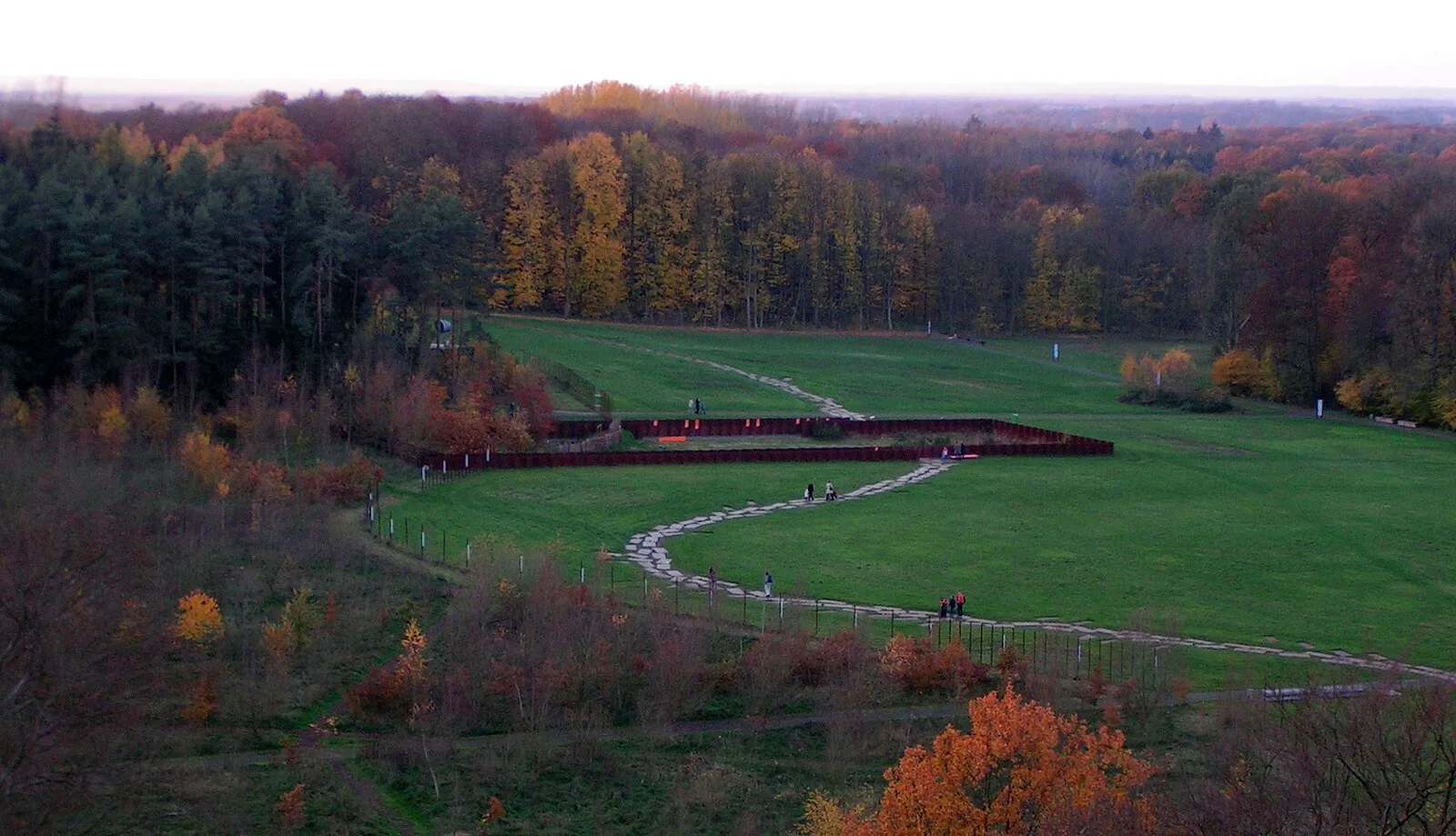
Also known as: Kalkreese, Kalkriese (Bramsche), Калкриз, カルクリーゼ
| Type | City/town/settlement |
|---|---|
| Period | 1 - 500 AD |
| Country | Germany |
| Coordinates | 52.4081° N, 8.1290° E |