
 France
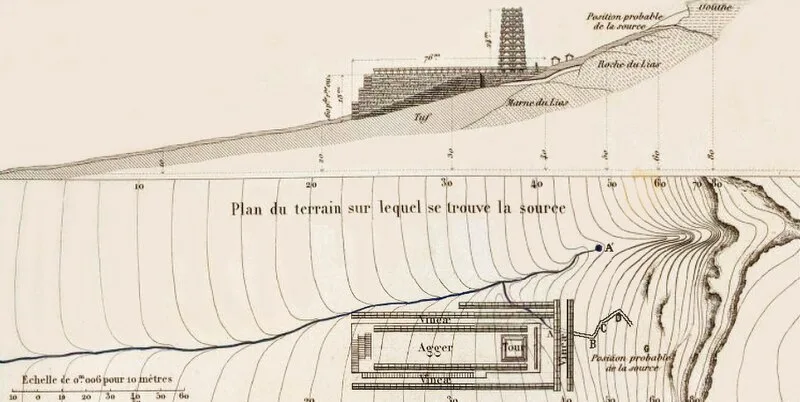
Uxellodunum is an Iron Age hill fort, or oppidum, located above the river Dordogne near the modern-day French village of Vayrac in the Lot department [1]. This stronghold lay within the lands of the Cadurci tribe [1]. According to Aulus Hirtius in his addendum to Julius Caesar's Commentaries on the Gallic War, the last revolt against Rome's authority in Gaul occurred here, and was brutally punished [1]. The Commentaries on the Gallic War describe Uxellodunum as being strongly fortified by its natural position, with a river dividing the valley below that almost surrounded the steep craggy mountain on which the citadel was built [1]. In the 19th century there was controversy as to the location of Uxellodunum [1]. Archaeological work has since validated the theory that the oppidum in question was at Puy d'Issolud [1].
Text: Wikipedia – 'Uxellodunum' (revision of 2026-01-03), CC BY-SA 4.0 · sentences selected and shortened by an AI system · source →Uxellodunum
Also known as: Asedio de Uxeloduno, Ukselodun, Uxellodonum, Uxelloduno, Uxeloduno, Укселодунум, 乌克塞洛杜努姆
| Type | Fort |
|---|---|
| Period | 1500 - 500 BC |
| Country | France |
| Coordinates | 44.9501° N, 1.6834° E |