
 France
The Isturitz and Oxocelhaya caves are an important Paleolithic site where a Neanderthal mandible was found, as well as later modern human finds associated with the Aurignacian, Solutrean and Magdalenian [1]. They also include cave paintings and bone flutes [1]. The caves are located in the Gaztelu hill in the Arberoue Valley in the foothills of Pyrenees, in Lower Navarre, a traditional region of the department of Pyrénées-Atlantiques, southwestern France, part of the French Basque Country [1]. The Isturitz cave is divided into two parts: the Hall of Saint-Martin and the Main Hall or Hall of Isturitz [1]. The most common human remains from Isturitz are cranial vaults, which have been cut-marked and modified to create drinking cups, dating from the Magdalenian [1].
Text: Wikipedia – 'Isturitz and Oxocelhaya caves' (revision of 2026-06-29), CC BY-SA 4.0 · sentences selected and shortened by an AI system · source →Isturitz and Oxocelhaya Caves
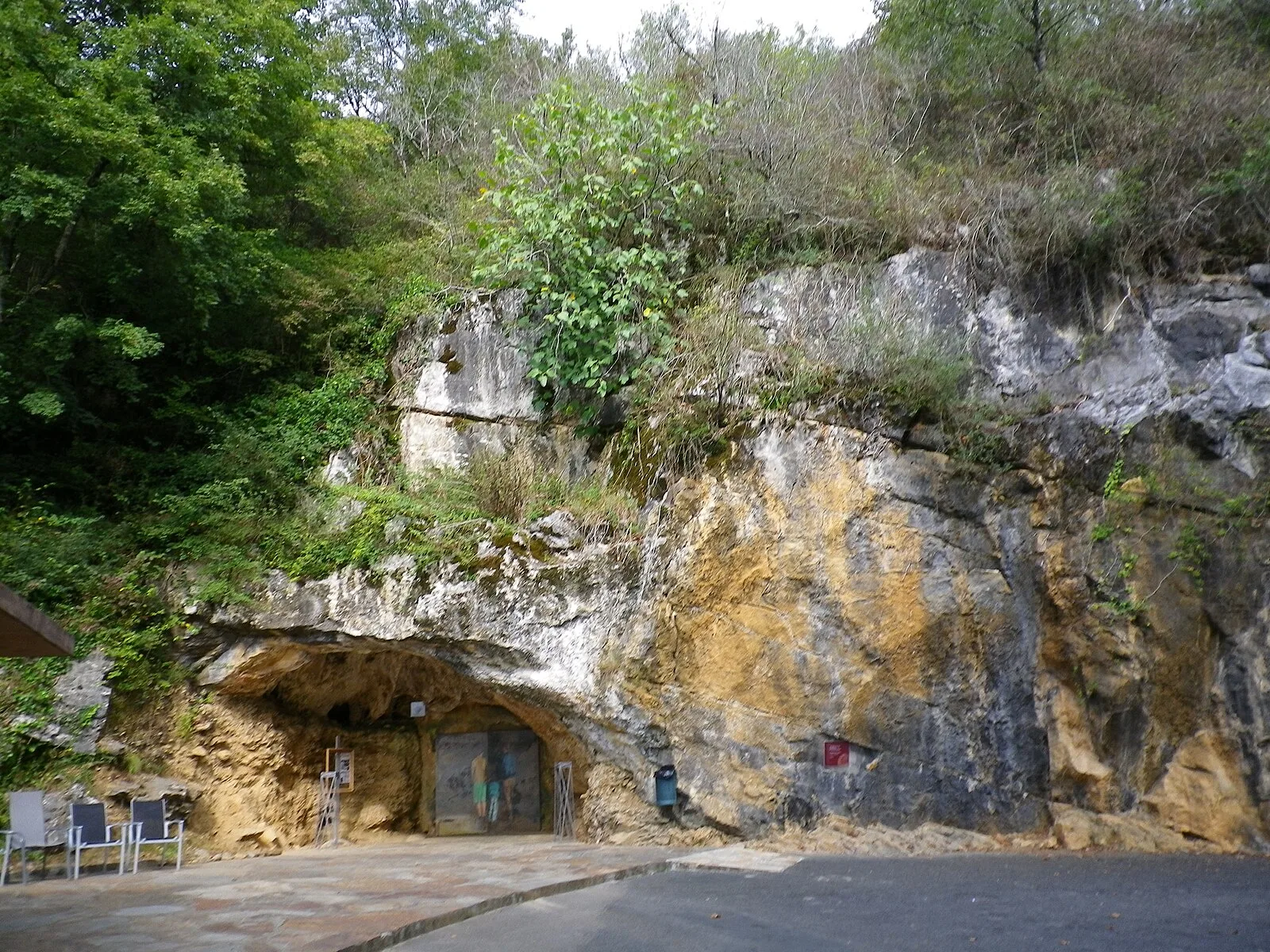
Also known as: Cavernas Isturitz e Oxocelhaya, Espelugas d'Isturits e d'Otsocel·haia, grottes d'Isturitz et d'Oxocelhaya, grottes d'Izturitze et d'Otsozelai, Groty Isturitz i Oxocelhaya, Höhlen von Isturitz und Oxocelhaya, Izturitze and Otsozelai caves, Izturitze eta Otsozelaiako leizeak, Izturitze eta Otsozelaiko harpeak
| Type | Cave Structures |
|---|---|
| Period | < 4500 BC |
| Country | France |
| Coordinates | 43.3530° N, 1.2061° W |