
 England
Woodcutts Settlement is an archaeological site of the late Iron Age and Romano-British period on Cranborne Chase, England [1]. It is situated about 1 mile (1.6 km) north of the hamlet of Woodcutts, and about 1.75 miles (2.8 km) north-west of the village of Sixpenny Handley, in Dorset, near the boundary with Wiltshire [1]. The site, on Woodcutts Common, has an area of about 1.6 hectares (4.0 acres) [1]. Before excavation, there was a roughly circular enclosure, defined by a low bank with an external ditch, about 300 feet (91 m) in diameter [1]. Outside this enclosure were three smaller enclosures, and two trackways, about 20 feet (6.1 m) wide, leading away on the north-west and south-east sides [1]. Augustus Pitt Rivers, inheritor of the Rushmore Estate, where he was resident from 1880, investigated many prehistoric monuments on his estate [1]. He excavated the site at Woodcutts in 1884 and 1885 [1]. The main enclosure, and two of the outer enclosures, were totally excavated [1].
Text: Wikipedia – 'Woodcutts Settlement' (revision of 2026-07-22), CC BY-SA 4.0 · sentences selected and shortened by an AI system · source →Woodcutts Settlement
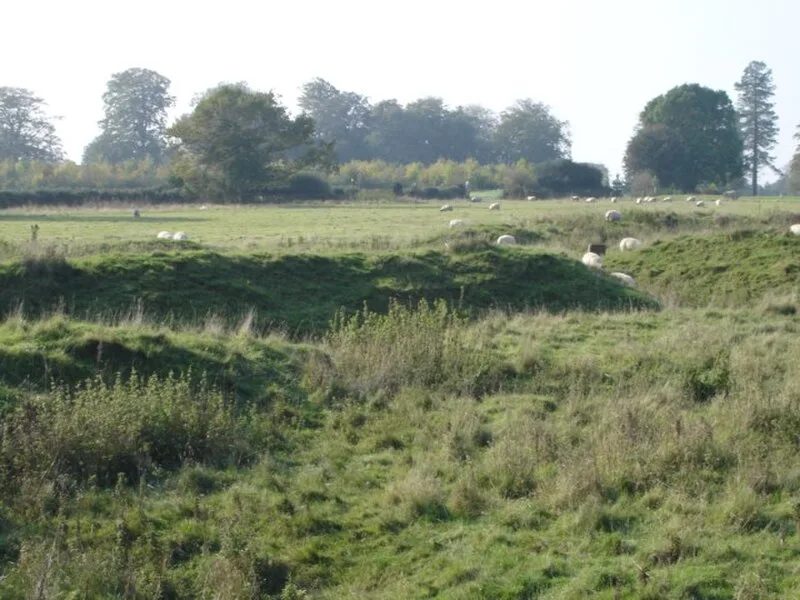
Also known as: Iron Age and Romano-British settlement remains on Woodcutts Common, 850m south east and 845m SSE of Arundell Cottages
| Type | City/town/settlement |
|---|---|
| Period | 1 - 500 AD |
| Country | England |
| Coordinates | 50.9626° N, 2.0533° W |