
 Spain
SpainCastrino de Conxo is an archaeological site in Santiago de Compostela, Galicia, featuring Bronze Age petroglyphs discovered by Ramon Sobrino Buhigas in 1935. The granitic slab bears engravings of daggers, halberds, and shield-like representations dating to the early 2nd millennium BC, depicting weapons from the earliest period of copper and bronze metalworking in the Iberian Peninsula. The carvings are thought to have served religious purposes associated with warrior culture. Notably, the slab was the first in Galicia to be preserved using reverse moulding technique. The site also includes a later Iron Age castro (7th-1st century BC). Unfortunately, the petroglyphs are now in a state of neglect and suffered vandalism in 2019.
Castriño de Conxo
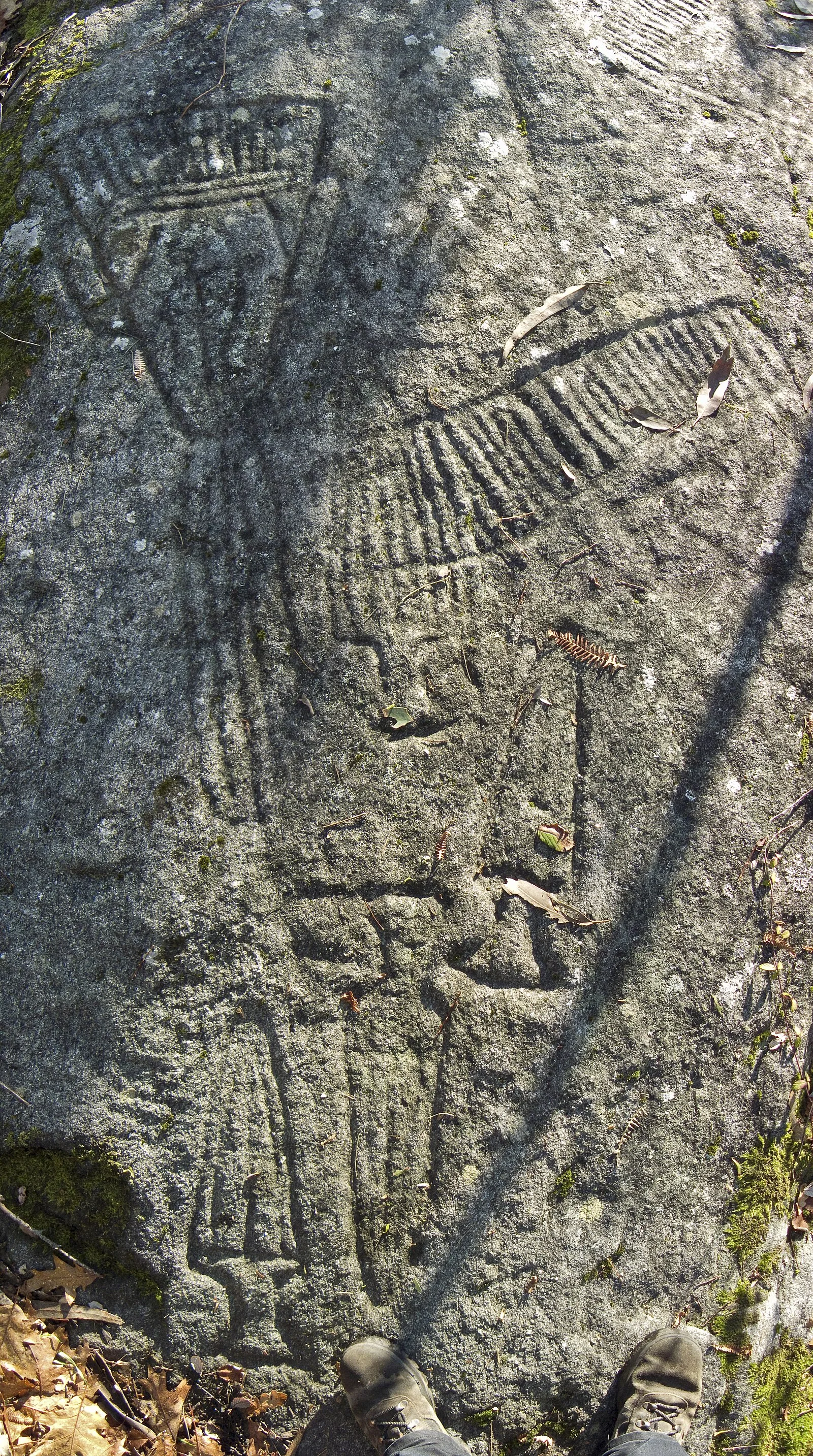
Also known as: Castrinho de Conjo, Castrinho de Conxo, Castriño of Conxo, Castro de Conxo, O Castriño
| Type | Petroglyphs |
|---|---|
| Period | 3000 - 1500 BC |
| Country | Spain |
| Coordinates | 42.8657° N, 8.5672° W |