
 Spain
SpainThe Castro of Santa Trega is an archaeological site on the hillsides of Mount Santa Trega, in the southwestern Galician municipality of A Guarda [1]. The site is strategically located overlooking the mouth of the river Miño, at 341 meters above sea level [1]. Santa Trega is a 'Castro-Roman' settlement [1]. It was inhabited between 100 BC and 100 AD, in a period when the process of Romanisation of the northwest of the Iberian Peninsula had already begun [1]. Despite this, the construction system reflects techniques that respect the Castro tradition and has seen very little Roman influence [1]. This style is dominated by the use of circular structures [1]. Proof of human presence approximately 2,000 years before the settlement was built is confirmed by petroglyphs or rock engravings in various locations [1]. In 1862, the first recorded archaeological discovery was a bronze sculpture of Hercules found by stonemasons [1].
Text: Wikipedia – 'Castro of Santa Trega' (revision of 2026-02-27), CC BY-SA 4.0 · sentences selected and shortened by an AI system · source →Castro of Santa Trega
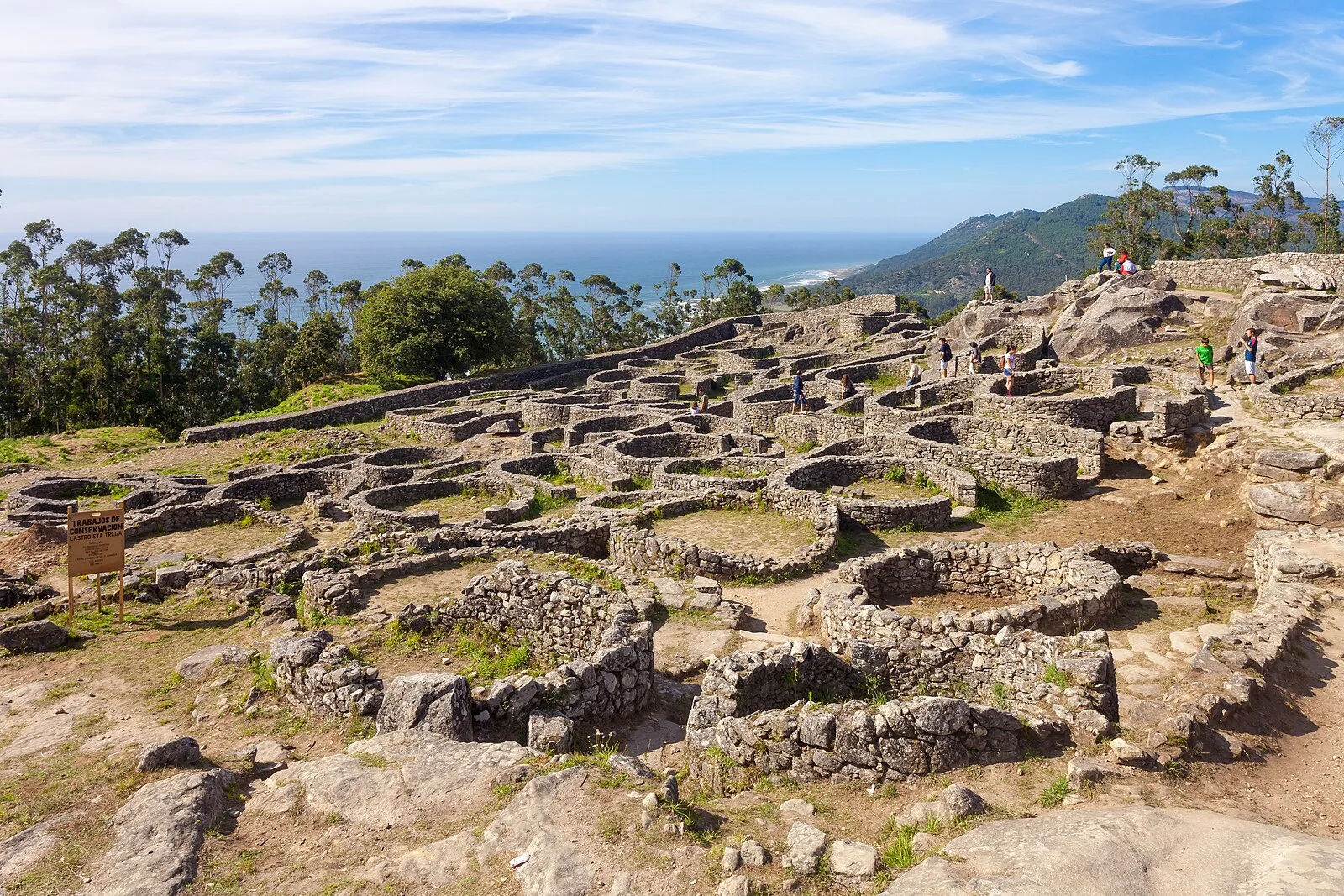
Also known as: castro de Santa Tecla, castro de Santa Tegra, Castro de Santa Trega, Castro von Santa Trega, Ruínas Arqueológicas de Santa Tegraa, Santa Trega, Santa Tregako kastroa, Szent Tekla-hegyi földvár, カストロ・デ・サンタ・トレガ
| Type | Settlement |
|---|---|
| Period | 500 BC - 1 AD |
| Country | Spain |
| Coordinates | 41.8927° N, 8.8698° W |