
 Spain
SpainCastro de Borneiro is an archeological site in Galicia, Spain [1]. A castro is an iron-age walled settlement, or oppidum, and the site is an example of remnants of the Castro culture in Northern Spain which dates as far back as the 9th century BCE, though this site was inhabited from the 4th to the 1st century BCE [1]. Castro de Borneiro is located in Castro, which belongs to the parish of Borneiro, in the municipality of Cabana de Bergantiños [1]. The castro, which is located at an altitude of 200 m on an east-facing slope near a stream, was the first Galician castro to have been scientifically dated, using Carbon-14 dating [1]. No signs of Romanization have been found at the site [1]. After being discovered in 1924 by Isidro Parga Pondal and Pérez Bustamante, excavations began in the 1930s, led by Sebastián García-Paz, and were resumed by Jorge Juan Eiroa in the 1970s [1]. To date, a total of 36 structures have been excavated, about three quarters of the total [1].
Text: Wikipedia – 'Castro de Borneiro' (revision of 2024-05-15), CC BY-SA 4.0 · sentences selected and shortened by an AI system · source →Castro de Borneiro
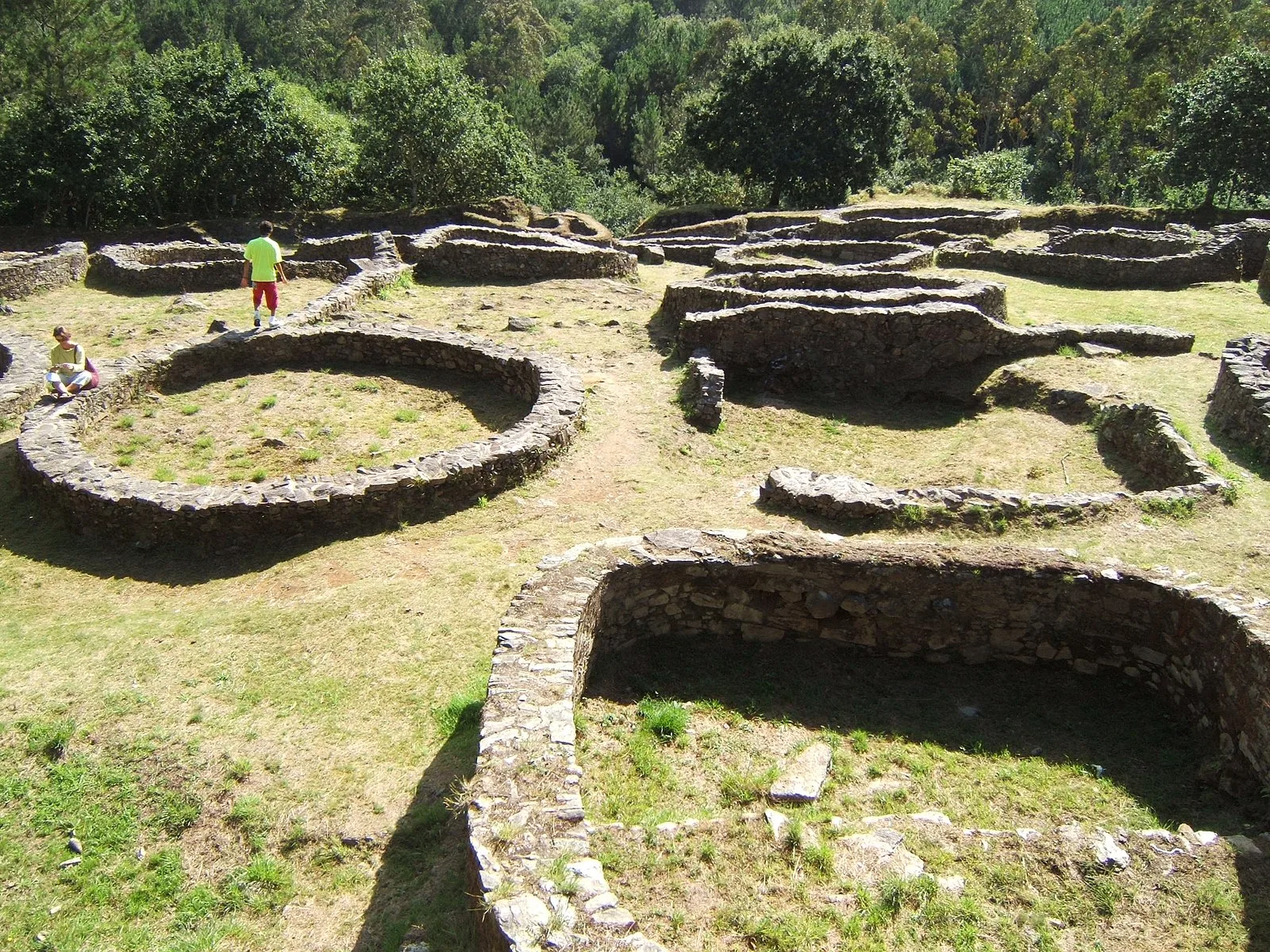
Also known as: Borneiroko kastroa, Castre de Borneiro, Castro da Cibdá, Castro of Borneiro
| Type | Settlement |
|---|---|
| Period | 500 BC - 1 AD |
| Country | Spain |
| Coordinates | 43.1949° N, 8.9527° W |