
 Spain
SpainCancho Roano is an archaeological site located in the municipality of Zalamea de la Serena, in the province of Badajoz, Spain [1]. Cancho Roano is the best preserved Tartessian site [1]. It dates back to at least the sixth century BCE, although the building was expanded and modified in later centuries [1]. Based on the dating of objects found on the site, Cancho Roano is estimated to date from 550 BCE [1]. The site was destroyed in a fire no later than 370 BCE [1]. The building appears to have been ritually burned and sealed in rammed earth in a manner similar to Etruscan [1]. The main body of the building is square and oriented toward the east [1]. Excavations of the site, directed by John Maluquer de Motes, began in 1978 and continued through 2001 [1].
Text: Wikipedia – 'Cancho Roano' (revision of 2026-07-18), CC BY-SA 4.0 · sentences selected and shortened by an AI system · source →Cancho Roano
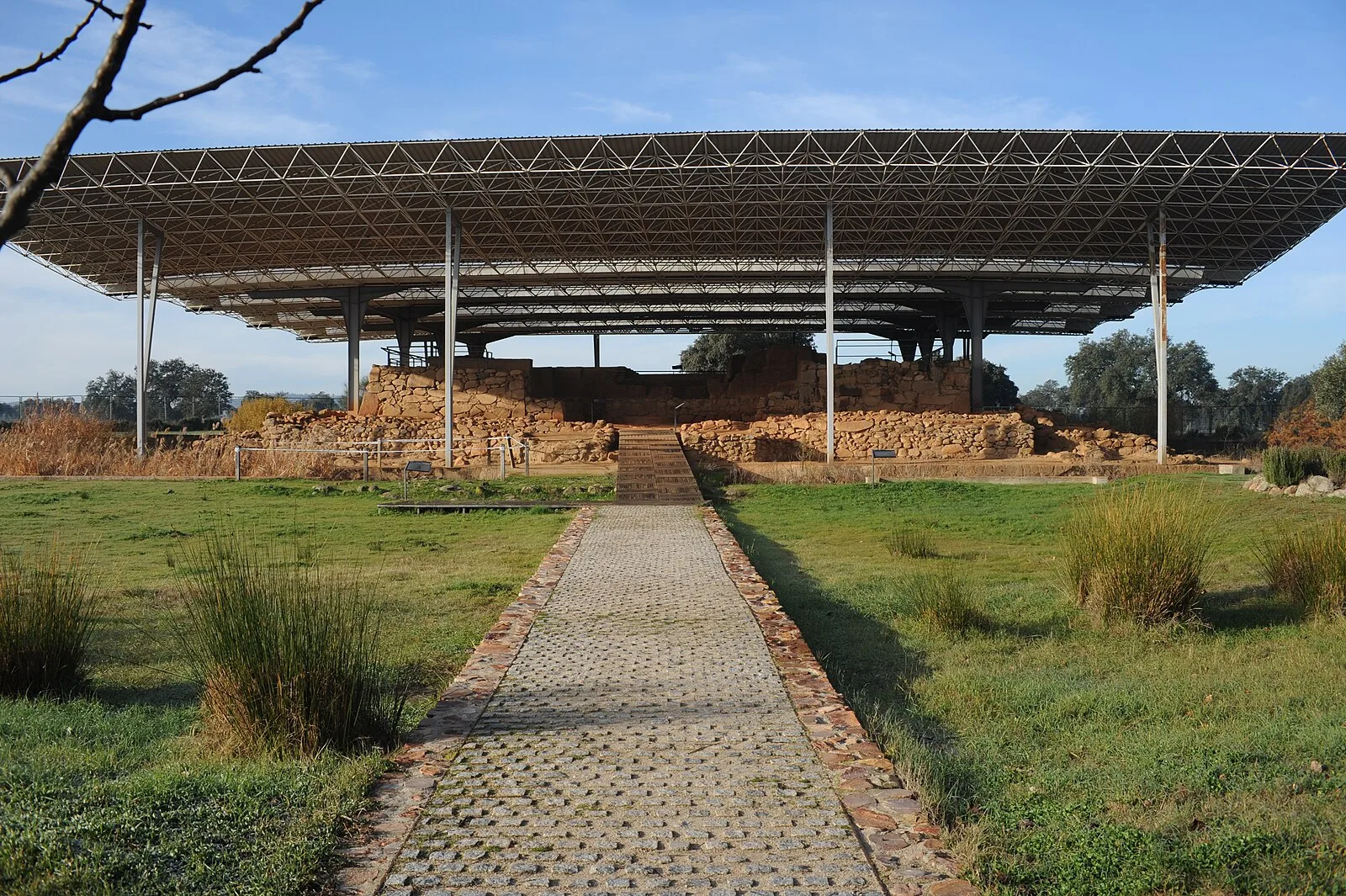
Also known as: Cancho Ruano, Canchu Roanu, Yacimiento Arqueológico Cancho Roano, Канчо Роано, Канчо-Роано
| Type | Castle/palace |
|---|---|
| Period | 1500 - 500 BC |
| Country | Spain |
| Coordinates | 38.7016° N, 5.6841° W |