
 Spain
SpainThe Cave of Maltravieso in Caceres, Extremadura, was discovered in 1951 when a quarry explosion exposed the cavity [1] [2]. It contains 71 hand stencils created by blowing pigment around hands placed on the walls, along with linear designs and animal paintings [1] [3].
Cave of Maltravieso
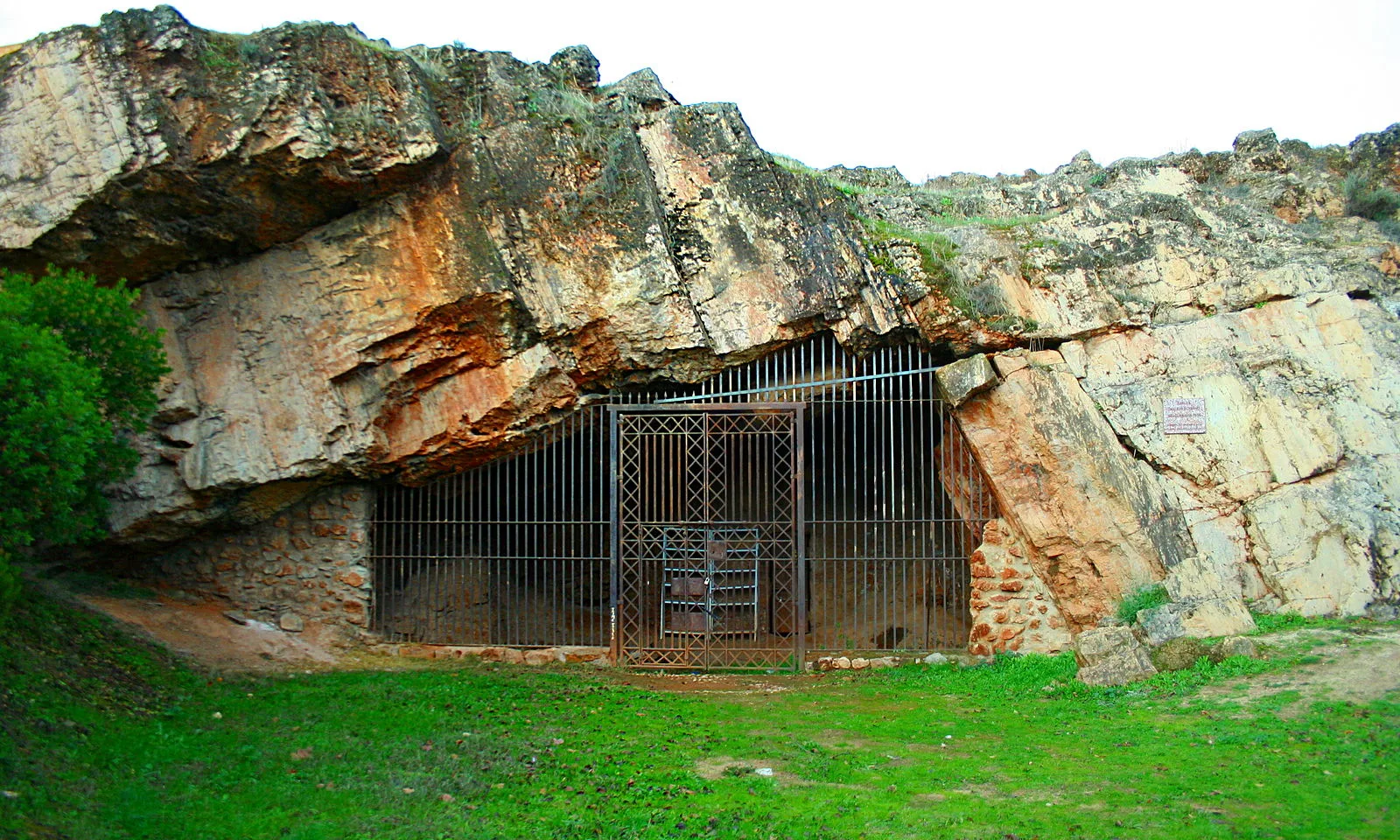
Also known as: cova de Maltravieso, Cueva de Maltravieso, Cueva de Maltraviessu, Grotte de Maltravieso, Maltravieso, Maltravieso-barlang, غار مالتراویسو, كهف مالترافيسو, 马尔特拉维索岩洞
| Type | Rock art |
|---|---|
| Period | < 4500 BC |
| Country | Spain |
| Coordinates | 39.4576° N, 6.3708° W |