
 Peru
PeruPiki Mach'ay (Quechua piki flea, mach'ay cave, "flea cave", also spelled Pikimachay, Piquimachay, where machay means "drunkenness", "to get drunk" or "a spindle packed with thread") is an archaeological site in the Ayacucho Valley of Peru [1]. Richard S. MacNeish was the first archaeologist to explore Piki Mach'ay [1]. The cave is part of the Ayacucho complex, a culture defined by several cave sites including Jaya Mach'ay [1]. Piki Mach'ay yielded some of the oldest plant remains in Peru, including an 11,000-year-old bottle gourd [1]. Strata from later periods at the site revealed fishtail point arrows, manos, and metates [1].
Text: Wikipedia – 'Pikimachay' (revision of 2026-07-22), CC BY-SA 4.0 · sentences selected and shortened by an AI system · source →Pikimachay
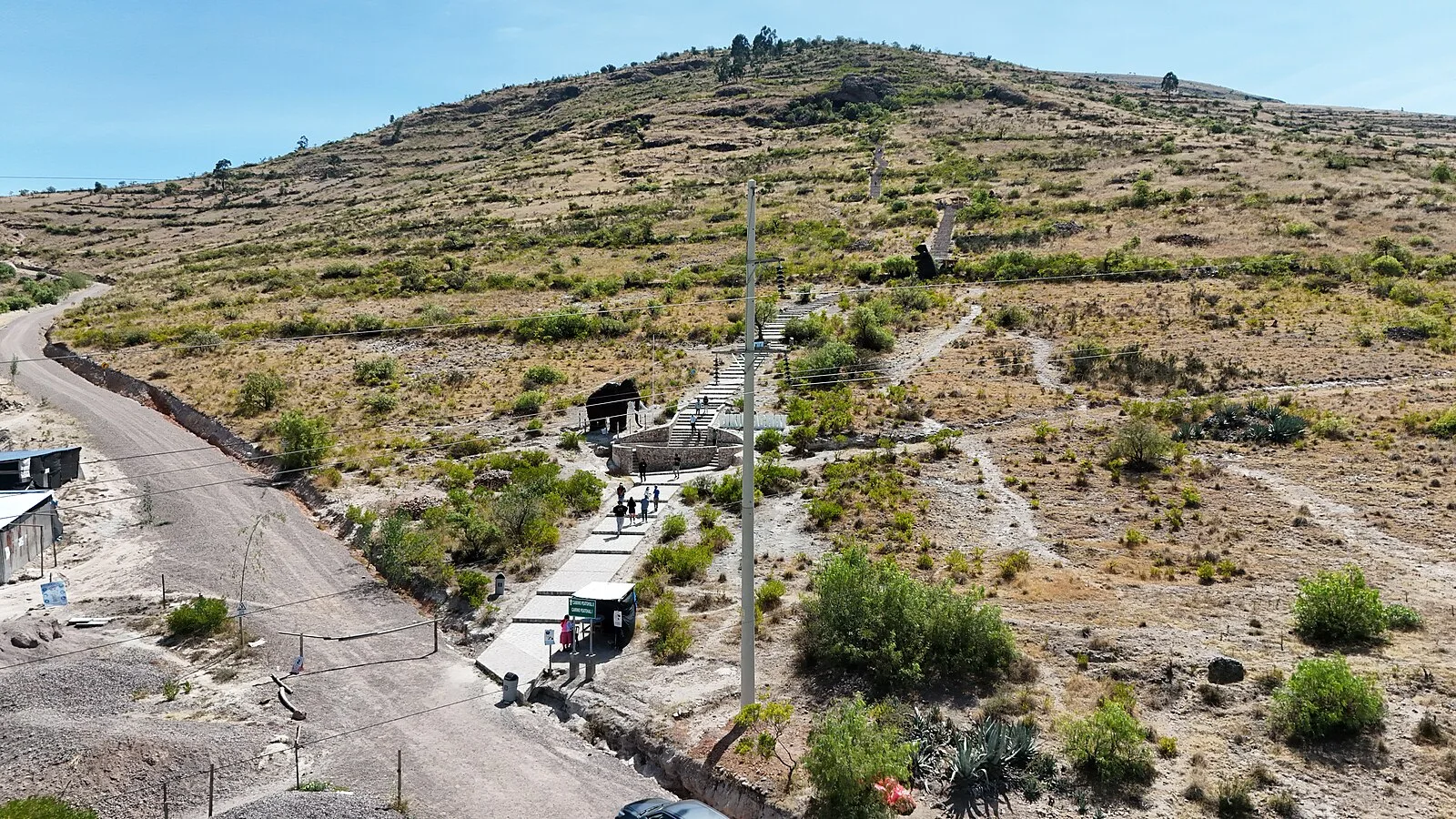
Also known as: Cueva de Piquimachay, Pikimačajus, Piki Mach'ay, Pikmačajus, Piquimachay, Пикимачай, პიკიმაჩაი, პიკიმაჩაუ, פיקימצ'אי, بيكي ماتشاي
| Type | Cave Structures |
|---|---|
| Period | < 4500 BC |
| Country | Peru |
| Coordinates | 13.0406° S, 74.2242° W |