
 Peru
PeruThe Inca complex at Pisac is a large Incan complex of agricultural terraces, residences, guard posts, watchtowers and a ceremonial/religious centre located along a mountain ridge above the modern town of Pisac in the Sacred Valley of Peru [1]. An early settlement, which probably pre-dated the Inca, existed on the hillside between the Quitamayo and Chongo tributaries of the Vilcanota river [1]. The community raised their crops on terraces as well as on the flood plain [1]. Later as the threats from other tribes declined the villagers moved closer to the main road to Cusco and Urcos [1]. It is unknown when the complex that remains today was built, but the consensus is that the contributions by the Incas were built by the Inca emperor Pachacuti no earlier than 1440 [1]. The mountain spur is covered with approximately 500 agricultural terraces called andenes, some 6 metres high in places, which follow the contours of the hillside [1].
Text: Wikipedia – 'Inca complex at Písac' (revision of 2026-07-20), CC BY-SA 4.0 · sentences selected and shortened by an AI system · source →Inca Complex at Písac
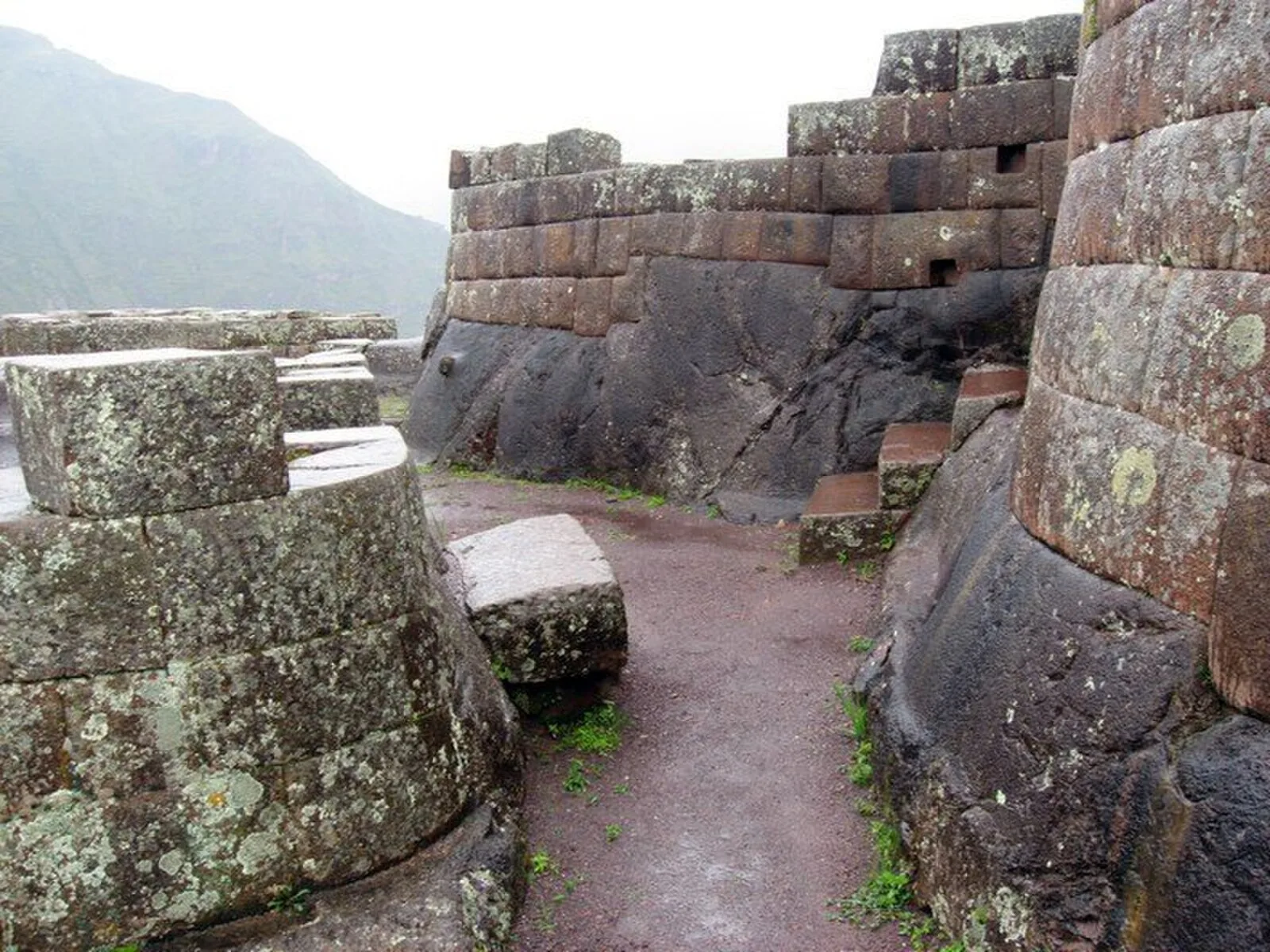
Also known as: Parco archeologico di Pisac, Písac, Pisac Archeological Park, Písac (sitio arqueológico), site archéologique de Písac
| Type | City/town/settlement |
|---|---|
| Period | 1000 - 1500 AD |
| Country | Peru |
| Coordinates | 13.4129° S, 71.8435° W |