
 Peru
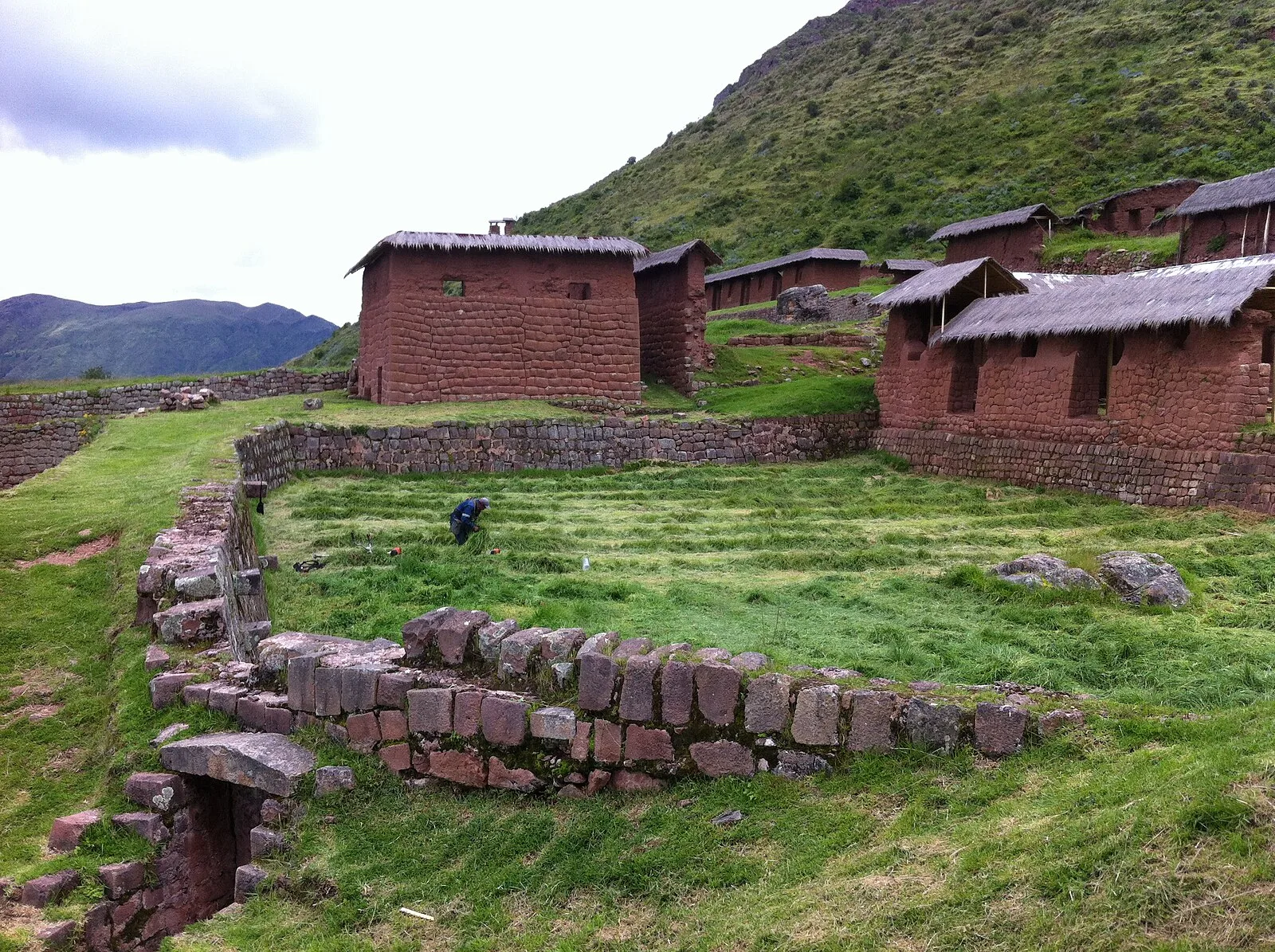
PeruHuchuy Qosqo, (also spelled Yuchuy Cuzco), is an Incan archaeological site north of Cuzco, Peru [1]. Its name is Quechua for "Little Cuzco" [1]. It lies at an elevation of 3,650 meters, overlooking the Sacred Valley and 3 kilometres west and above the town of Lamay at an elevation of 2,920 metres [1]. The settlement at the archaeological ruin at Huchuy Qusqo dates back to between 1000 and 1400 CE [1]. In the early 1400s, according to the Spanish chronicler Pedro de Cieza de León, it became a royal estate of the semi-mythical Viracocha, (c. 1410-1438), the eighth Inca ruler [1]. Amongst a large number of buildings, some stone, some adobe, is a kallanka (great hall), 40 m long [1]. Providing water to the site is an Inca built irrigation channel, lined with stones for about 800 m [1]. The Spanish took control of Huchuy Qosqo in the 1500s, after the Manco Inca Revolution (approx. 1540) and used the site as a farm [1].
Text: Wikipedia – 'Huchuy Qosqo' (revision of 2026-07-29), CC BY-SA 4.0 · sentences selected and shortened by an AI system · source →Huchuy Qosqo
Also known as: Caquia Xaquiguana, Huch'uy Qusqu, Huchuy Qusqu, Juchuy Cusco, Juchuy Cuzco, Kakya Qawani, Xaquixaguana, Учуй-Коско, 小庫斯科
| Type | City/town/settlement |
|---|---|
| Period | 1000 - 1500 AD |
| Country | Peru |
| Coordinates | 13.3660° S, 71.9450° W |