
 Netherlands
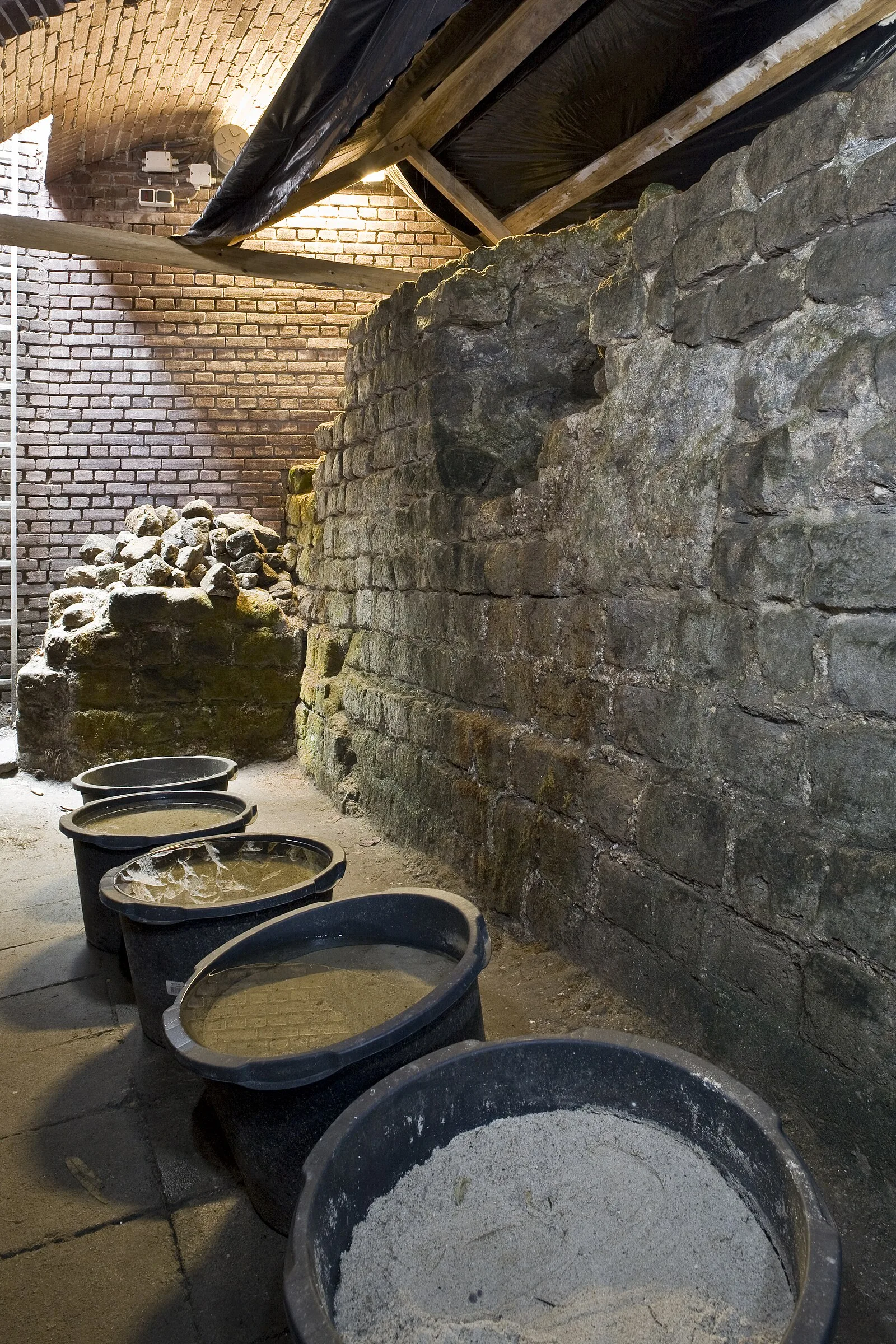
Traiectum was a Roman fort, on the frontier of the Roman Empire in Germania Inferior [1]. The remains of the fort are in the center of Utrecht which takes its name from the fort [1]. In the Roman Empire Traiectum was one of the forts in the lower Limes Germanicus defensive lines [1]. In AD 69-70 Gaius Julius Civilis led the revolt of the Batavi during which the fort was burned [1]. The fort was rebuilt four times, and each time was raised up by adding fill [1]. Periods I-II date from AD 47-69; periods III-IV date from 70 to the end of the 2nd century; and period V dates from the end of the 2nd century to the middle of the 3rd century [1]. In period V it was rebuilt of stone and increased in size to 125 by 150 metres [1]. The footings of two of the fort's four gates have since been excavated, and some parts of the barracks from different periods have been revealed [1].
Text: Wikipedia – 'Traiectum (Utrecht)' (revision of 2026-07-24), CC BY-SA 4.0 · sentences selected and shortened by an AI system · source →Traiectum, Utrecht
Also known as: rijksmonumentnummer 18334, Traiectum, Traiectum ad Rhenum, Traiectum (Utrecht), Trajectum, Trajectum Inferior, Trajeto, Trajeto (castelo), Ultraiectum, Ultra Traiectum ad Rhenum, Urbs Antonina
| Type | Fortress/citadel |
|---|---|
| Period | 1 - 500 AD |
| Country | Netherlands |
| Coordinates | 52.0909° N, 5.1217° E |