
 Netherlands
Located on the Waal River close to the German border, Nijmegen is one of the oldest cities in the Netherlands and the first to be recognized as such in Roman times [1]. The first mention of Nijmegen in history is in the first century BC, when the Romans built a military camp on the place where Nijmegen was to appear; the location had great strategic value because of the surrounding hills [1]. By 69, when the Batavi, the original inhabitants of the Rhine and Meuse delta, revolted, a village called Oppidum Batavorum had formed near the Roman camp [1]. This village was destroyed in the revolt, but when it had ended the Romans built another, bigger camp where the Legio X Gemina was stationed [1]. In 98, Nijmegen was the first of two settlements in what is now the Kingdom of the Netherlands to receive Roman city rights [1]. Few Roman remains are visible today; a fragment of the old city wall can be seen near the casino and the foundations of the amphitheatre are traced in the paving of the present-day Rembrandtstraat [1].
Text: Wikipedia – 'Nijmegen' (revision of 2026-09-27), CC BY-SA 4.0 · sentences selected and shortened by an AI system · source →Nijmegen
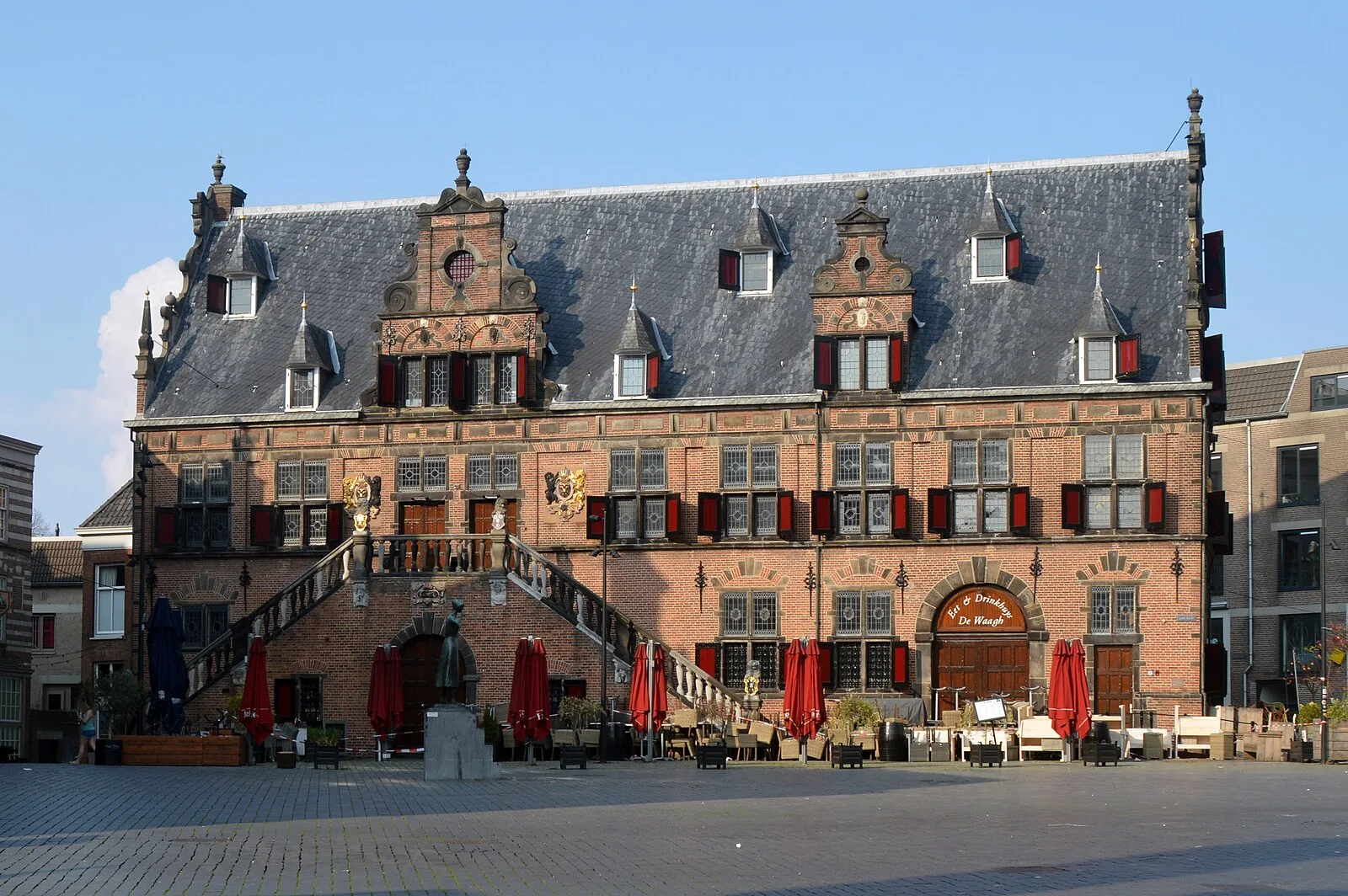
Also known as: 네이메헌, 네이메헨, Batavodurum, Gemeen Nimwaege, Gemeente Nijmegen, Municipality of Nijmegen, Municipium Ulpia Noviomagus Batavorum, Neimegena, Neimegenas, Neymeqen, Nijmegena, Nijmegenas
| Type | City/town/settlement |
|---|---|
| Period | 500 BC - 1 AD |
| Country | Netherlands |
| Coordinates | 51.8477° N, 5.8625° E |