
 Netherlands
Fectio was a Roman castellum in the province Germania Inferior established in the year 4 or 5 AD [1]. It was located at the place where the river Vecht (Fectio) branched off from the Rhine, leading to Lake Flevo, which was later to become the Zuiderzee [1]. This was near the modern hamlet of Vechten in the municipality Bunnik, Utrecht [1]. Imperial Roman coinage reveals that the castellum was built by order of Tiberius, then engaged in his campaign of 4–5 AD [1]. In 40 AD the emperor Caligula visited Fectio during the trip to Lugdunum Batavorum, the ancient Brittenburg [1]. Under the emperor Claudius, Fectio became part of the Rhine limes [1]. Then around 70 AD, at the time of the Batava revolt, the castellum was completely burned [1]. The archeological site contains the remains of a fort, port, cemetery, and a civilian settlement [1].
Text: Wikipedia – 'Fectio' (revision of 2026-07-24), CC BY-SA 4.0 · sentences selected and shortened by an AI system · source →Fectio
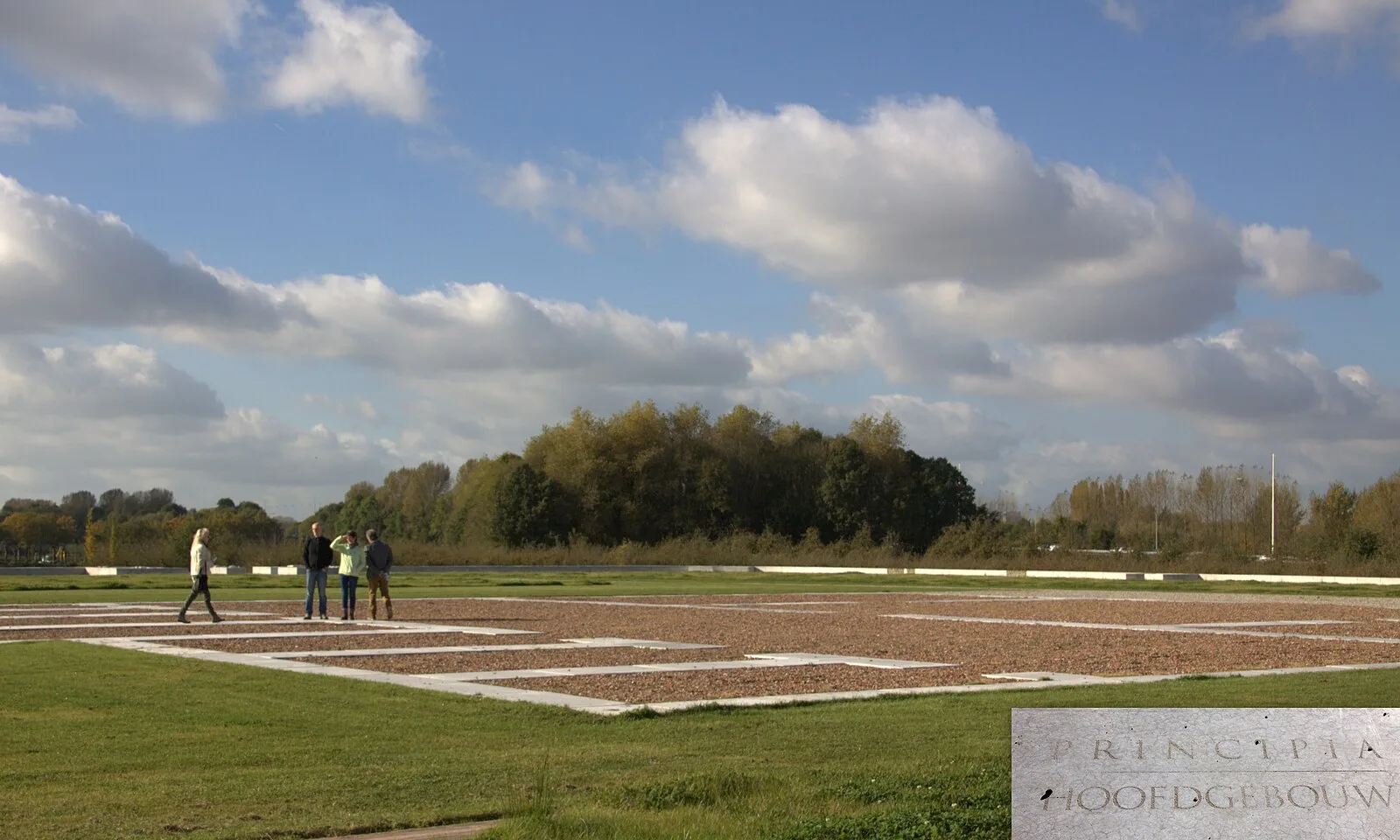
Also known as: Overblijfselen van het Romeinse fort Fectio met naastgelegen burgernederzetting, rijksmonumentnummer 45717, فکتیو
| Type | Fortification |
|---|---|
| Period | 1 - 500 AD |
| Country | Netherlands |
| Coordinates | 52.0564° N, 5.1650° E |