
 Malta
MaltaSan Pawl Milqi are the ruins of a Roman period agricultural villa and pagan temple [1]. The site has been in use since prehistoric times; a couple of tombs date back to the Zebbug and possibly the Borg in-Nadur phases of the Maltese Bronze Age [1]. The first building on the site was probably built in the Phoenician-Punic period, when the site was used intermittently for agriculture [1]. A small number of structures remain from this period and one burial bears a neo-Punic inscription [1]. In the Roman period, the site’s position on the slopes of a fertile valley and vicinity to the Roman harbour at Salina meant that it was ideally suited to the production of olive oil [1]. The establishment was expanded; the original central courtyard was transformed into an industrial area [1]. Although the remains of the villa have long been well known, scientific excavations, led by the Missione Archeologica Italiana a Malta, did not commence until 1963 [1].
Text: Wikipedia – 'San Pawl Milqi' (revision of 2026-07-11), CC BY-SA 4.0 · sentences selected and shortened by an AI system · source →San Pawl Milqi
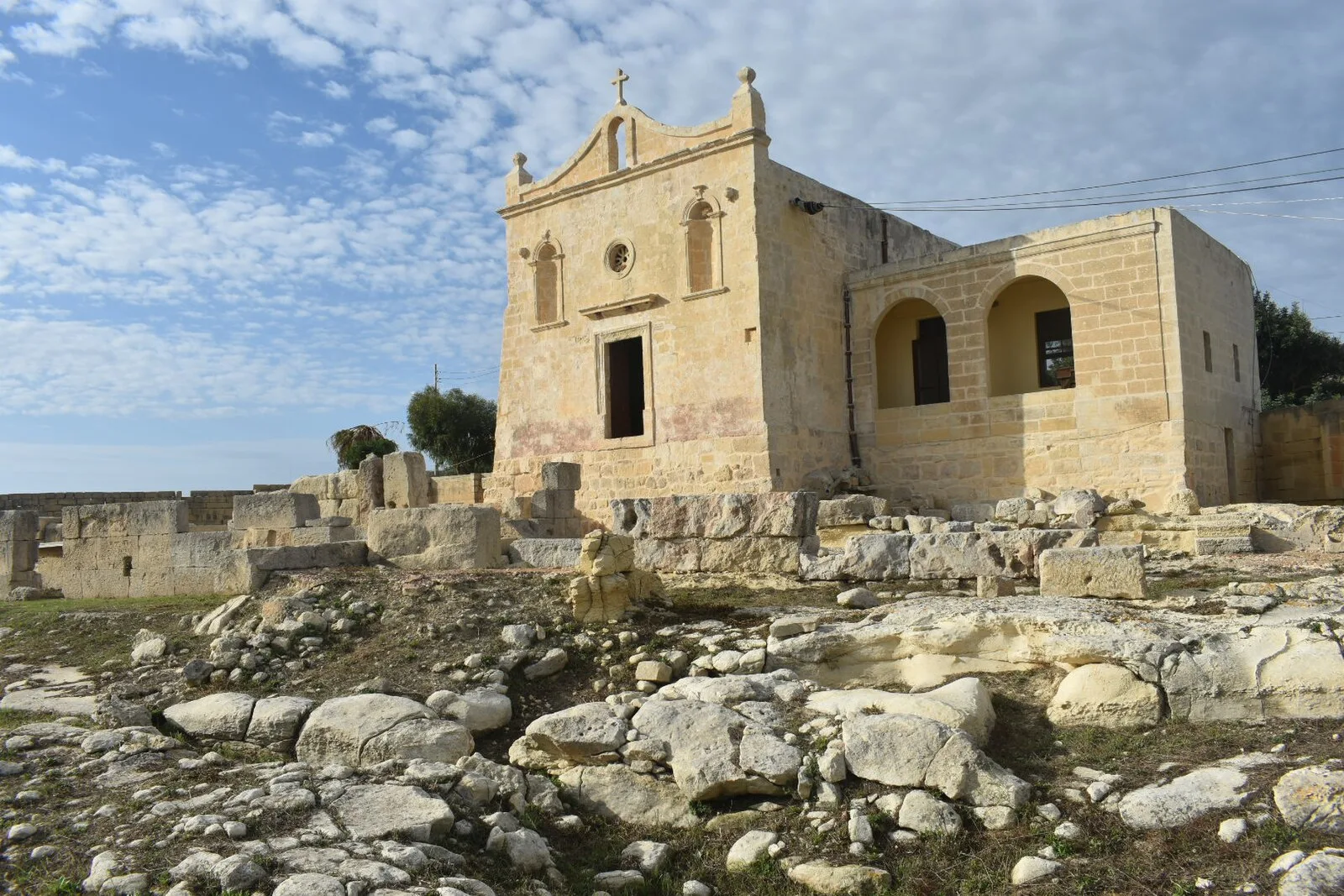
Also known as: Römische Villa „San Pawl Milqi“, סן פאול מילקי
| Type | Residence/villa/farmhouse |
|---|---|
| Period | 4500 - 3000 BC |
| Country | Malta |
| Coordinates | 35.9334° N, 14.4118° E |