
 Malta
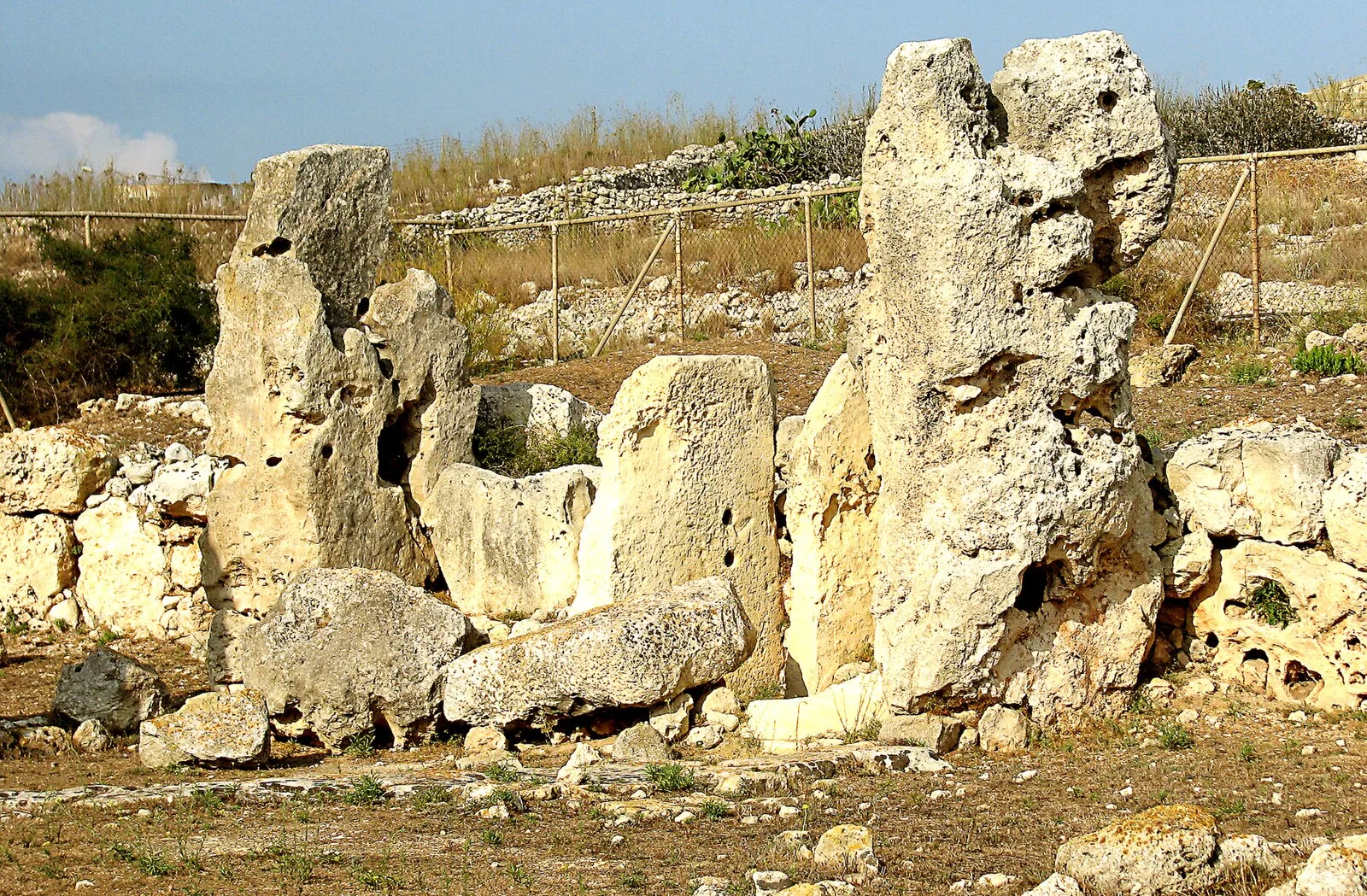
MaltaThe Skorba temples are megalithic remains on the northern edge of Żebbiegħ which have provided detailed and informative insight into the earliest periods of Malta's neolithic culture [1]. The site was only excavated in the early 1960s, rather late in comparison to other megalithic sites, some of which had been studied since the early 19th century [1]. The Żebbiegħ area around Skorba appears to have been inhabited very early in the Neolithic period [1]. The remains on the site are a series of megalithic uprights, the lowest course of the temples' foundations, paving slabs with libation holes in the entrance passage, and the torba floor of a three-apse temple [1]. This three-apse shape is typical of the Ġgantija phase [1]. The pottery found on the site is divided into two styles, the Grey Skorba phase distinguished by grey-colored pottery with no motifs, and the Red Skorba phase, which is exactly like the grey Skorba but colored using red ocher [1].
Text: Wikipedia – 'Skorba Temples' (revision of 2026-07-19), CC BY-SA 4.0 · sentences selected and shortened by an AI system · source →Skorba Temples
Also known as: Megalithische tempels van Skorba, Scorba, Skorba, Skorba Tapınakları, Tempel von Skorba, templele Skorba, Templji Skorba, Templos de Skorba, Скорба, Սկորբա, سکوربا, หมู่วิหารสกอร์บา
| Type | Temple complex |
|---|---|
| Period | < 4500 BC |
| Country | Malta |
| Coordinates | 35.9210° N, 14.3776° E |