
 India
IndiaThe Kanheri Caves are a group of caves and rock-cut monuments, cut into a massive basalt outcrop in the forests of the Sanjay Gandhi National Park, on the island of Salsette in the western outskirts of Mumbai, India [1]. They contain Buddhist sculptures and relief carvings, paintings and inscriptions, dating from the 1st century CE to the 10th century CE [1]. The cave complex comprises one hundred and nine caves [1]. Rock-cut channels above the caves fed rainwater into cisterns, which provided the complex with water [1]. Most of the caves were Buddhist viharas, meant for living, studying, and meditating [1]. The larger caves, which functioned as chaityas, or halls for congregational worship, are lined with intricately carved Buddhist sculptures, reliefs, pillars and rock-cut stupas [1]. A 494-495 CE inscription found at Kanheri mentions the Traikutaka dynasty [1].
Text: Wikipedia – 'Kanheri Caves' (revision of 2026-06-29), CC BY-SA 4.0 · sentences selected and shortened by an AI system · source →Kanheri Caves
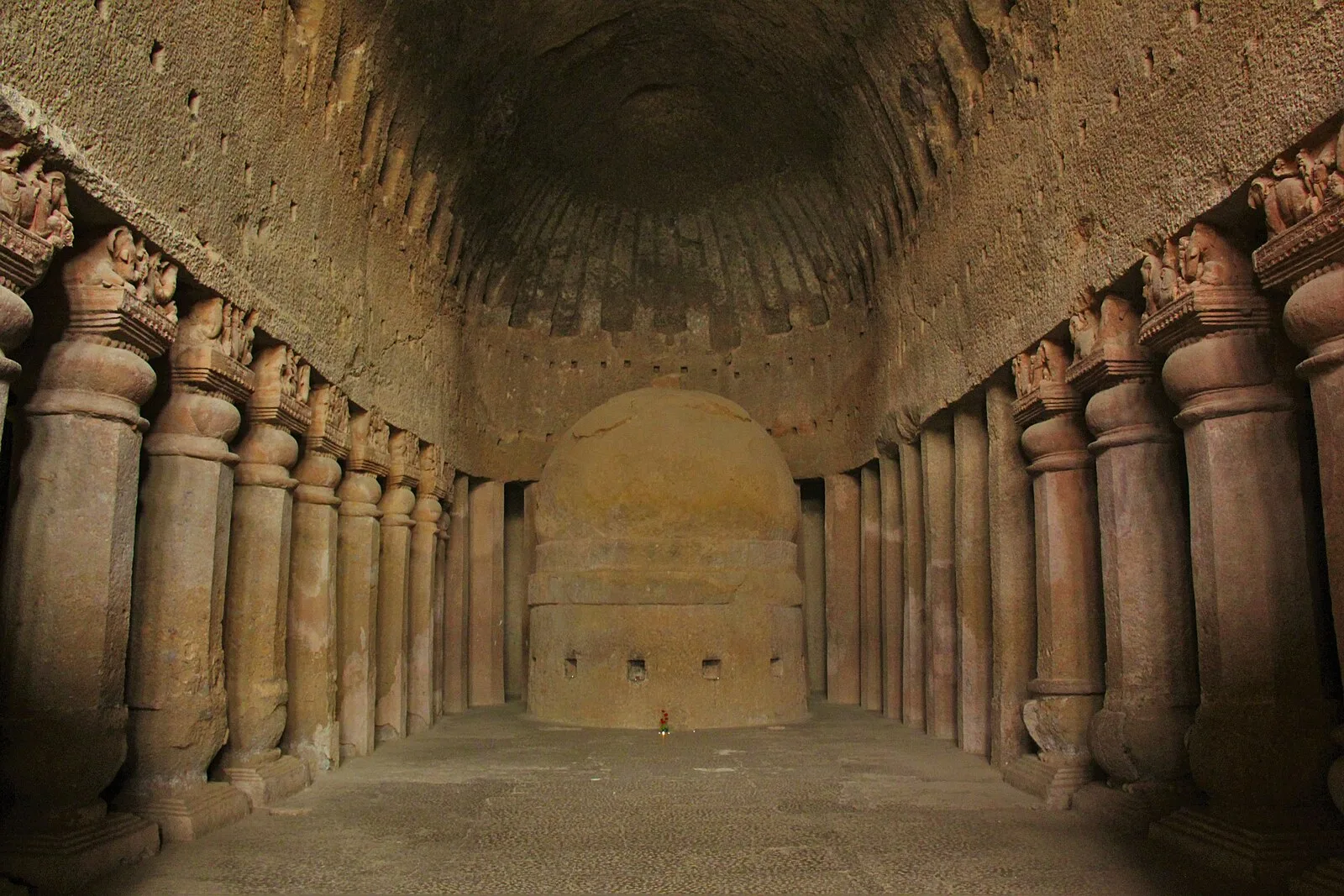
Also known as: 칸헤리 석굴, Cuevas de Kanheri, grottes de Kanheri, Gua Kanheri, Kanheri, Kanheri-Höhlen, Shpellat Kanheri, Канхери, Пещеры Канхери, Пячоры Канхеры, מערות קנהרי, كهوف كانهيرى
| Type | Cave Structures |
|---|---|
| Period | 500 BC - 1 AD |
| Country | India |
| Coordinates | 19.2060° N, 72.9074° E |