
 India
IndiaThe Elephanta Caves form a collection of cave temples predominantly dedicated to the Hindu god Shiva; UNESCO has designated them as a World Heritage Site [1]. They are located on Elephanta Island, or Gharapuri, in Mumbai Harbour [1]. The island, about 2 kilometres west of the Jawaharlal Nehru Port, features five Hindu caves, a few Buddhist stupa mounds that date back to the 2nd century BCE, and two Buddhist caves with water tanks [1]. The Elephanta Caves contain rock-cut stone sculptures, mostly in high relief, that show a syncretism of Hindu—Buddhist ideas and iconography [1]. The caves are hewn from solid basalt rock [1]. The main cave (Cave 1, or the Great Cave) was a Hindu place of worship until the Portuguese arrived, whereupon the island ceased to be an active place of worship [1]. The main cave, also called Cave 1, Grand Cave, or the Great Cave, is 39.63 metres square in plan with a hall [1].
Text: Wikipedia – 'Elephanta Caves' (revision of 2026-07-24), CC BY-SA 4.0 · sentences selected and shortened by an AI system · source →Elephanta Caves
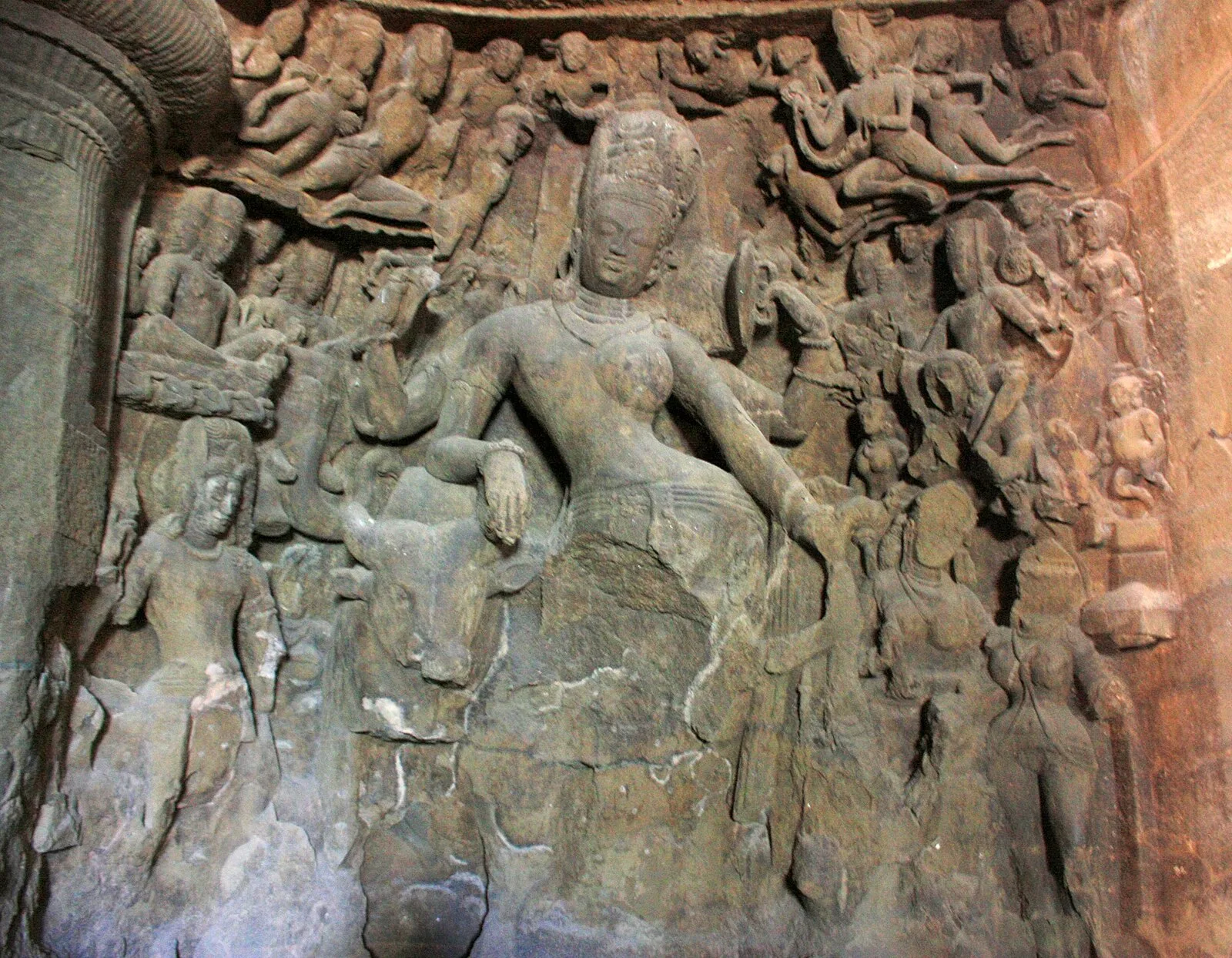
Also known as: 엘레판타 동굴, Các hang động Elephanta, Coves de l'Elefanta, Elefanta, Elefanta Leizeak, Elefantos olos, Elephanta, Elephantagrotten, Elephanta-Höhlen, Elephanta Mağaraları, Gharapuri Caves, Għerien ta' Elephanta
| Type | Cave Structures |
|---|---|
| Period | 500 BC - 1 AD |
| Country | India |
| Coordinates | 18.9637° N, 72.9320° E |