
 England
The Uley Long Barrow, also known locally as Hetty Pegler's Tump, is a Neolithic burial mound near the village of Uley, Gloucestershire [1]. Although typically described as a long barrow, the mound is actually a transepted gallery grave [1]. It was probably built before 3000 BC [1]. It measures around 37 metres long, 34 metres wide, and has a maximum height of 3 metres [1]. It contains a stone-built central passage with two chambers on each side and another at the end [1]. The earthen mound is surrounded by a dry-stone revetting wall [1]. The barrow was archaeologically excavated in 1821, revealing the remains of fifteen skeletons and a later, intrusive Roman age burial above the northeast chamber [1].
Text: Wikipedia – 'Uley Long Barrow' (revision of 2026-07-19), CC BY-SA 4.0 · sentences selected and shortened by an AI system · source →Uley Long Barrow
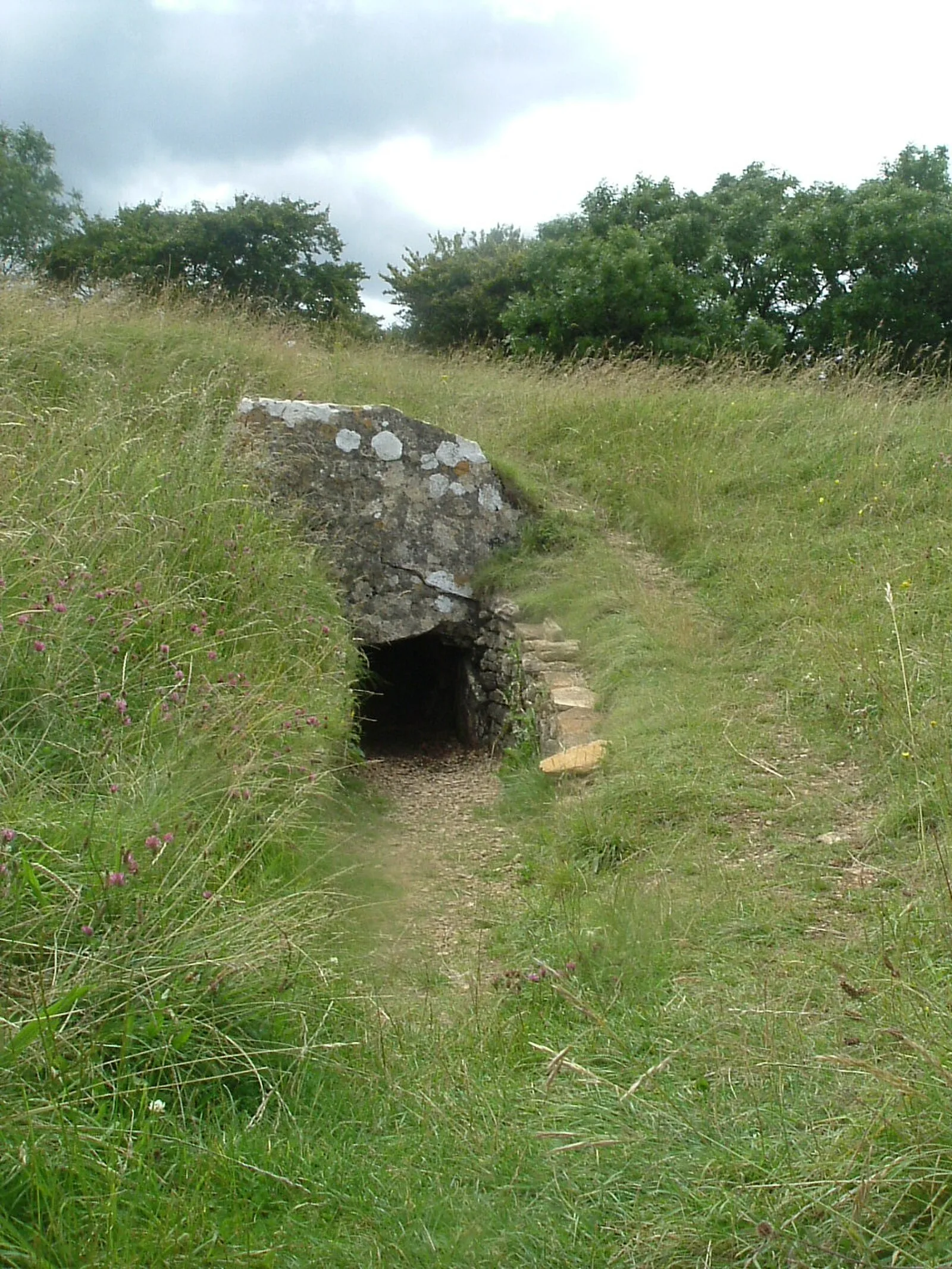
Also known as: Hetty Pegler's Tump, Uley long barrow, also known as Hetty Pegler's Tump, 400m south-east of Knapp Farm House, 屈利長塚
| Type | Barrow |
|---|---|
| Period | 4500 - 3000 BC |
| Country | England |
| Coordinates | 51.6988° N, 2.3058° W |