
 England
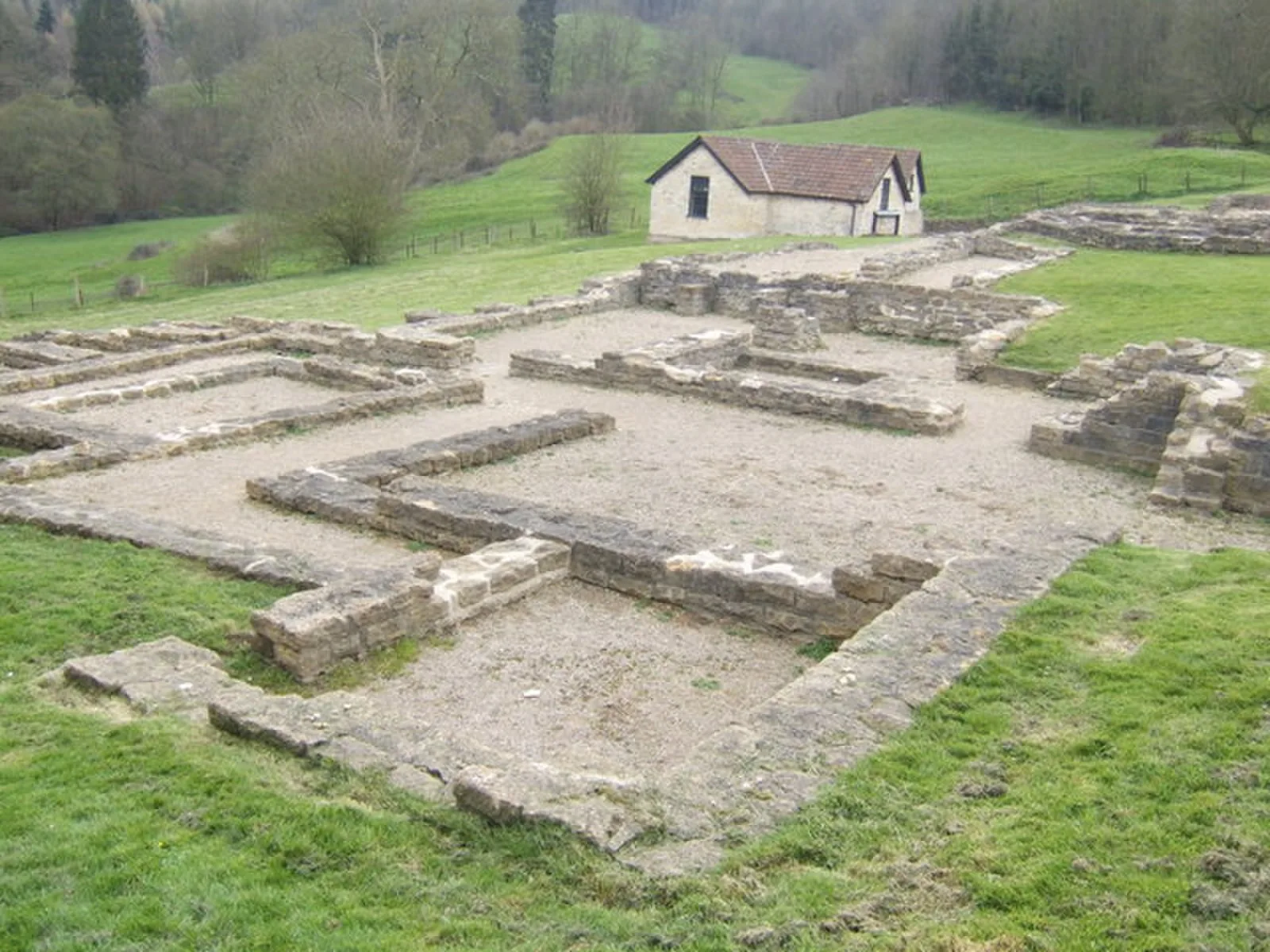
Great Witcombe Roman Villa was a villa built during the Roman occupation of Britain [1]. It is located on a hillside at Great Witcombe, near Gloucester in the English county of Gloucestershire [1]. Although a first-century CE date for the Roman villa at Great Witcombe has been suggested, twenty-first century work has suggested that it was first developed between 150 and 200; the villa was enlarged in the late third century or the fourth; additions and alterations were still taking place in the late fourth century; and the villa was probably occupied into the early fifth century [1]. The villa itself is sited in an unusual location – the unevenness of the terrain would seem to render it unsuitable for such a large dwelling [1]. To cope with the difficult terrain, the building itself was constructed on four terraces, cut into the hillside and heavily buttressed [1]. When the site was first excavated in the 19th century it was reported that parts of the villa were very well preserved [1]. The villa contained at least one substantial bath house [1].
Text: Wikipedia – 'Great Witcombe Roman Villa' (revision of 2026-03-05), CC BY-SA 4.0 · sentences selected and shortened by an AI system · source →Great Witcombe Roman Villa
Also known as: Great Witcombe Romano-British villa, villa romaine de Great Witcombe, Villa Rustica (Great Witcombe), Villa Rustica (Witcombe), 大韋琴羅馬別墅
| Type | Residence/villa/farmhouse |
|---|---|
| Period | 1 - 500 AD |
| Country | England |
| Coordinates | 51.8268° N, 2.1475° W |