
 England
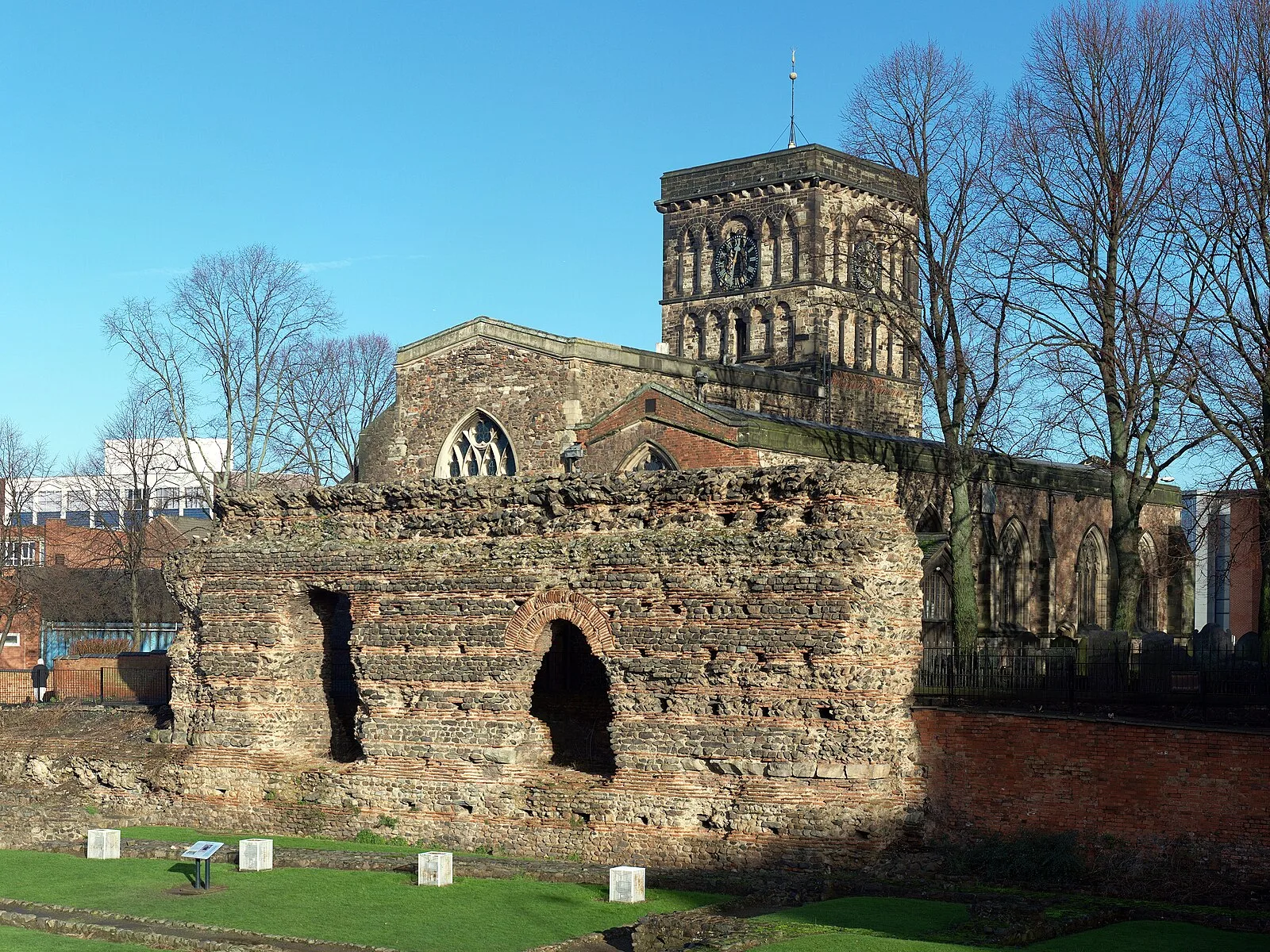
The Jewry Wall is a substantial ruined wall of 2nd-century Roman masonry, with two large archways, in Leicester [1]. The wall is an impressive example of standing Roman masonry [1]. It dates to approximately 125–130 AD [1]. It measures 23 m long, 8 m high and 2.5 m thick [1]. It is among the largest pieces of surviving civil Roman architecture in Britain, and is comparable to the "Old Work" at Wroxeter [1]. The structure comprises alternate bands of Roman brick and coursed masonry, of local granite, limestone and sandstone [1]. In the centre of the wall are two large arched openings about 3 m wide and 4 m high, and there are further arched alcoves on the eastern side [1]. The wall appears to have formed the long western side of a large rectangular basilica-like structure [1].
Text: Wikipedia – 'Jewry Wall' (revision of 2026-07-21), CC BY-SA 4.0 · sentences selected and shortened by an AI system · source →Jewry Wall
Also known as: 猶太牆
| Type | Wall |
|---|---|
| Period | 1 - 500 AD |
| Country | England |
| Coordinates | 52.6350° N, 1.1414° W |