
 England
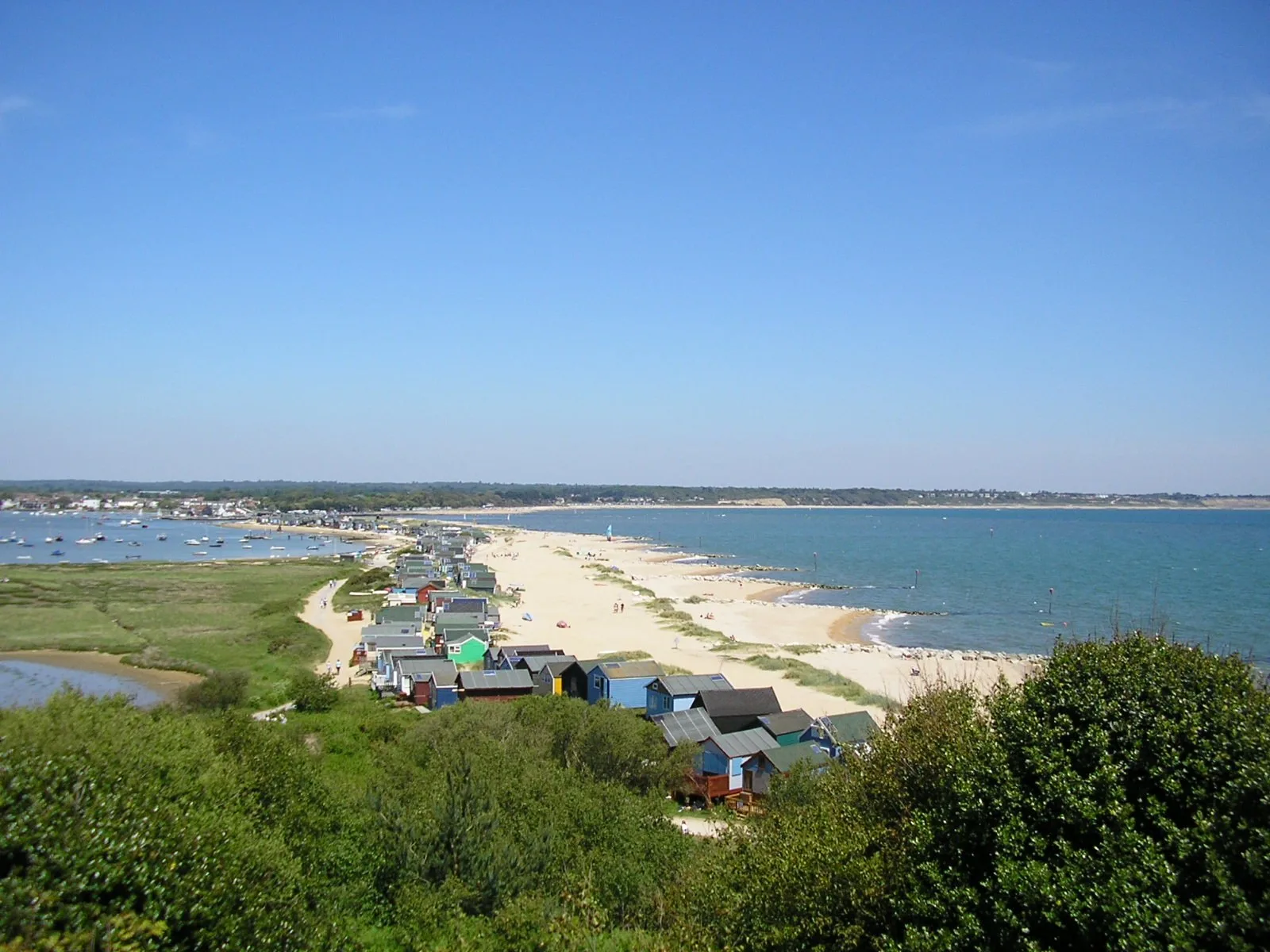
Hengistbury Head, formerly also called Christchurch Head, is a headland jutting into the English Channel between Bournemouth and Mudeford in the English county of Dorset [1]. It is a site of international importance in terms of its archaeology and is scheduled as an Ancient Monument [1]. Several archaeological digs have revealed that the site was occupied during the Upper Palaeolithic [1]. There is evidence of an open settlement of the Creswellian culture on the hill in the middle of the headland dating to around 14,100 years ago [1]. In Iron Age Britain around 700 BC, a settlement on the Head was established; also around this time, the headland was cut off from the mainland by the construction of two banks and ditches called the Double Dykes [1]. The advanced level of metallurgy in the area, coupled with its ease of access from the Continent, meant that Hengistbury Head became a significant Late-Iron Age port; trading worked metal of iron, silver, and bronze in return for figs, glass, tools and other goods [1]. Armorican coins and pottery uncovered here show links to the Brittany peninsula [1].
Text: Wikipedia – 'Hengistbury Head' (revision of 2026-06-05), CC BY-SA 4.0 · sentences selected and shortened by an AI system · source →Hengistbury Head
Also known as: ヘンギストベリヘッド, 亨吉斯特伯里角
| Type | City/town/settlement |
|---|---|
| Period | < 4500 BC |
| Country | England |
| Coordinates | 50.7159° N, 1.7540° W |