
 Egypt
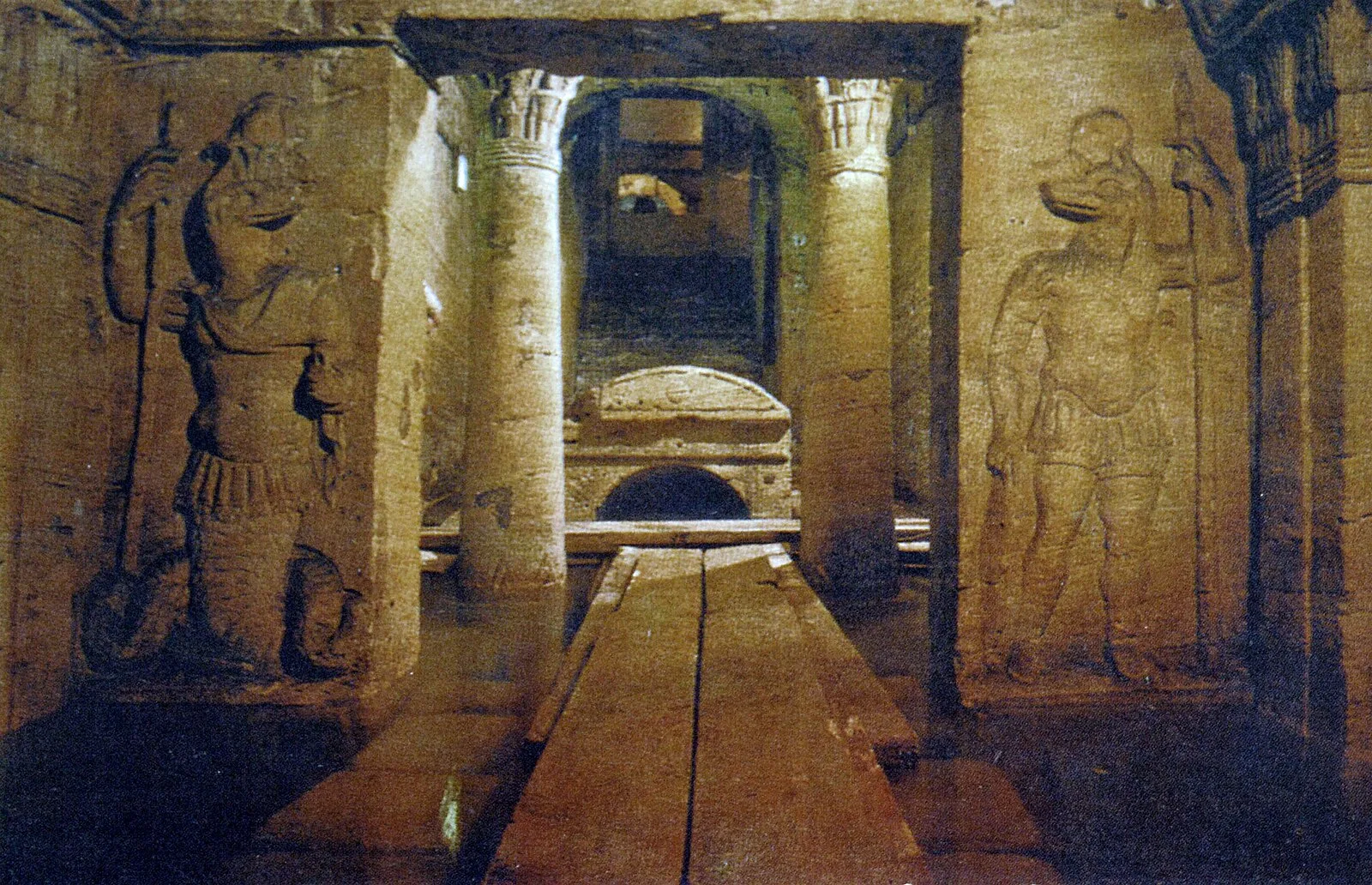
EgyptThe Catacombs of Kom El Shoqafa are a Roman-era necropolis in Alexandria, Egypt, considered one of the Seven Wonders of the Middle Ages and the largest known Roman burial site in Egypt [1] [2]. Dating to the 2nd century AD under the Antonine emperors, they were used until the 4th century [1]. Rediscovered in 1900 when a donkey fell through an access shaft, the complex descends three levels to approximately 35 metres deep [1] [2]. Key chambers include a triclinium banquet hall, the Hall of Caracalla with human and horse bones, and a main burial chamber with three sarcophagi decorated with Medusa heads and reliefs of Anubis mummifying Osiris [1] [3].
Catacombs of Kom el Shoqafa
Also known as: Catacombe di Kom el-Suqafa, Catacomben van Kom el Shoqafa, Catacombes de Kom El Shoqafa, Catacumbas de Kaum al-Shukafa, Catacumbas de Kaum asz-Shukafa, Catacumbas de Kom ash-Shuqafa, Catacumbas de Kom el Shogafa, Catacumbas de Kom el Shoqafa, Catacumbas de Kom el-Shuqafa, Catacumbas de Kom el-Suqafa, Catacumbas de Kon el-Shokafar, Catacumbas de Kwum a-Shukapa
| Type | Necropolis/tombs complex |
|---|---|
| Period | 1 - 500 AD |
| Country | Egypt |
| Coordinates | 31.1789° N, 29.8931° E |