
 Italy
ItalyThe Amphitheatre of Capua was a Roman amphitheatre in the ancient city of Capua, second only to the Colosseum in size and probably the model for it [1]. Like all amphitheatres, the building had an elliptical plan [1]. Its dimensions approach those of the Colosseum in Rome, with which it shares so many structural features that the Capuan amphitheatre is believed to have provided the direct model for the Colosseum [1]. The major axis of the structure is 170 metres and the minor axis is 139 metres [1]. The façade had a total height of 46 metres, divided into four levels, all of the Tuscan order [1]. The lower three levels consisted of 80 arches, each made of travertine and decorated with a bust of a god in the keystone [1]. The structure was used as a fortress by the Lombard princes of Capua [1].
Text: Wikipedia – 'Amphitheatre of ancient Capua' (revision of 2026-09-01), CC BY-SA 4.0 · sentences selected and shortened by an AI system · source →Amphitheatre of Capua
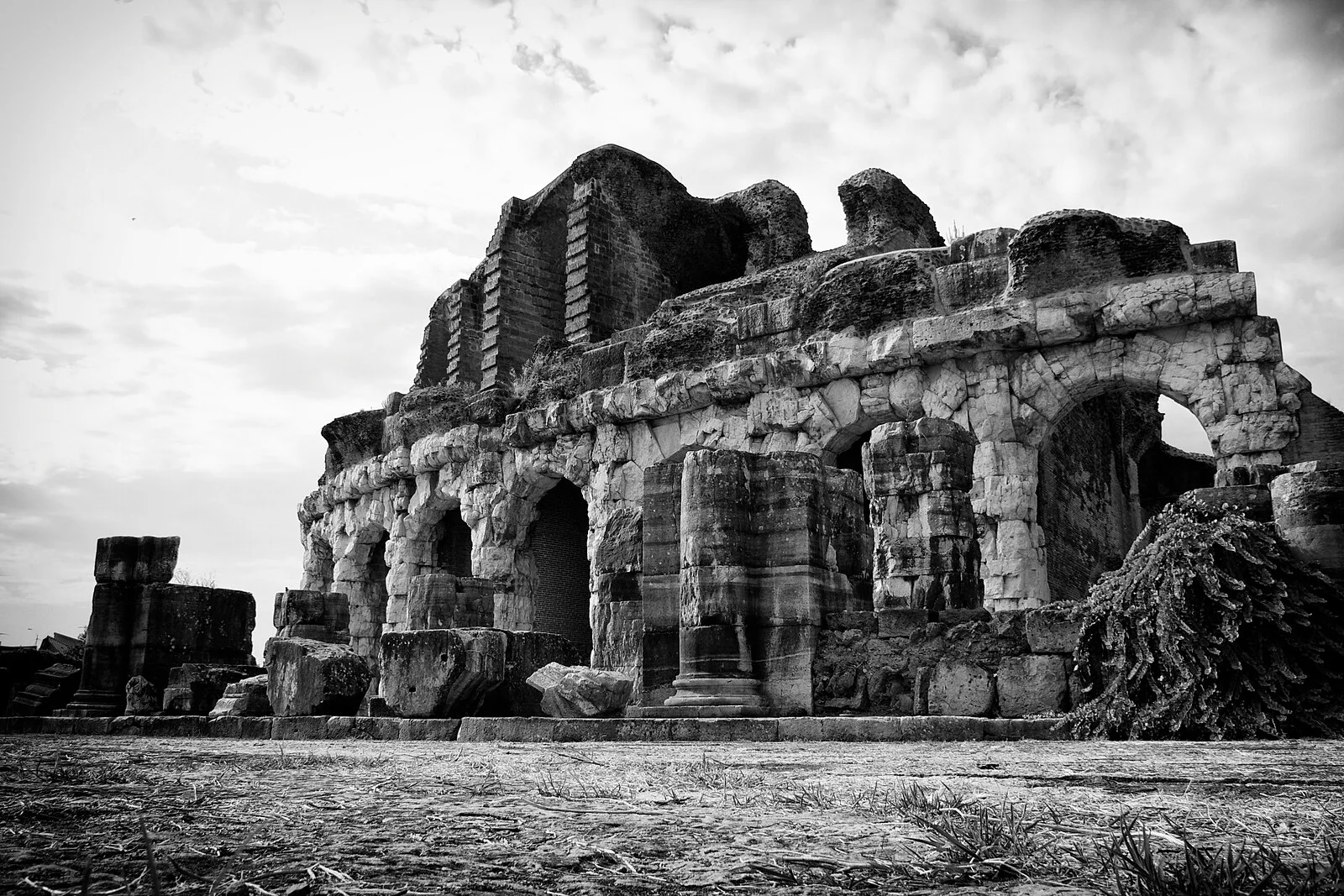
Also known as: Amfitheater van Capua, Amphitheater (Capua), Amphitheatre de Capoue, amphithéâtre de Capua, Amphitheatre of ancient Capua, Anfiteatro campano, Anfiteatro capuano, Anfiteatro de Capua, anfiteatro di Capua, anfiteatro di Santa Maria di Capua Vetere, Capua amphitheatre, Roman amphitheatre of Santa Maria Capua Vetere
| Type | Amphitheatre |
|---|---|
| Period | 1 - 500 AD |
| Country | Italy |
| Coordinates | 41.0863° N, 14.2500° E |