
 Italy
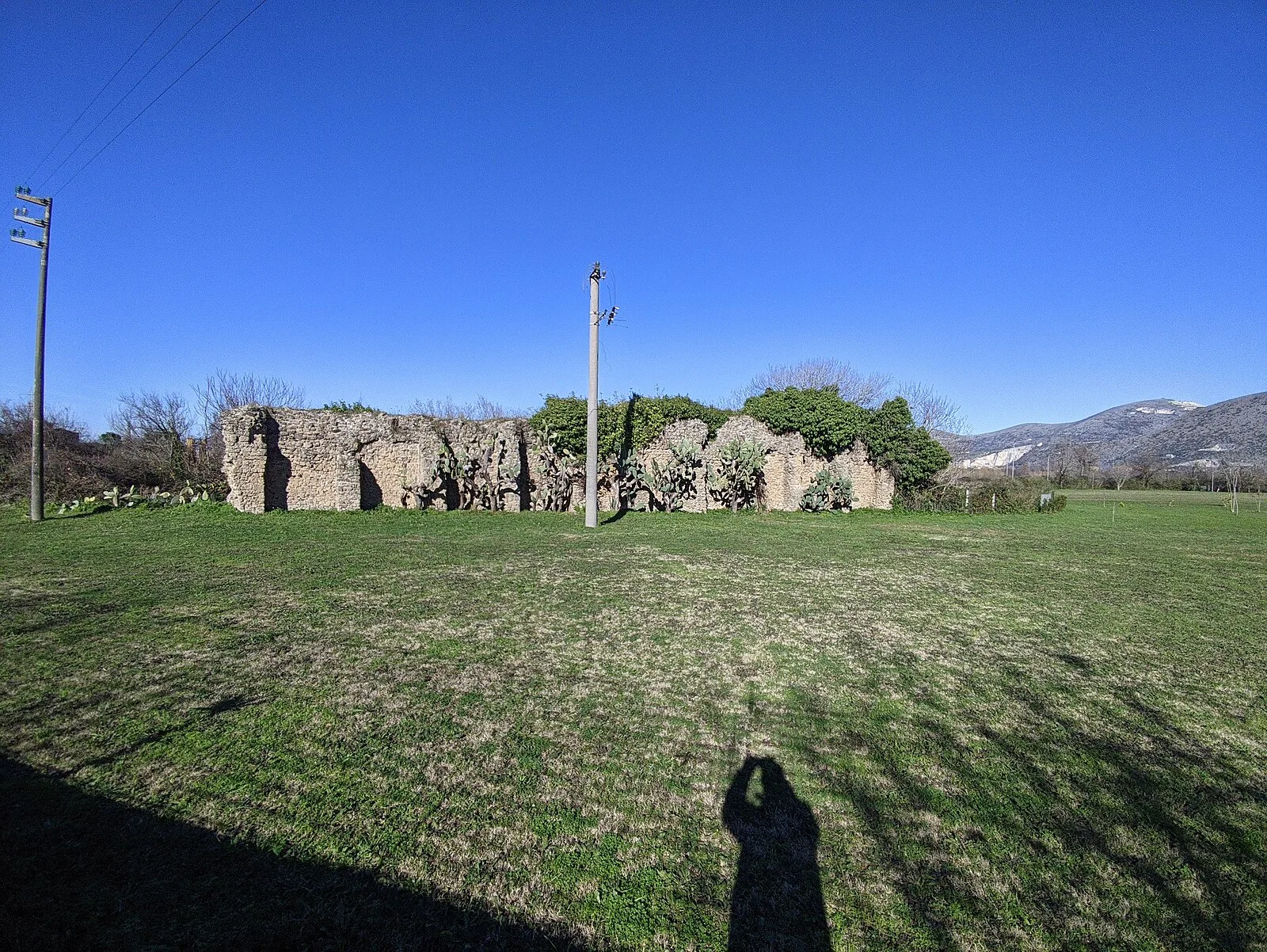
ItalyCālātia was an ancient town of Campania, southern Italy, c. 10 km southeast of Capua, on the Via Appia, near the point where the Via Popillia branches off from it [1]. It is represented by a locality known as Villa Galazia and by the church of San Giacomo alle Galazze, within the modern town of Maddaloni, very near the boundary with the neighboring town of San Nicola la Strada, and right on the Via Appia [1]. Ruins include remains of the walls and the pre-Roman necropolis was partially excavated in 1882 [1]. The history of Calatia is similar to that of its more powerful neighbor Capua, but as it lay near the point where the Via Appia turns east and enters the mountains, it had some strategic importance [1]. In 313 BC it was taken by the Samnites and recaptured by the dictator Fabius Maximus Rullianus; the Samnites captured it again in 311 BC, but it must have been retaken at an unknown date [1]. In 174 BC it is mentioned that its walls were being repaired by the censors [1]. In 59 BC a colony was established here by Caesar [1].
Text: Wikipedia – 'Calatia' (revision of 2026-07-18), CC BY-SA 4.0 · sentences selected and shortened by an AI system · source →Calatia
Also known as: Calacia, Calatia (Campania), Mint of Calatia, Калатија, カラティア
| Type | City/town/settlement |
|---|---|
| Period | 1500 - 500 BC |
| Country | Italy |
| Coordinates | 41.0440° N, 14.3625° E |