
 Greece
Roussolakkos is the site of a major Minoan town near Palekastro in eastern Crete, occupied from Early Minoan IIA to Late Minoan IIIB (c. 2650-1200 BC). At its height around 1450 BC, it was one of the largest settlements on the island, covering over 50,000 sq.m. with paved streets, an elaborate drainage system, and imposing house facades. Excavations from 1902 onward uncovered the Palaikastro Kouros, a remarkable chryselephantine statuette believed to represent a precursor of Diktaian Zeus. The settlement's destruction around 1450 BC may relate to the Thera eruption or foreign invasion.
Roussolakko
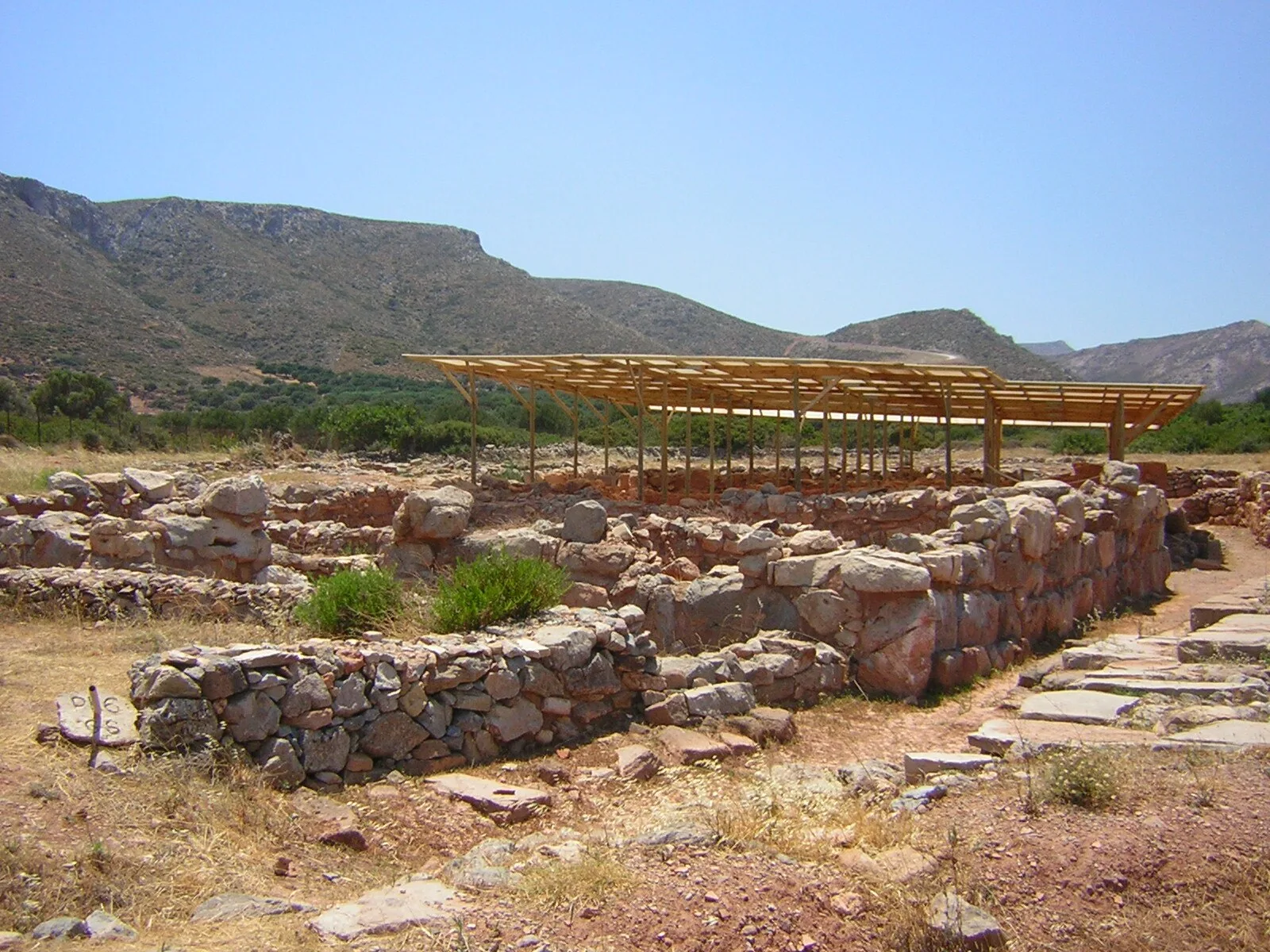
Also known as: Palaeocastrum, Palaeocastrum (urbs Minoa), Palaikastro excavation, Rousolákos, Roussolakkos, Roussolakkos excavation, Rusolaccus, Rusólakos, Russólacos, Παλαίκαστρο, Ρουσόλακκος, Русолакос
| Type | City/town/settlement |
|---|---|
| Period | 3000 - 1500 BC |
| Country | Greece |
| Coordinates | 35.1954° N, 26.2755° E |