
 Greece
Kavousi Vronda is an archaeological site in eastern Crete, Greece, located about 1.25 km south of the modern village of Kavousi [1]. It is situated in the northern foothills of the Thripti Mountains overlooking the Gulf of Mirabello, at an elevation of 427 m above sea level [1]. Most of the visible remains on the site belong to a "Dark Age" settlement dating to the Late Minoan IIIC period (c. 1170–1050 BCE) and a slightly later, Early Iron Age cemetery (c. 1050–600 BCE) [1]. Investigations by the Kavousi Project have recovered evidence of human activity on the Vronda ridge as early as the Final Neolithic period and continuing, with interruptions, through the end of the Bronze Age and transition to the Iron Age [1]. The earliest traces of human activity at the site date to the Final Neolithic period, and consist of two stone celts and several fragments of pottery [1]. Occupation of the site during the Prepalatial and Late Prepalatial periods is attested primarily by substantial amounts of ceramic material deposited as fill during the construction of later buildings [1].
Text: Wikipedia – 'Kavousi Vronda' (revision of 2025-10-29), CC BY-SA 4.0 · sentences selected and shortened by an AI system · source →Kavousi Vronda
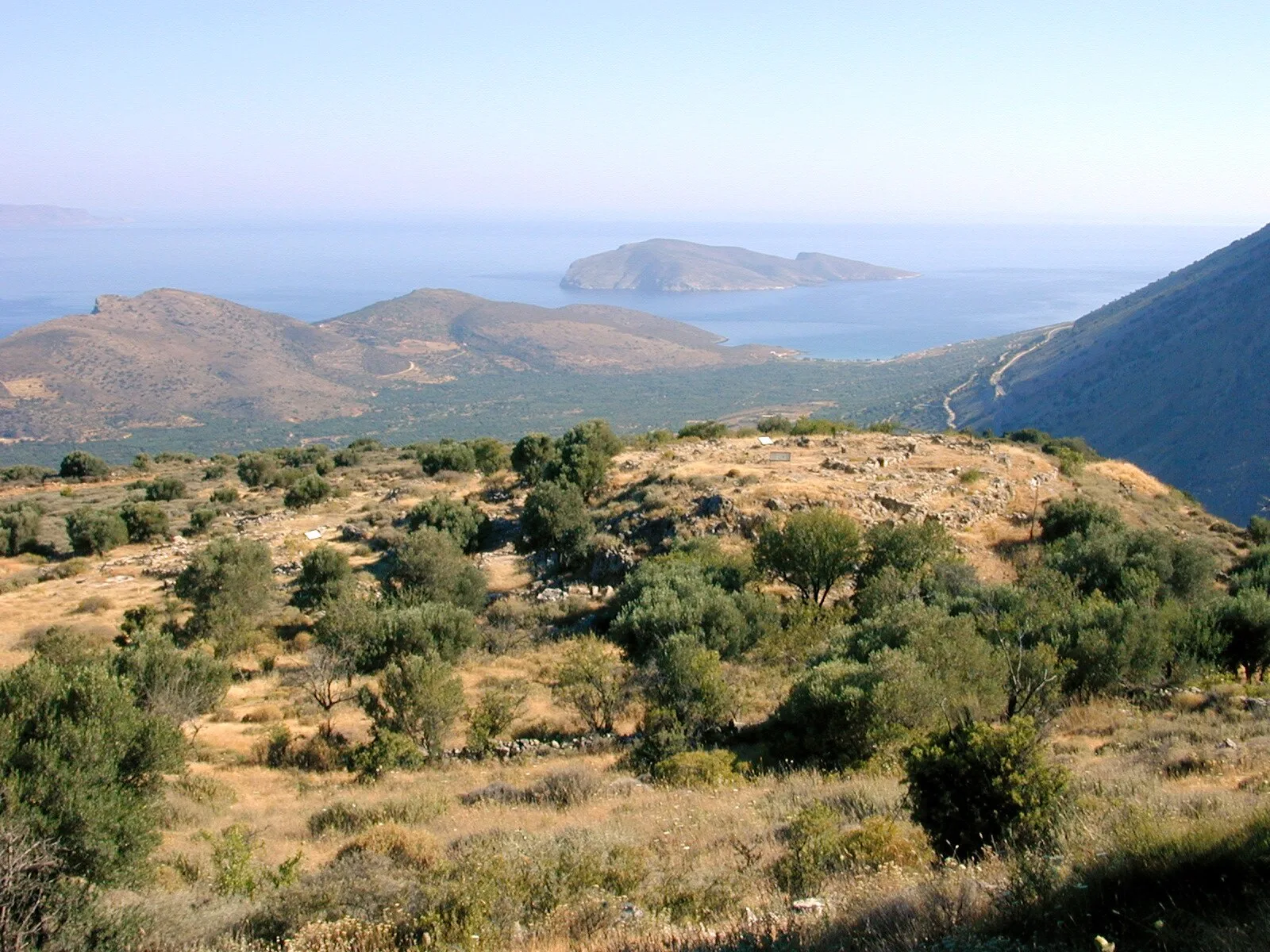
Also known as: Kavoúsi Vrontás, Αρχαιολογικός Χώρος Βροντά
| Type | City/town/settlement |
|---|---|
| Period | 4500 - 3000 BC |
| Country | Greece |
| Coordinates | 35.1102° N, 25.8583° E |