
 Georgia
The Vani archaeological site is a multi-layer archaeological site in western Georgia, located on a hill at the town of Vani in the Imereti region [1]. It is the best studied site in the hinterland of an ancient region, known to the Classical world as Colchis, and has been inscribed on the list of the Immovable Cultural Monuments of National Significance [1]. An ancient name for Vani is unknown: two competing hypotheses identify the site with the Surium of Pliny the Elder or the Leucothea of Strabo [1]. Four phases have been identified at the Vani site from the 8th century down to the mid-1st century BC [1]. An important find is a 4th-century BC signet-ring bearing, in Greek letters, the name of "Dedatos", probably a local ruler [1]. In the middle of the 1st century BC, the ancient city at Vani was attacked and destroyed [1].
Text: Wikipedia – 'Vani archaeological site' (revision of 2026-07-22), CC BY-SA 4.0 · sentences selected and shortened by an AI system · source →Vani Archaeological Site
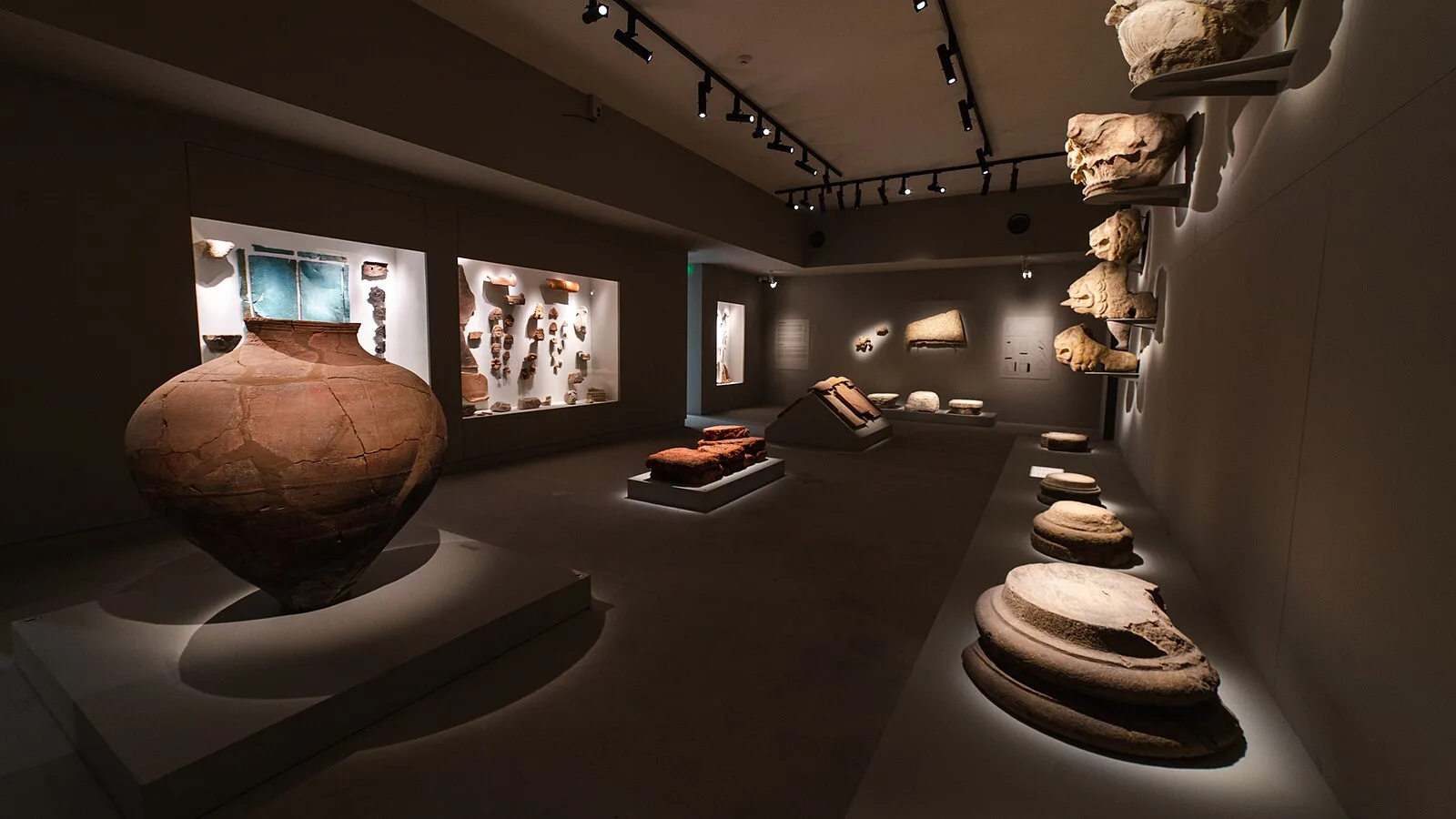
Also known as: Jaciment arqueològic de Vani, Lloc arqueològic de Vani, Sitio arqueológico de Vani, Sítio arqueológico Vani, Vani Sit Alanı, Vendi arkeologjik i Vanit, Вани (археологический памятник), Ваниҙың археология ҡомартҡылары, ვანის არქეოლოგიური მუზეუმი, ვანის არქეოლოგიური მუზეუმ-ნაკრძალი
| Type | City/town/settlement |
|---|---|
| Period | 1500 - 500 BC |
| Country | Georgia |
| Coordinates | 42.0851° N, 42.5039° E |