
 Georgia
Located by the Tekhuri River, on the northern edge of the Colchian plain in Samegrelo, western Georgia, lie the ruins of Nokalakevi [1]. Occupying approximately 20ha, the site was known to early Byzantine historians as Archæopolis, and to the neighbouring Georgian chroniclers as Tsikhegoji, or the fortress of Kuji — a Colchian ruler or eristavi [1]. Nokalakevi-Archaeopolis played a part in the major wars fought between the Byzantine Empire and Sasanians in the South Caucasus during the sixth century AD [1]. It was one of the key fortresses guarding Lazika from Sasanian, Persian and Iberian attack [1]. During the war of AD 540-562, the Persians' failure to take Nokalakevi-Archaeopolis from the Byzantines and the Laz eventually cost them control of Lazika [1]. In the winter of 1930-31, a joint German-Georgian team, led by Dr Alfonse-Maria Schneider of Freiburg University, traced the line of the walls and excavated about 40 survey trenches and one of the towers, as well as what they erroneously believed to be the agora in the 'lower' town [1].
Text: Wikipedia – 'Nokalakevi' (revision of 2026-07-18), CC BY-SA 4.0 · sentences selected and shortened by an AI system · source →Nokalakevi
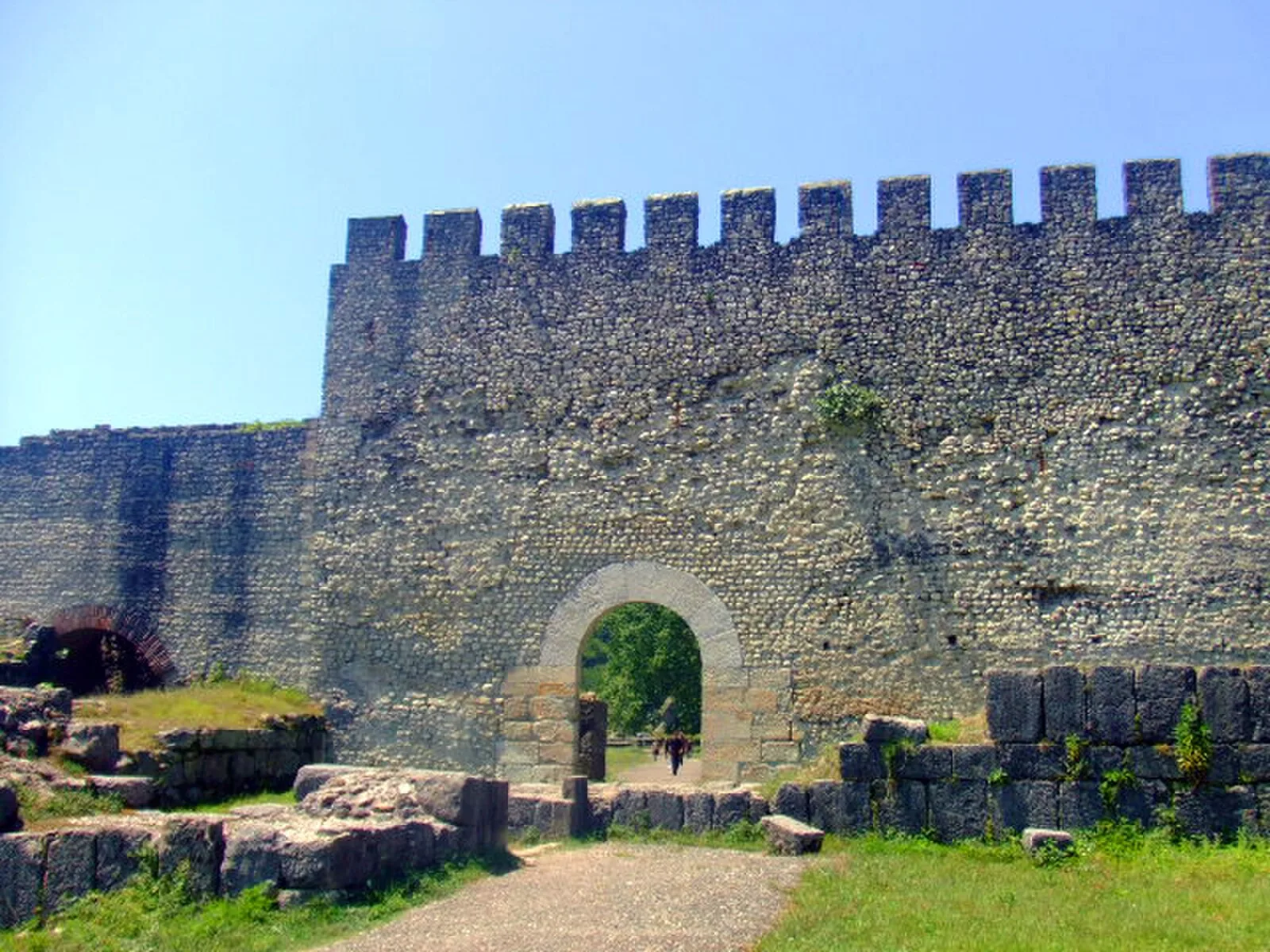
Also known as: Archaeopolis, Archeopolis, Arqueòpolis, Forteresse de Kuji, Jikhanqunji, jikhanqvinji, Kuji Fortress, Noqalaqu, Tsikhe Godji, Tsikhegoji, Αρχαιόπολις, Νοκαλακέβι
| Type | City/town/settlement |
|---|---|
| Period | 1500 - 500 BC |
| Country | Georgia |
| Coordinates | 42.3572° N, 42.1938° E |