
 Georgia
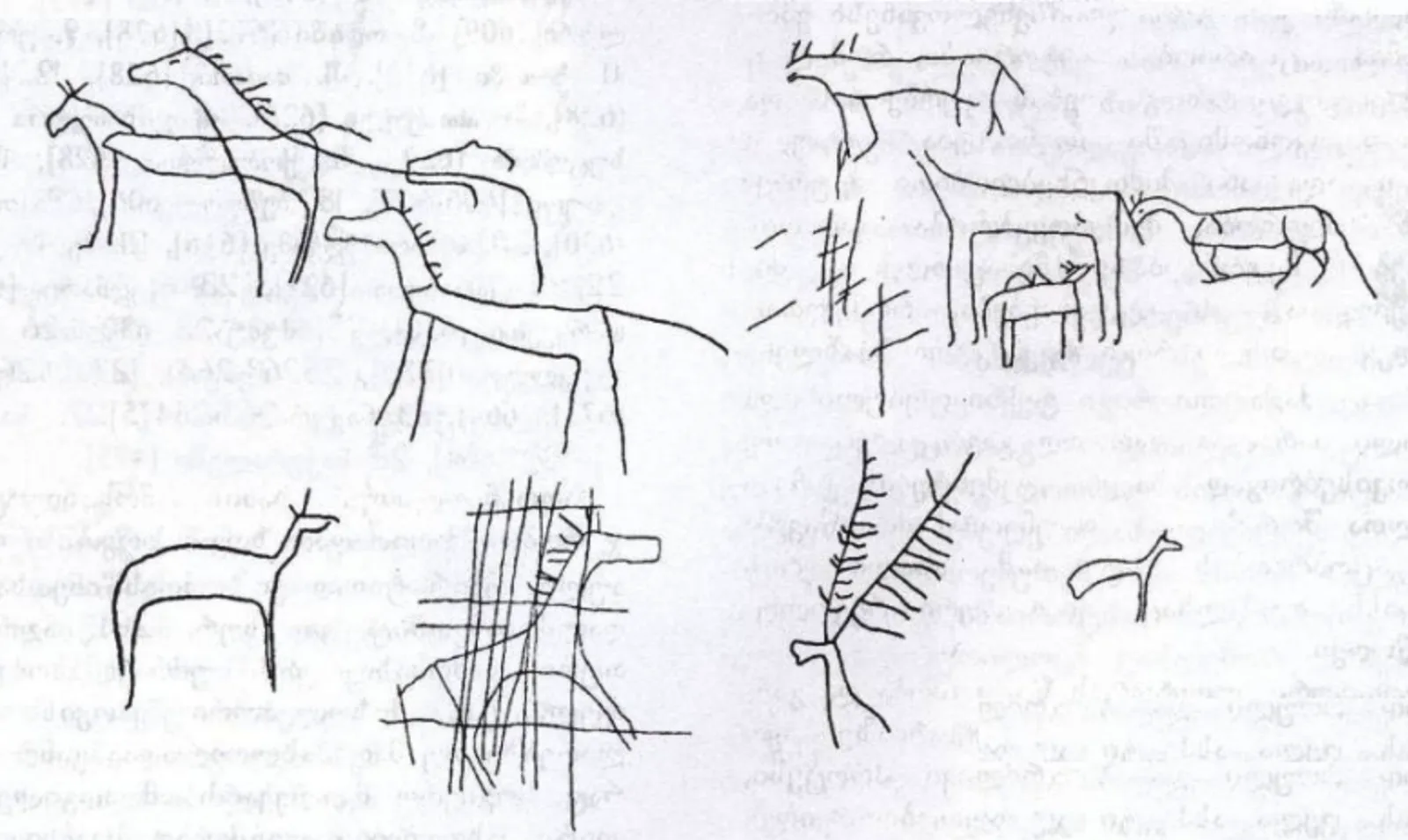
Trialeti petroglyphs is prehistoric rock art in the Trialeti area, in the Tsalka Municipality, engraved over a number of periods from the Mesolithic to the Middle Bronze Age [1]. The depictions include geometric, zoomorphic and anthropomorphic images [1]. The Trialeti petroglyphs are located some 12 km east of the town of Tsalka, in the narrow gorge of the Avdris-Tsqali or Patara Khrami river—a right tributary of the Ktsia River—on the outskirt of the village of Gantiadi in the Kvemo Kartli region, in an area which was historically known as Trialeti [1]. This rock art site was discovered in the 1880s and rediscovered in 1976 [1]. The Trialeti petroglyphs include about 100 images, clustered into six panels, carved across 50 m of a flat basalt surface [1]. Animals are the most common depictions and include local fauna, such as deer, horses, mountain goats, birds, and fish, as well as fantastic and hybrid creatures [1]. Human figures are hunters, equipped with bows and arrows, and diminutive in comparison to the animals, measuring between 2.5 cm and 18–20 cm, mostly of 1–2 mm in width and depth [1].
Text: Wikipedia – 'Trialeti petroglyphs' (revision of 2026-07-22), CC BY-SA 4.0 · sentences selected and shortened by an AI system · source →Trialeti Petroglyphs
Also known as: petroglify z Trialeti, Trialeti petroglifleri, Триалетские петроглифы, Триалеты петроглифтæ, Трыялецкія петрогліфы, თრიალეთის პეტროგლიფები, Թրիալեթի ժայռապատկերներ
| Type | Petroglyphs |
|---|---|
| Period | < 4500 BC |
| Country | Georgia |
| Coordinates | 41.5863° N, 43.9772° E |