
 Georgia
Satsurblia Cave Natural Monument is a paleoanthropological site located 1.2 km from Kumistavi village, Tsqaltubo Municipality, in the Imereti region of Georgia [1]. The karst cave was first excavated in 1976 by A. N. Kalandadze [1]. Prehistoric people first occupied the cave from around 25,500 to 24,400 BP [1]. The next period of human occupation at Satsurblia took place from around 17,000 to 16,200 BP [1]. The hiatus in human occupation at Satsurblia coincides with the Last Glacial Maximum [1]. Lithic artefacts, bone artefacts, charcoal, flax fibers, and pottery were discovered at the cave [1]. Perforated pendants made out of stalagmite and polished bovid bone were also discovered [1]. In 2013, archaeologists found a temporal bone fragment of an ancient human in the cave [1].
Text: Wikipedia – 'Satsurblia Cave' (revision of 2026-09-21), CC BY-SA 4.0 · sentences selected and shortened by an AI system · source →Satsurblia Cave
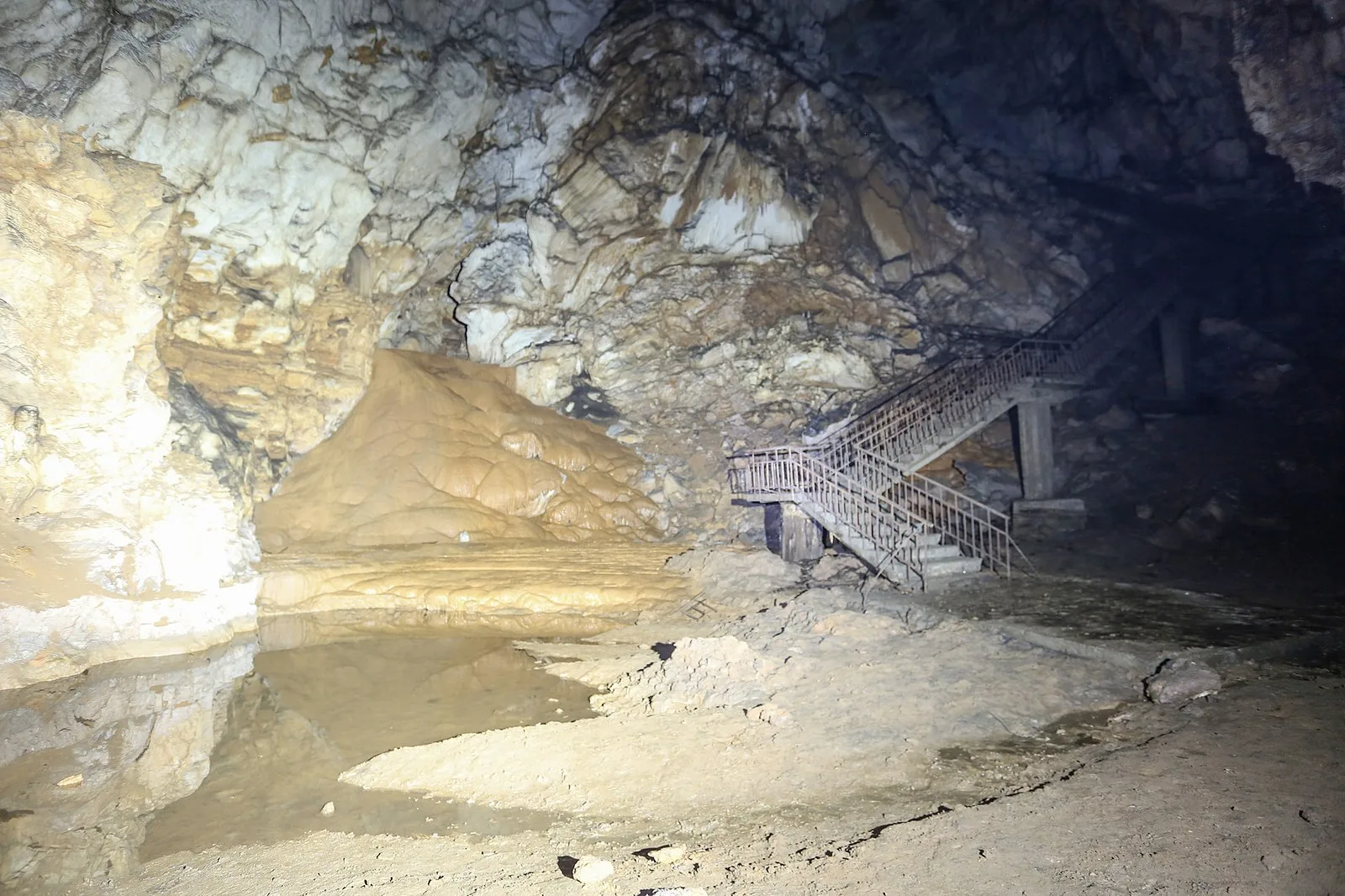
Also known as: Cova de Satsurblia, Cueva Satsurblia, grotte de Satsurblia, Satsoerbliagrot, Satsurblia-Höhle, Satsurblia Mağarası, საწურბლიას მღვიმე, غار ساتسوربلیا, كهف ساتسربليا
| Type | Cave Structures |
|---|---|
| Period | 500 BC - 1 AD |
| Country | Georgia |
| Coordinates | 42.3881° N, 42.6062° E |