
 Georgia
Dmanisi is a town and archaeological site in the Kvemo Kartli region of Georgia approximately 93 km southwest of the nation's capital Tbilisi in the river valley of Mashavera [1]. A series of skulls which had diverse physical traits, discovered at Dmanisi in the early 2000s, led to the hypothesis that many separate species in the genus Homo were in fact a single lineage [1]. The area around the town of Dmanisi has been settled since the Early Bronze Age [1]. Beyond a rich collection of ancient and medieval artifacts and the ruins of various buildings and structures, unique remains of prehistoric animals and humans have been unearthed [1]. The discovery of primitive stone tools in 1984 led to increasing interest to the archaeological site [1]. Early human fossils, originally named Homo georgicus and now considered Homo erectus georgicus, were found at Dmanisi between 1991 and 2005 [1]. At 1.8 million years old, they are now believed to be a subspecies of Homo erectus and not a separate species of Homo [1]. These fossils represent the earliest known human presence in the Caucasus [1].
Text: Wikipedia – 'Dmanisi' (revision of 2026-09-20), CC BY-SA 4.0 · sentences selected and shortened by an AI system · source →Dmanisi
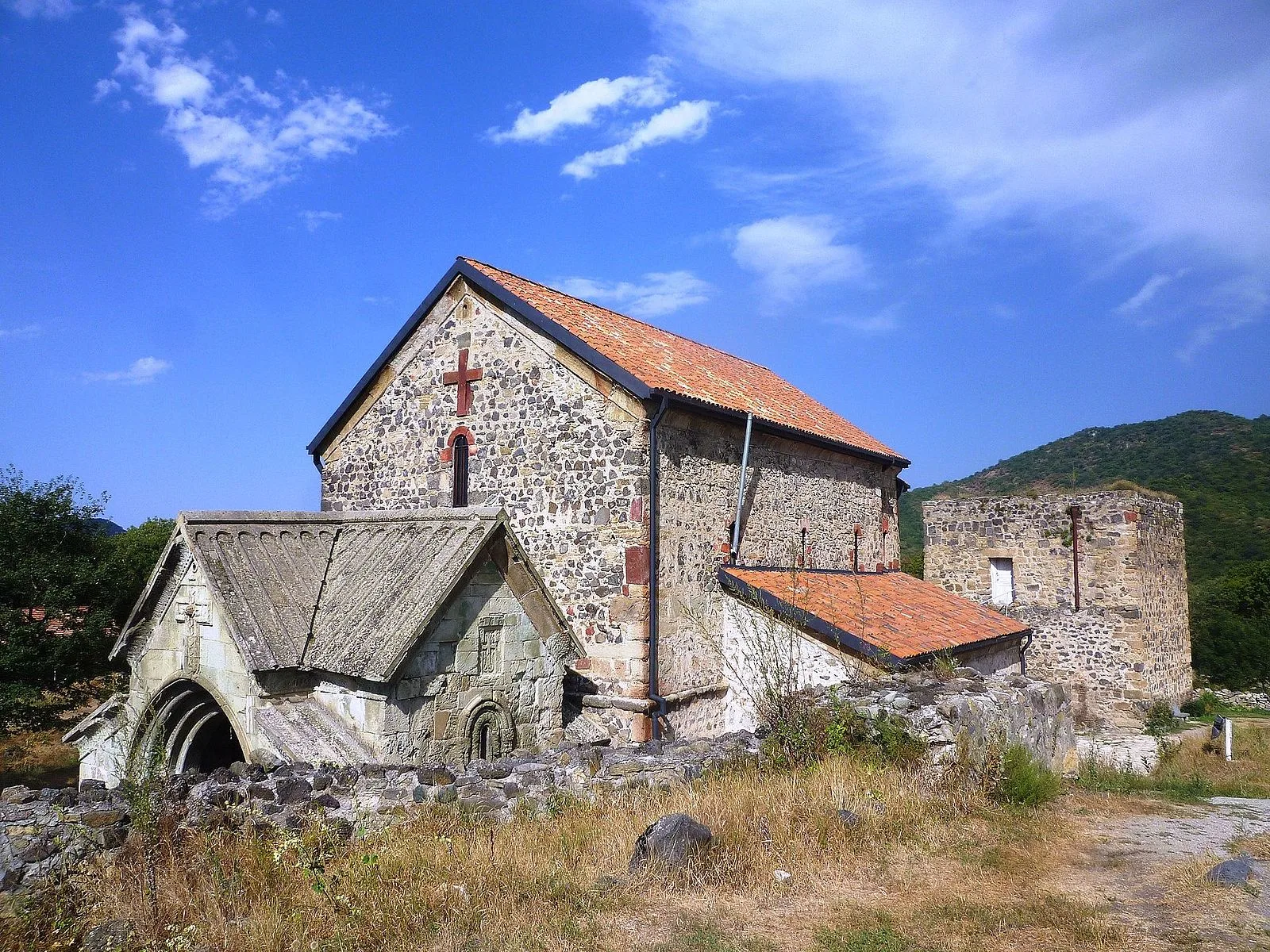
Also known as: 드마니시, Başkeçid, Dmanisi (lungsod), Dmanisi régészeti helyszín, Dmanisis, Dmanisis Nakalakari, Dmanisi (stad), Dmanissi, Ντμάνισι, Башкечид, Башкичет, Дманис
| Type | City/town/settlement |
|---|---|
| Period | 4500 - 3000 BC |
| Country | Georgia |
| Coordinates | 41.3317° N, 44.2037° E |