
 Georgia
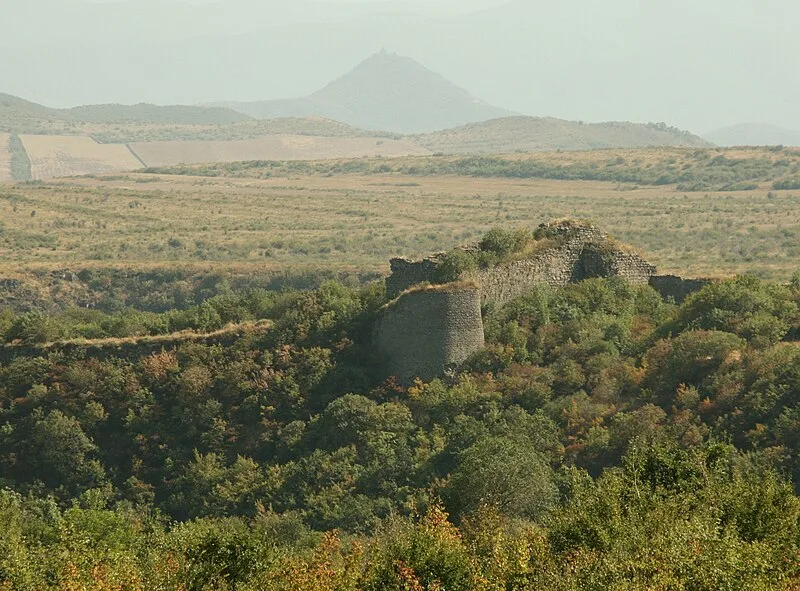
Samshvilde is a ruined fortified city and archaeological site in Georgia, in the country's south, near the homonymous modern-day village in the Tetritsqaro Municipality [1]. Some of the most recognizable monuments are the Samshvilde Sioni church and a citadel erected on a rocky river promontory [1]. The 1968–1970 archaeological expedition uncovered two layers of the early Bronze Age Kura–Araxes culture at Samshvilde, in the southern slopes of Mount Karnkali, dating from the middle of the 4th millennium BC and 3rd millennium BC, respectively [1]. This horizon included a settlement site and burial ground as well as a circular cult building [1]. Artifacts unearthed there were the Bronze-Age pottery and various obsidian tools [1]. In the 3rd century BC, under the kings of Kartli, known to the Greco-Roman world as Iberia, Samshvilde became a center of one of the kingdom's subdivisions, run by eristavi, first appointed by Parnavaz, the first in the traditional list of the kings of Kartli [1].
Text: Wikipedia – 'Samshvilde' (revision of 2026-08-27), CC BY-SA 4.0 · sentences selected and shortened by an AI system · source →Samshvilde
Also known as: Samsjvilde, Samşvilde, Sàmxvilde, Sanxevilde, Σάμσβιλντε, Самшвилде, ორბის ციხე, სამშვილდე, სამშვილდე (ციხე-ქალაქი), Սամշվիլդե, سامشویلده
| Type | City/town/settlement |
|---|---|
| Period | 500 BC - 1 AD |
| Country | Georgia |
| Coordinates | 41.5072° N, 44.5056° E |